Sunday, November 14, 2010

Heimaey Days 3 and 4

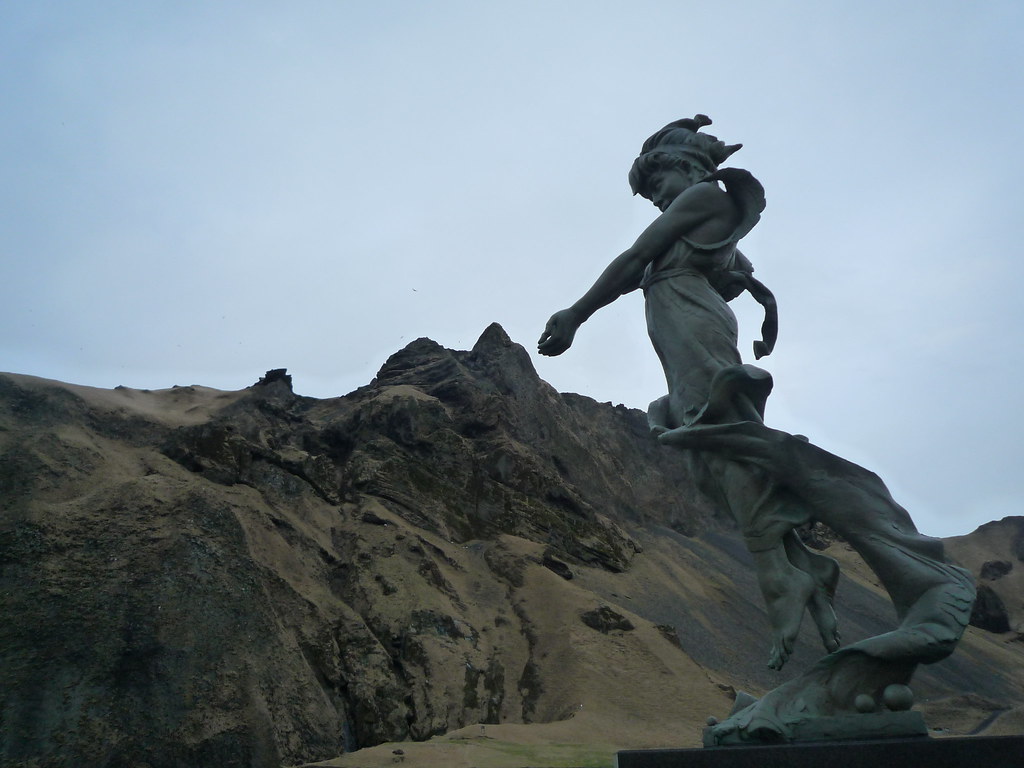
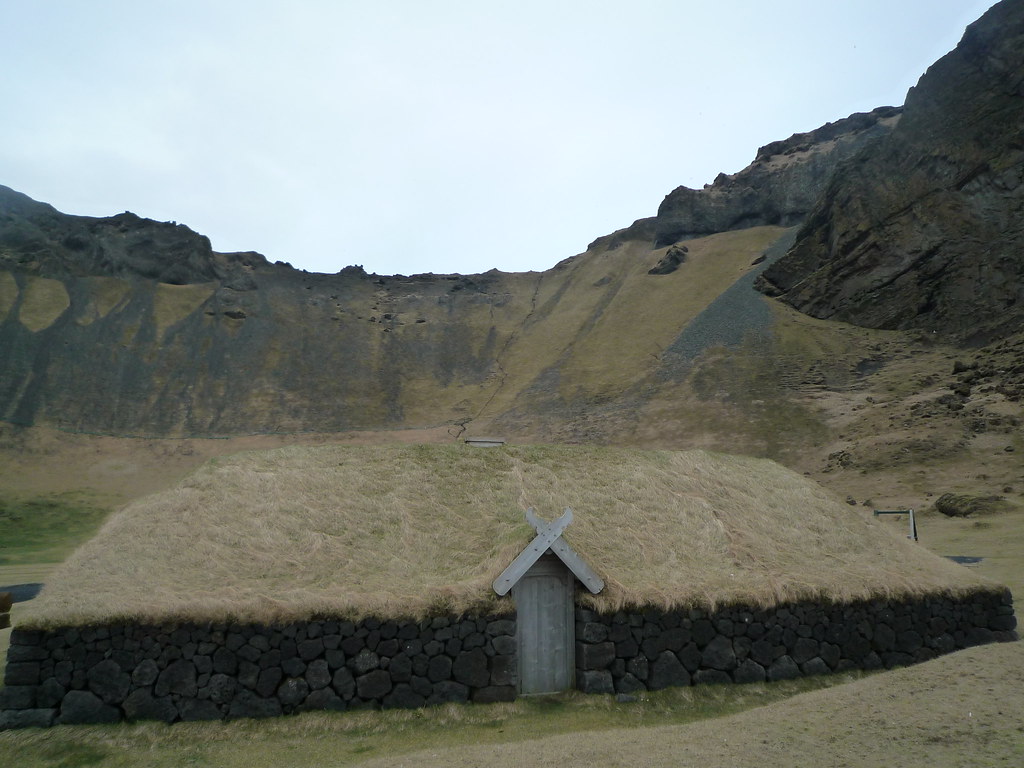
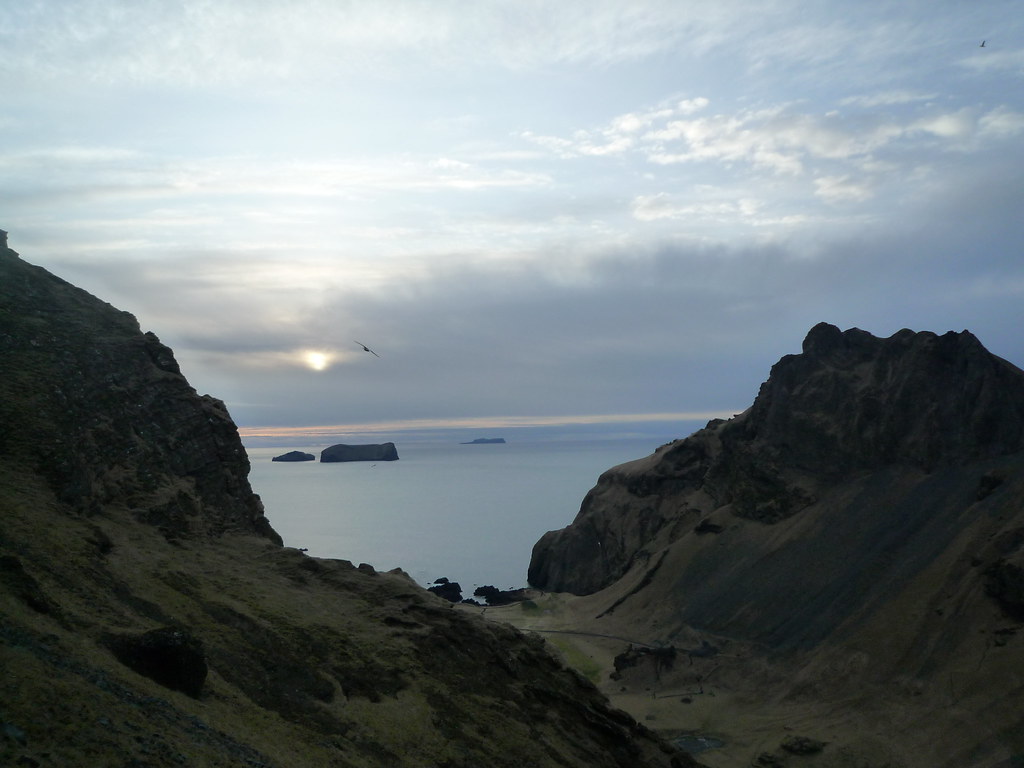
Having seen Heimaey's parimeter, I decided to explore what little of the interior I had not yet seen. I began with the graveyard, which has some interesting statues nearby. There were some fantastic shots of ash falling around the angel statue during the 1973 eruption.

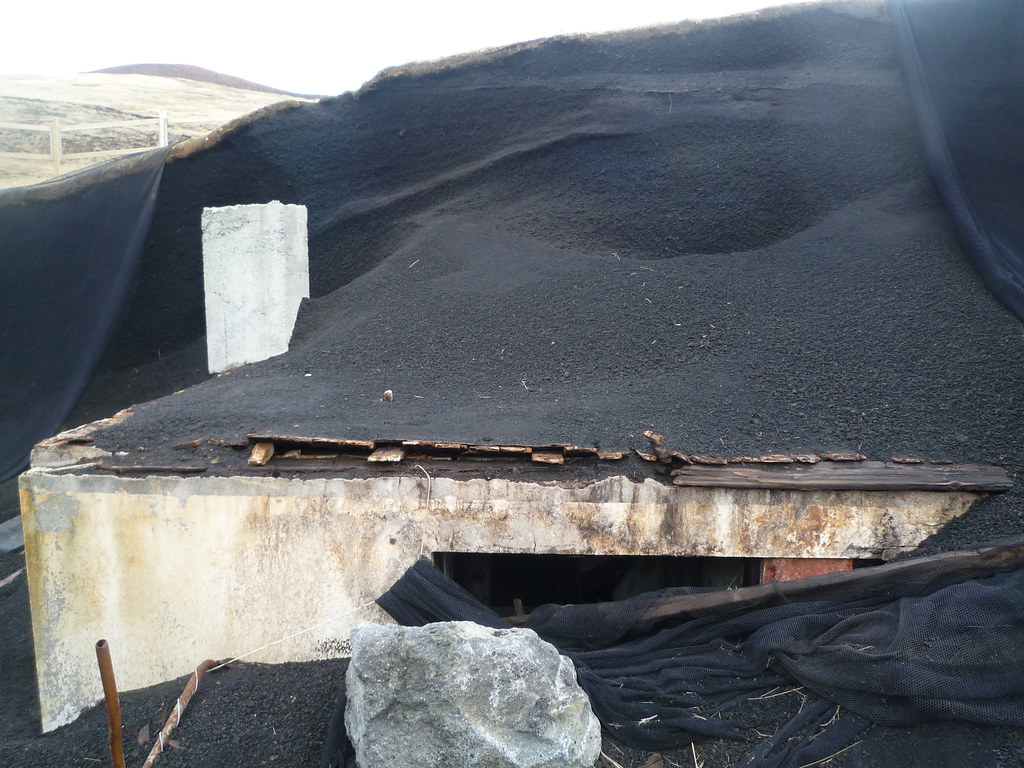
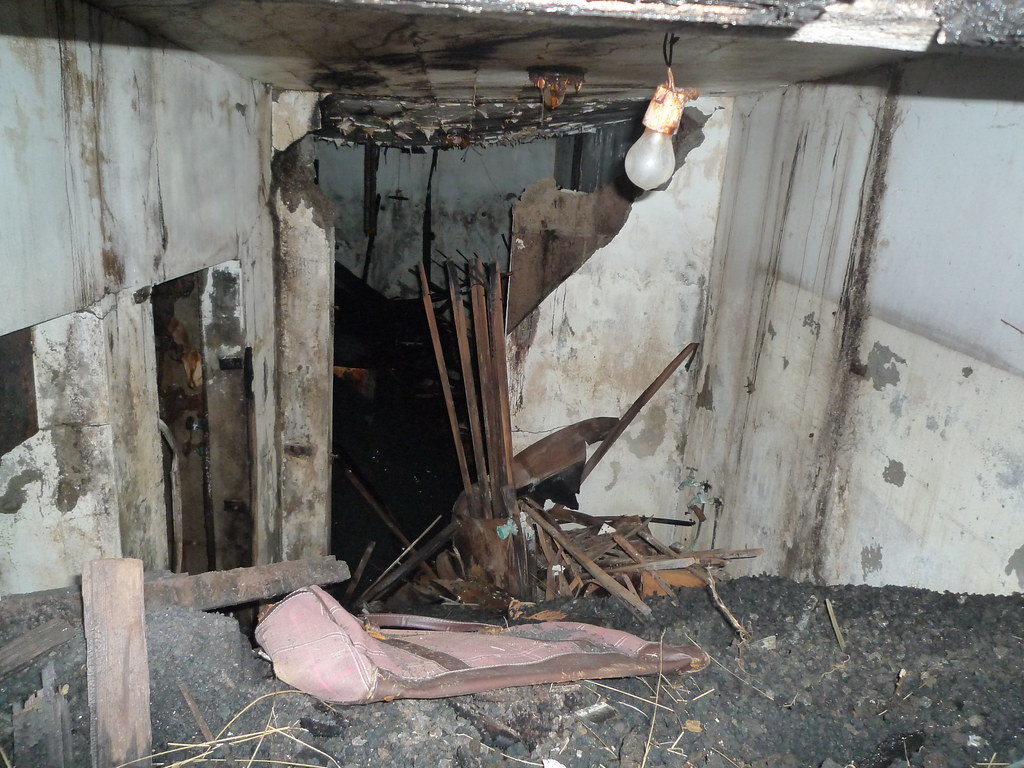
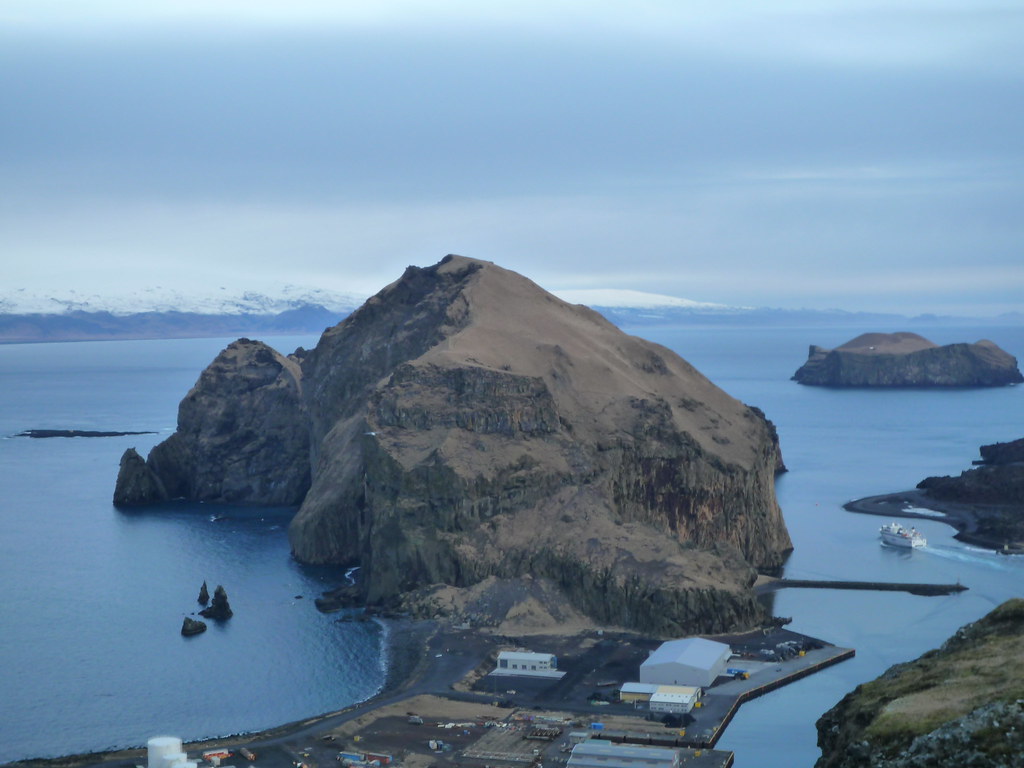
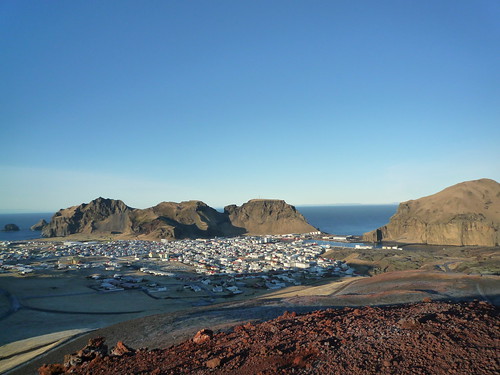
From there I went up to Helgafell, the island's central volcano. Once again I had spectacular view of the entire island. I could clearly see my next stop, the pompously-titled Pompeii of the North, an excavation of several of the buried houses.


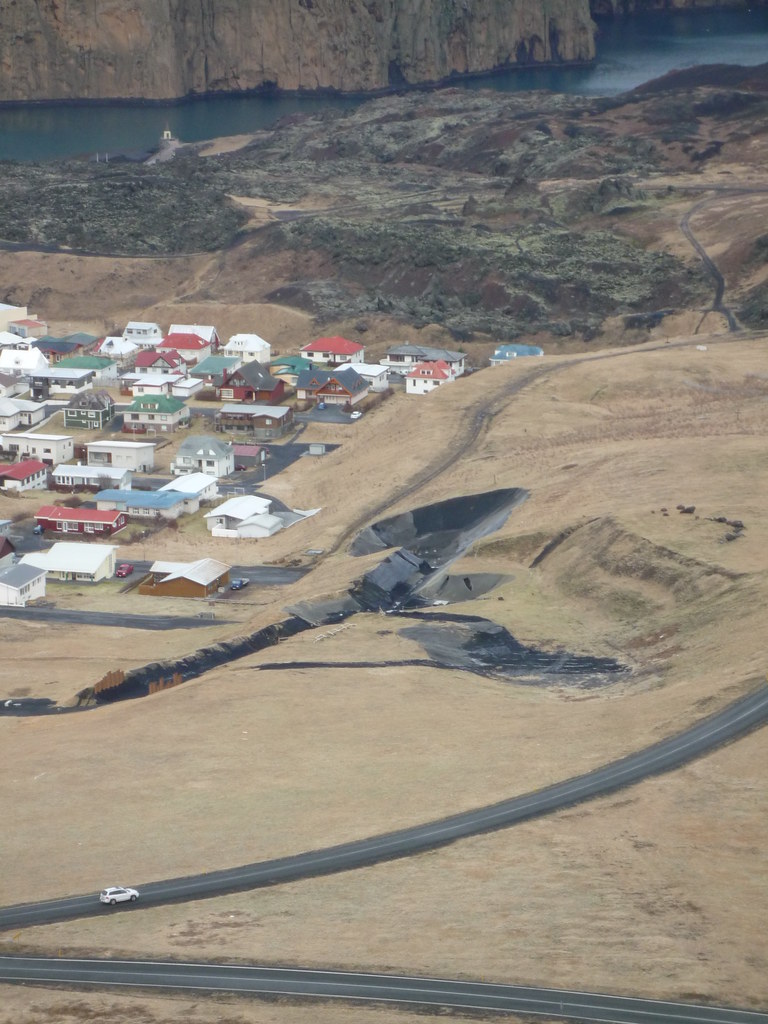
While a fine layer of hot ash of Vesuvius perfectly preserved the Roman town of Pompeii, Eldfell was not as gentle to the houses (though far kinder to the people).


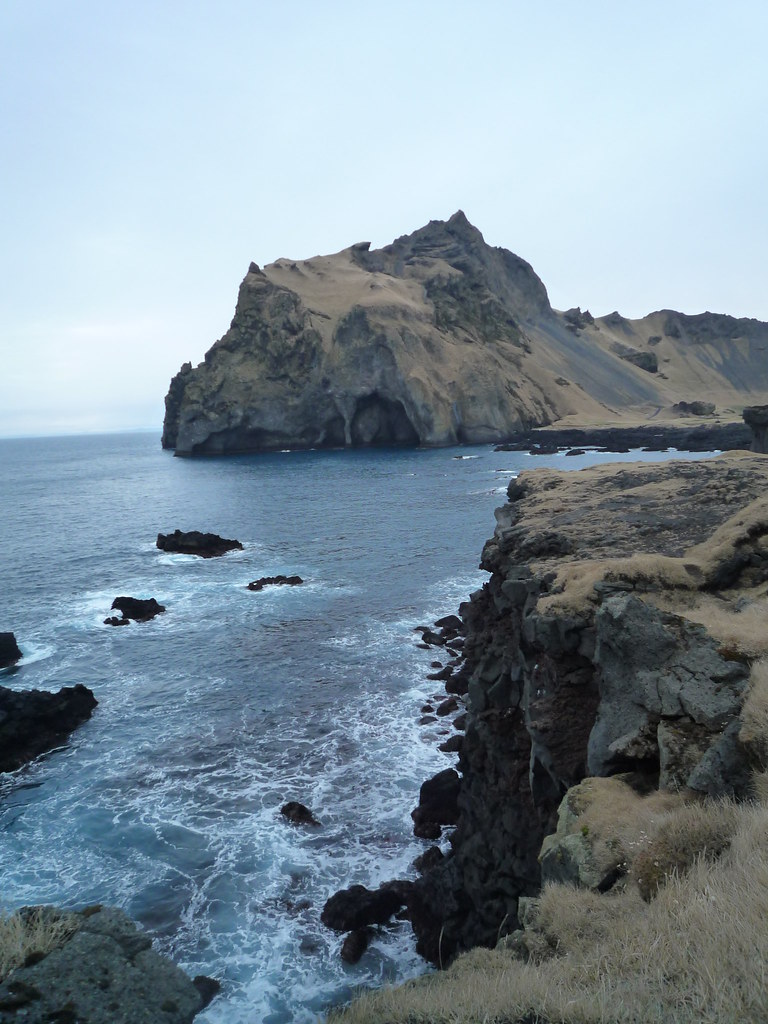
I then proceeded to pick up where I had left off at sunset on my perimeter perambulation by going across the Northwest coast of the island. The coastal path goes across a golf course, which of course was not in use in the winter.

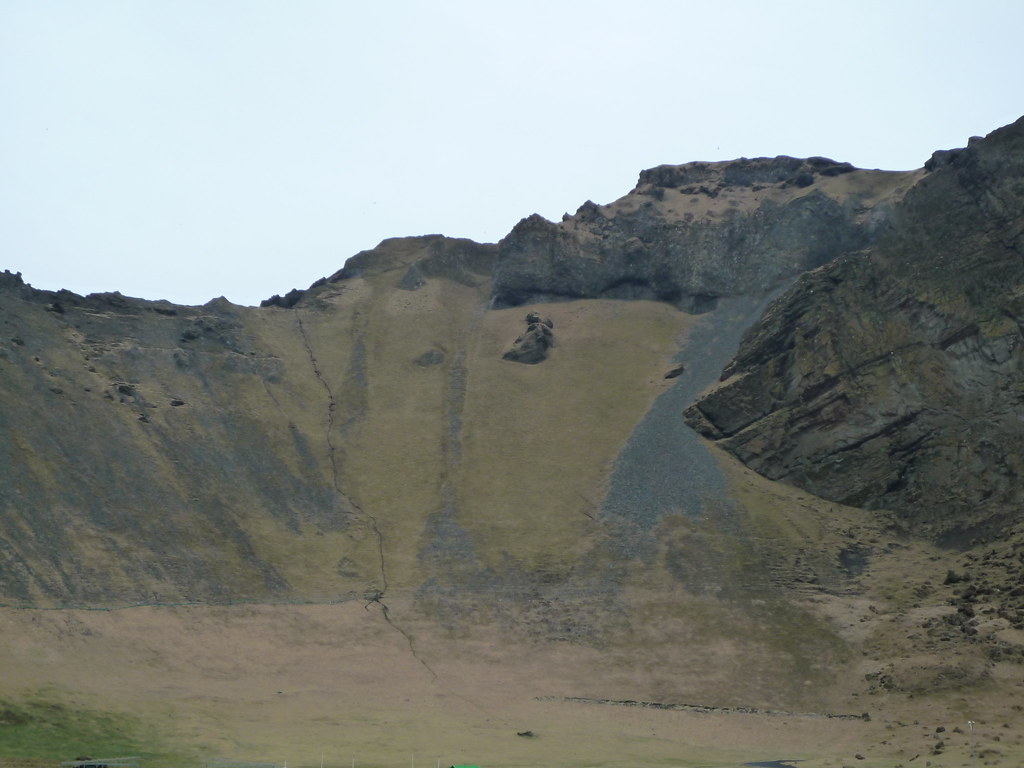
  Beyond that was the fairgrounds of the festival I mentioned, which lie at the base of precipitous cliffs, which, naturally, I walked up.


(If you look closely you can see the trail up, though I actually took a parallel one.)


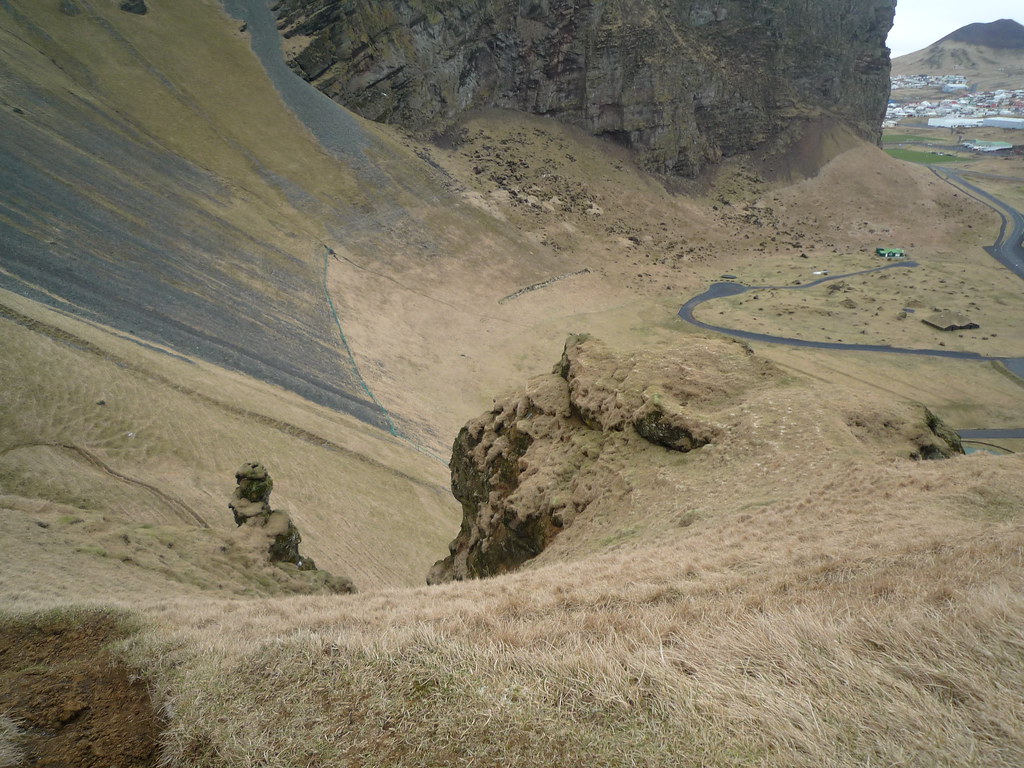
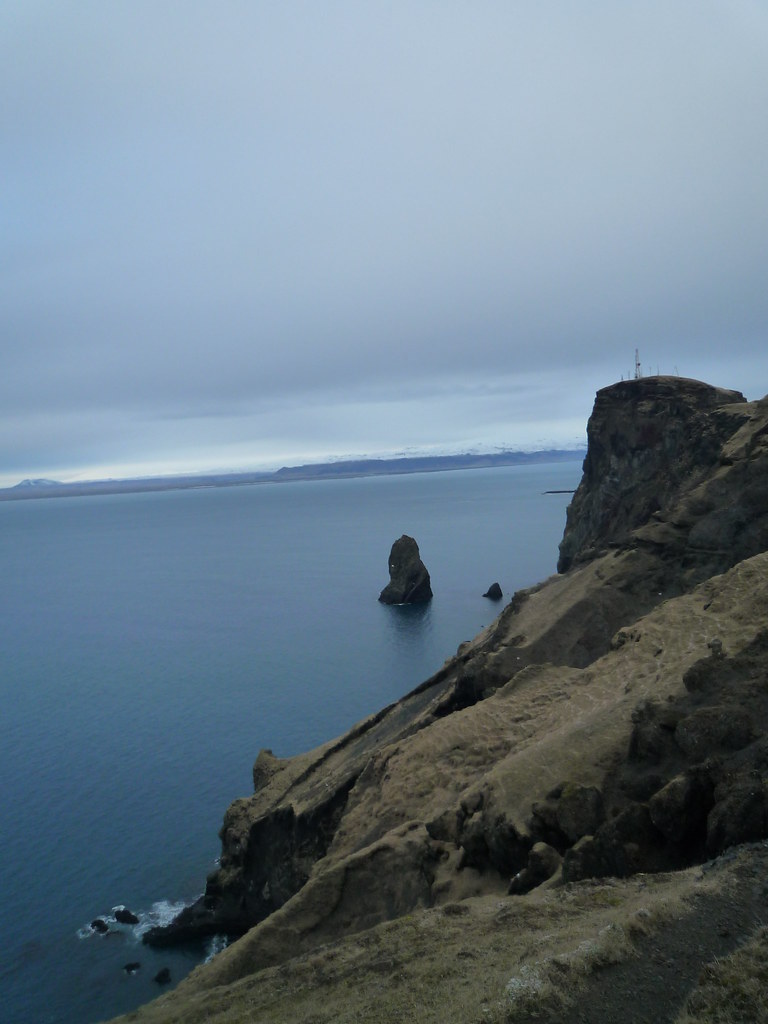
The views were breathtaking, and the vertigo I got switching between my camera and my eyes were even more so.
 The day before I had thought that Heimaey might be the location for Sigur Rós' Glósóli, the most beautiful music video I've ever seen and which still gives me goosebumps.


These cliffs made me think so even more, but after watching the video again it became clear that it was actually filmed on the mainland of Iceland. It turns out that moss covered lava fields and imposing cliffs are actually fairly common in Iceland.

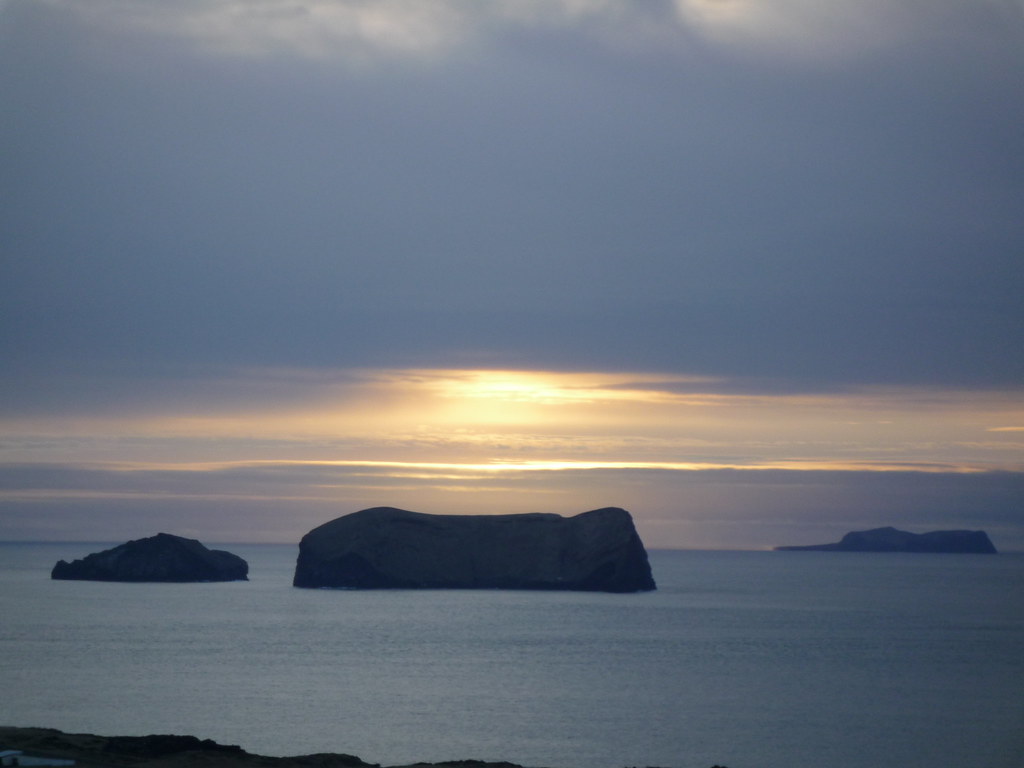
I made my way along the narrow path and was actually not the only one out on the heights on that blustery day. I went the wrong way around a rock outcropping, though, hoping to get a better view of the festival grounds, and... well, let's put it this way: I was honestly afraid for my life at a couple points scrambling across scree fields with nothing to stop me from rolling down the embankment for hundreds of feet. My foolhardy choice did let me see these icicles on an overhanging section of the outcropping and that view I was hoping for with another awe inspiring Icelandic sunset in the background.


I smelled sulfur in the air as I trudged on. It took me some time to pick my way across the jagged hills and back down to town, so I missed the ferry. So it goes.


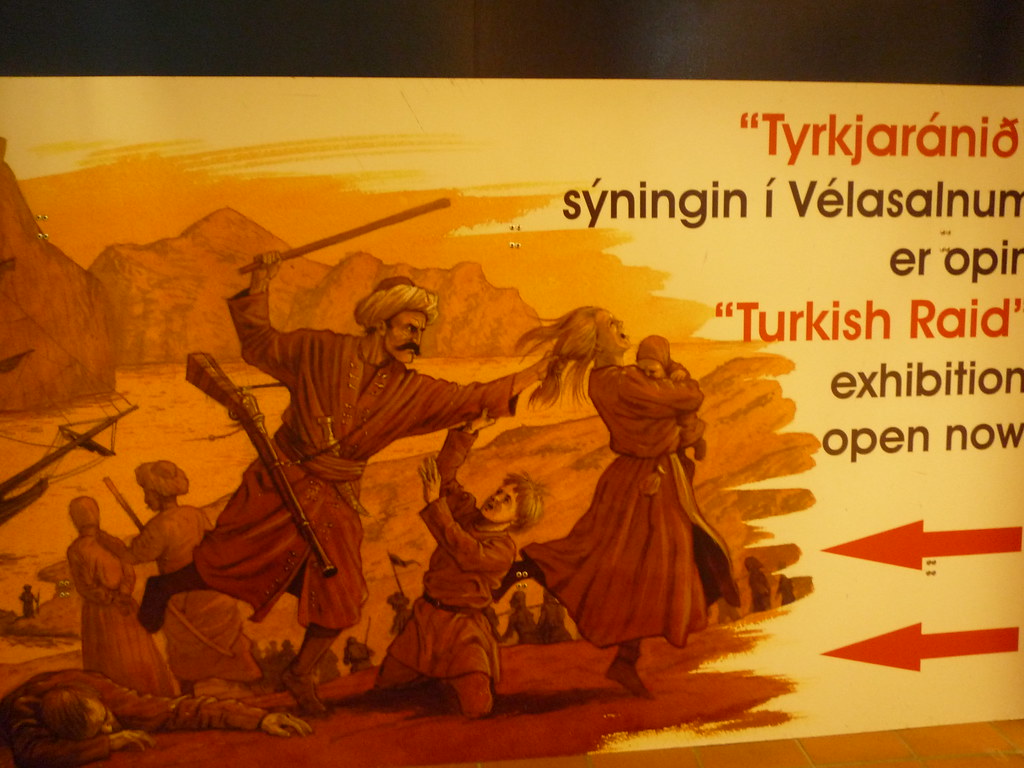
On the first of February I slept in then went to the town's museum, which was mostly about the pirate attack of 1627 and what happened to those taken, especially those who managed to travel back to Iceland from the far end of the Mediterranean (the pirates were mistakenly thought to be Turkish but were actually Algerian).

.

I made my own journey back along the ferry and bus to Reykjavik.

Heimaey Day 2

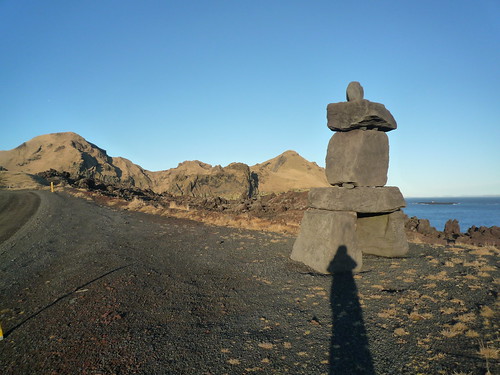
I decided to walk the entire perimeter of the island on my second day. I began by passing the house graveyard again and continuing on around the East coast where the ground is considerably younger than my parents. About a square mile of land was added by the '73 eruption, and it is just beginning to be developed. As I looked at new construction to one side of me and the impressively eroded cliffs of the islands on the other, I was amused by the length of my noonday shadow:


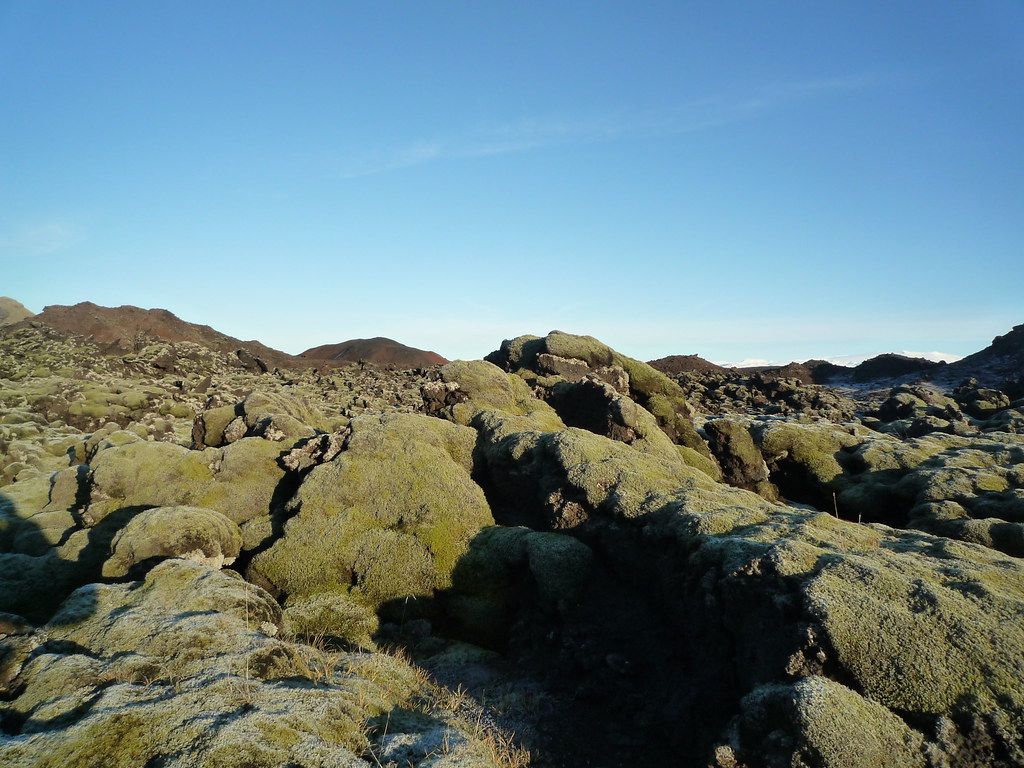
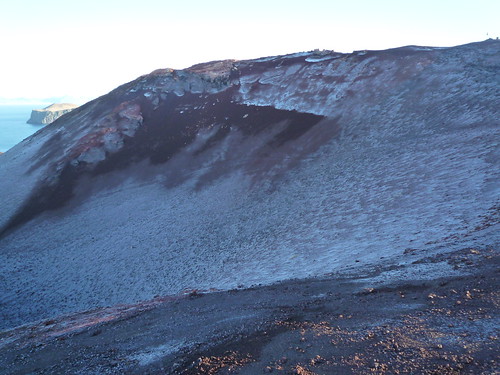
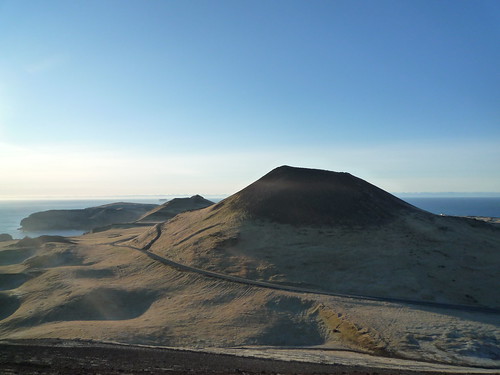
I cut inland and scrambled up hillsides and across fields of beautiful moss (and frost) covered lava formations to reach Eldfell, the volcano that caused all the trouble for the islanders.


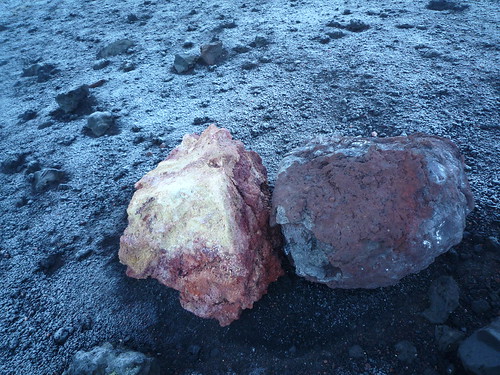
Eldfell was was actually still hot. Lonely Planet talked about the locals still using it to bake bread, though I saw no evidence of such. I did, however, see steam coming from a vent in the crater and many spots where the frost had melted from the heat emanating from below.


The rocks near the mountain still look like they are flaming:


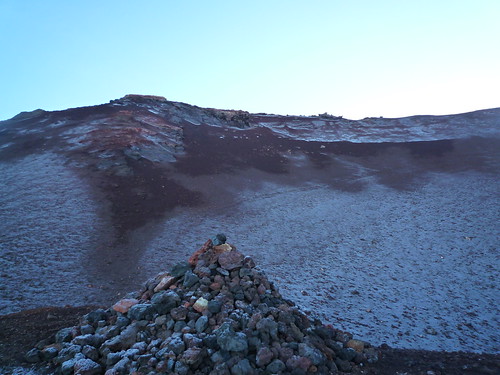
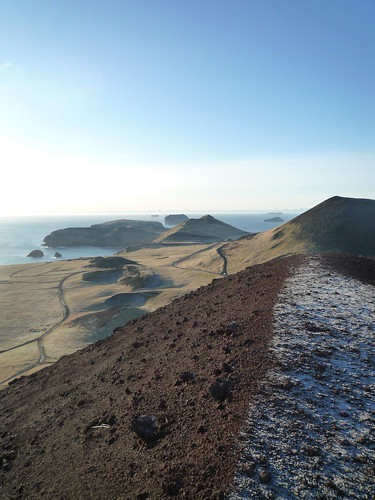
None of this, of course, kept me from walking in the crater or along the ridge of the side of the cone that didn't collapse. I ascended along the line between the frost covered interior of the mountain and the sunlit slope.


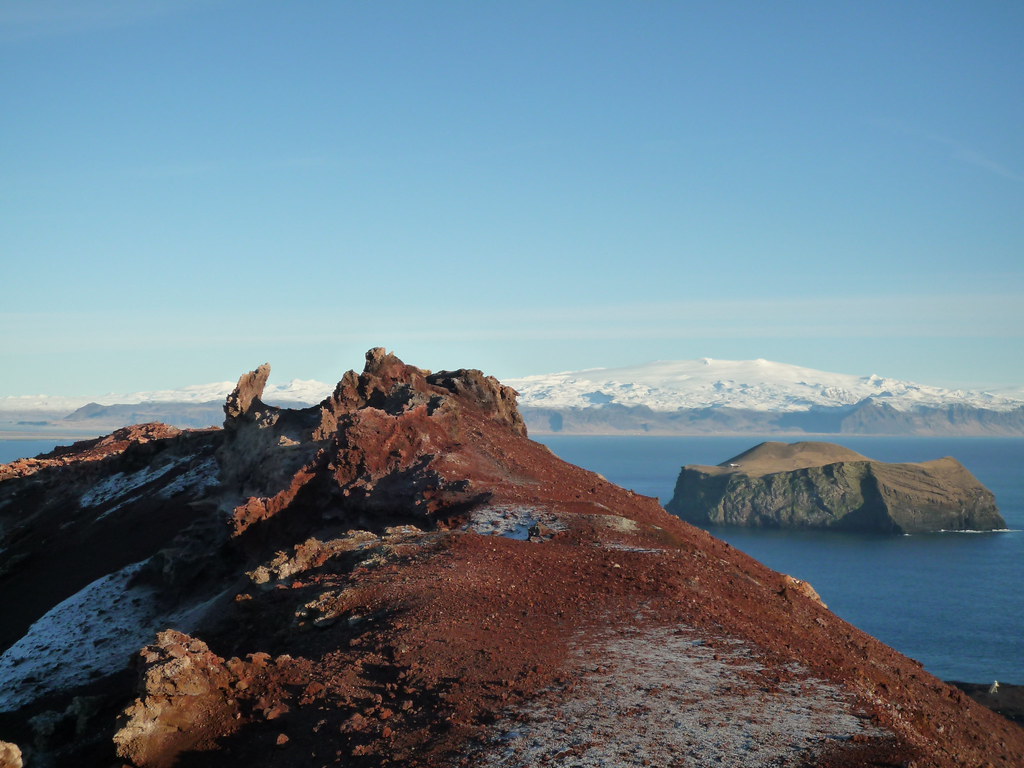
The top gave a wonderful view of the whole island as well as other islands and the glaciated mountains across the water. I could clearly see the new land, the town, and Helgafell, the island's original volcano.


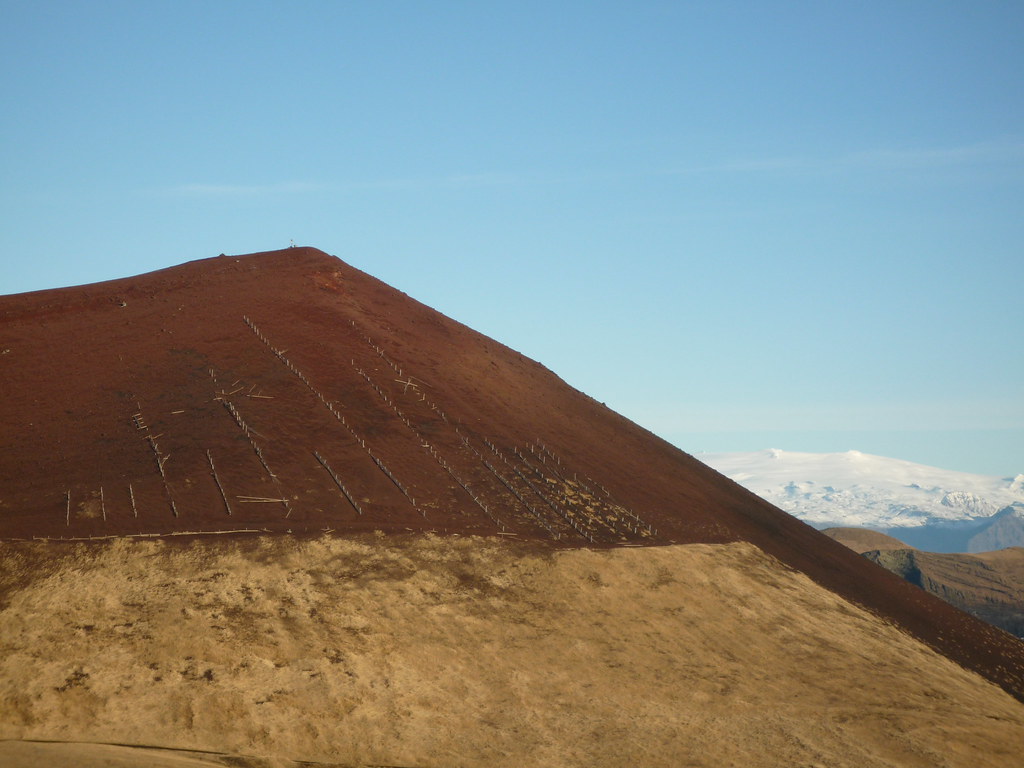
I descended alongside some wonderfully weathered fences down to where grass had been planted to keep the new land from eroding too badly. At about that point I realize I shouldn't be walking there because I was contributing to erosion myself. When I had the chance to look back the line between the grass and the top of the cindercone is striking. I remember thinking to myself "oh, I get it: the fence is to keep the grass out," and then laughing to myself. Traveling alone makes one slightly mad...


At the volcano's base, I saw a pile of bread laying on the frosty grass, and I had seen a similar pile in the house graveyard the day before. It would be perfectly reasonable to assume that it was left there because someone accidentally dropped it or happened to be standing there when they noticed it was stale. However, I prefer to believe that it was an offering, perhaps to the huldufólk -- hidden people or elves -- that are a part of Icelandic folklore. The average Icelandic person now typically doesn't believe in the hidden folk, but isn't willing to say that they don't exist either. The locals I talked to thought it was probably a coincidence, and they are probably right, though that isn't as fun. In any case, I moved on along the visible ridge of where the island split open From Eldfell on South. On the way I saw a bathtub with quite the story behind it. A fishing vessel sank off the island's coast, and one of the crew managed to swim the six kilometers to shore, where, exhausted and thirsty, he found this tub left to collect water for sheep, broke the ice on its surface, drank, and thereby regained enough strength to keep walking across lava fields to the nearest house. For the full story check out the pictures (in case there just weren't enough in this post already).

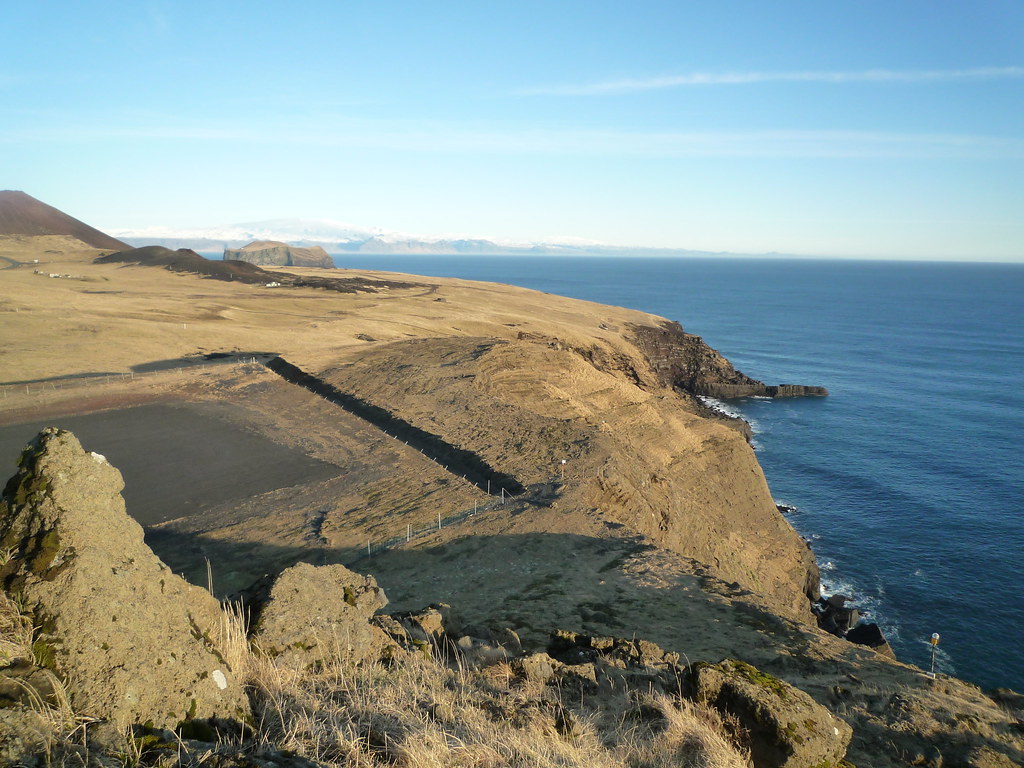
I wandered by some sheep ranches, and actually had to cut through a couple to go around the airport, which takes up a fairly big percentage of the tiny island. The runways are a little too close to the plumeting cliffs for my taste, but then again I was the one walking between the runway and said cliffs, so who am I to complain about safety?


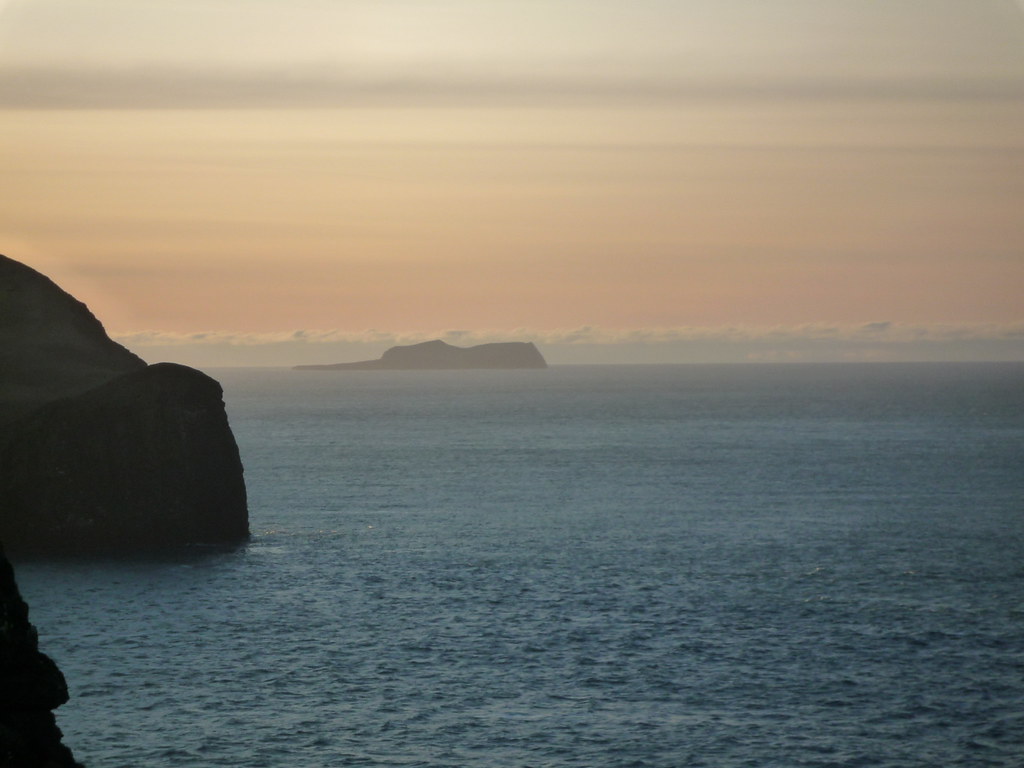
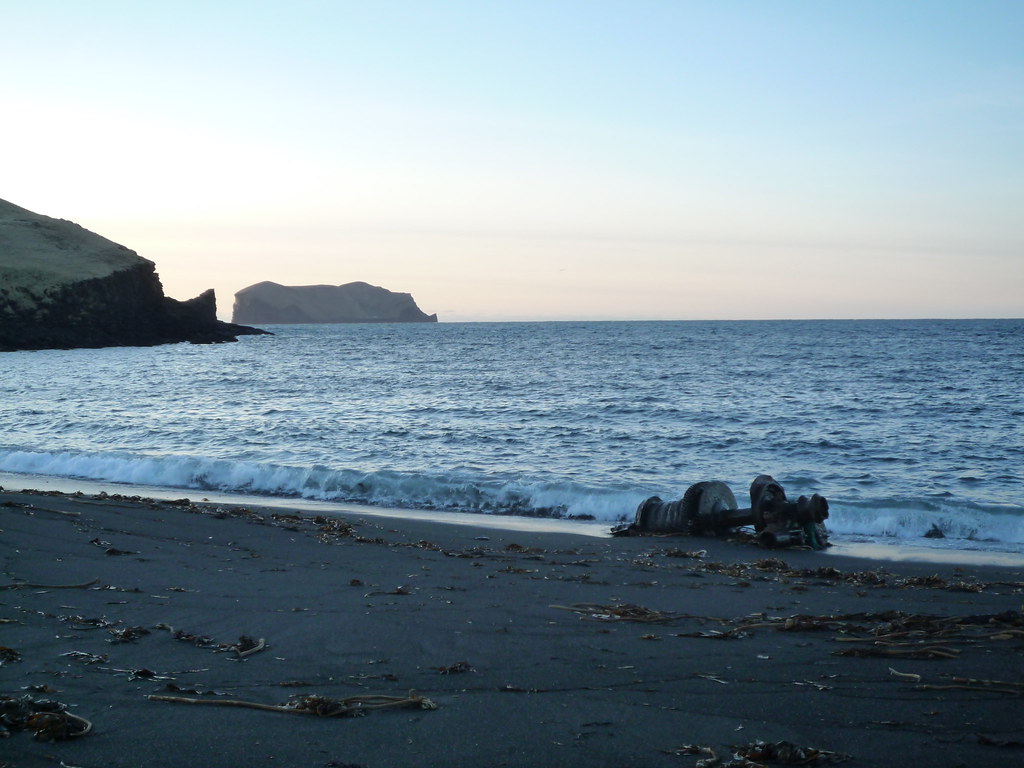
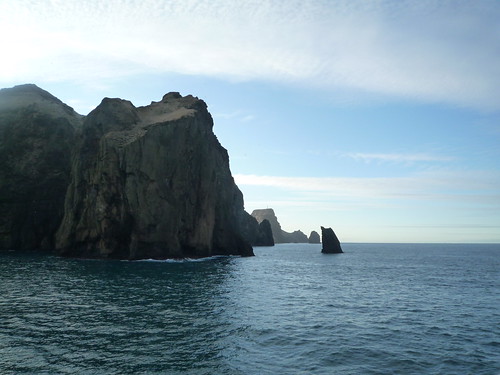
The walk across the narrow Southern part of Heimaey was windy, which in combination with the presence of steep cliffs made for an interesting jaunt. I took a quick stop at Pirate Cove, where Algerian pirates landed and conquered the island, taking many prisoners back with them as slaves. The stone fort at the entrance to the bay was made to repel these same pirates, but the pirates captured some fishermen whose information let them avoid the defended area and land at this unprotected point. The land rose back up to steep cliffs again for the Southermost tip, where I went to get some pictures of Surtsey and other small Vestmannaeyjar islands.


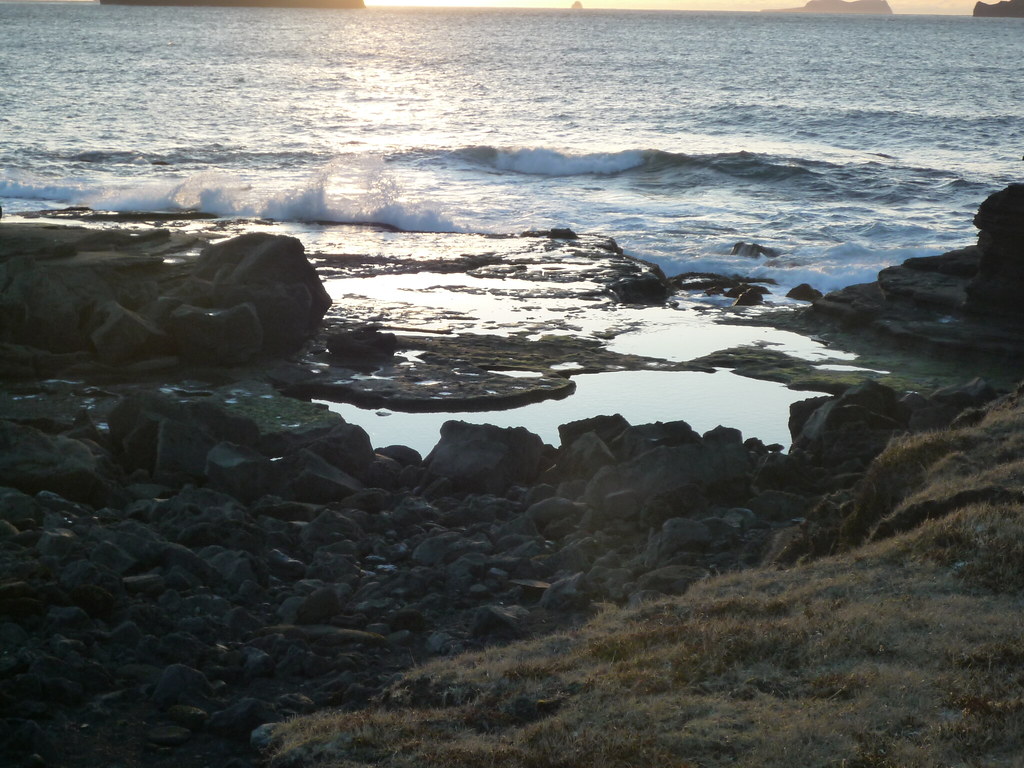
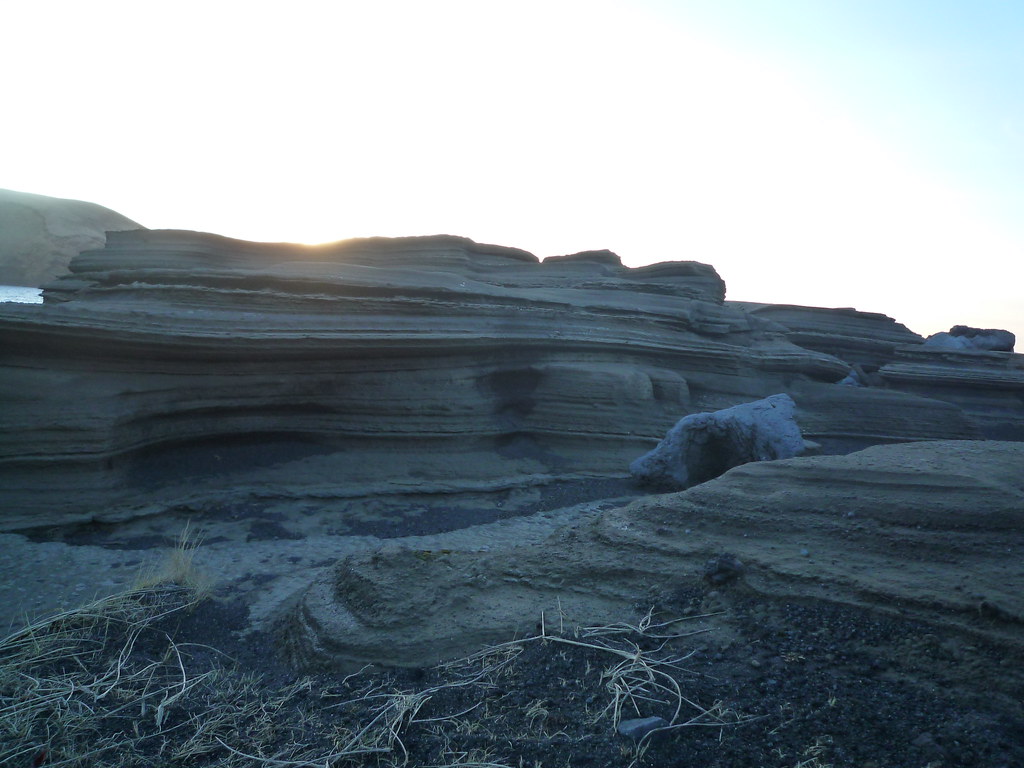
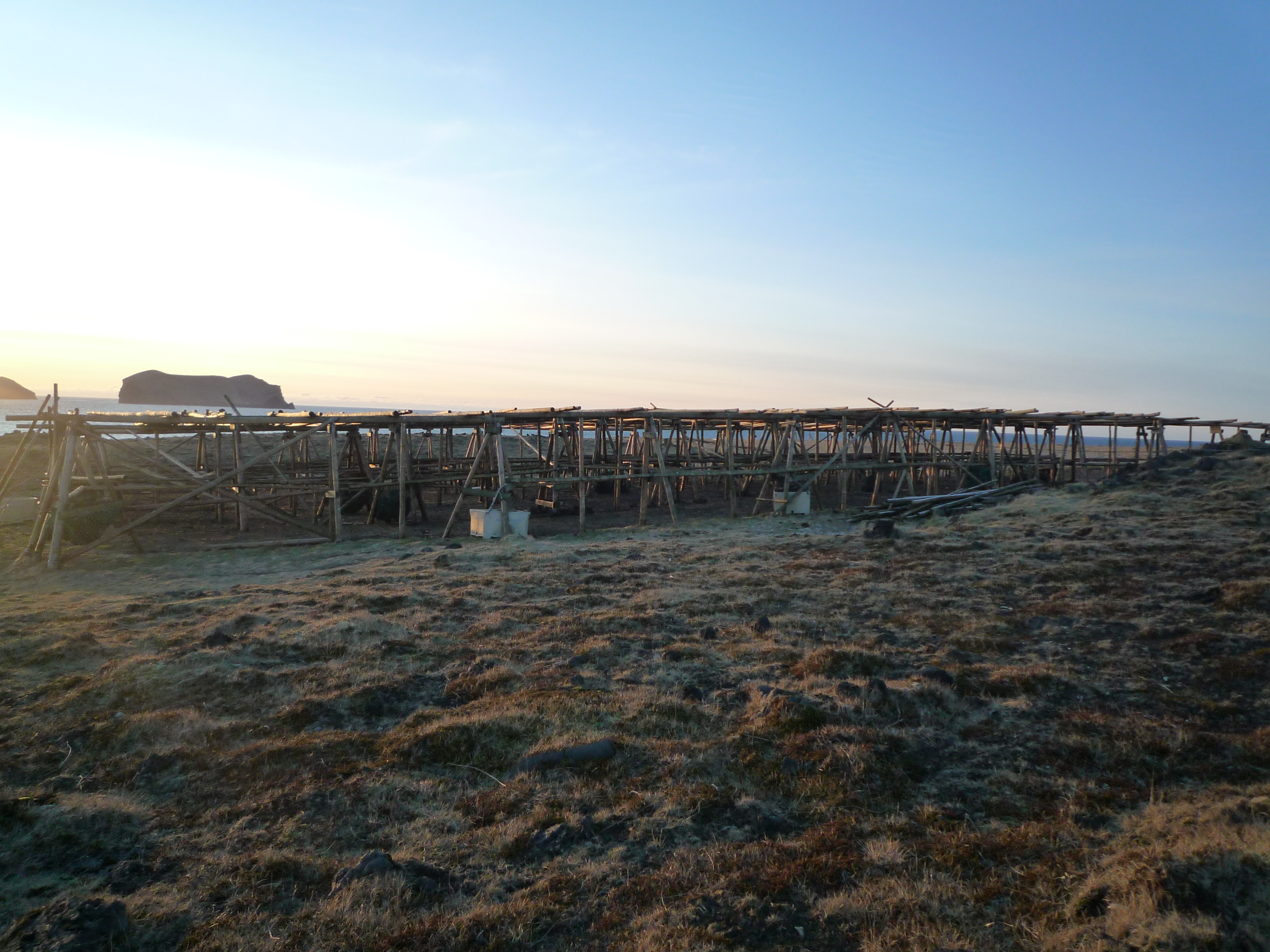
 I tread along sheep paths that were a bit too steep for my liking, especially with the strong winds, before heading back North. I found myself keeping pace just ahead of a man with a large camera who stopped to take (much better) pictures in pretty much the same places that I did. We walked by beaches, basalt columns, weirdly eroded volcanic rock, and nets full of rocks that had inexplicably been hung up on a wooden structure.


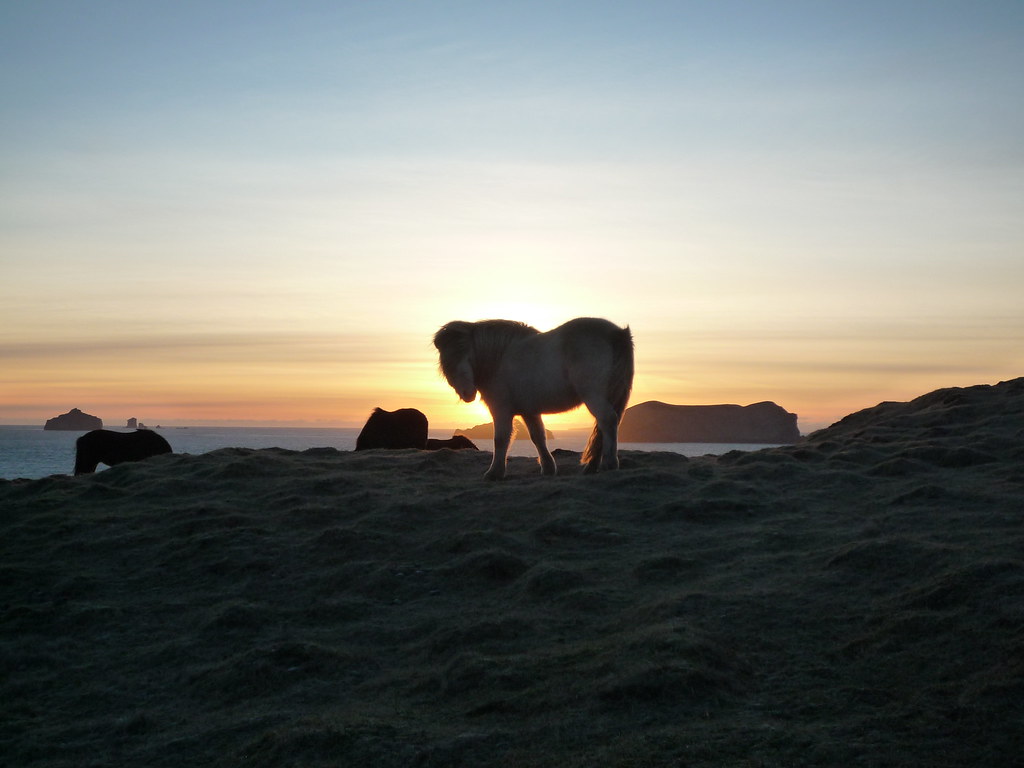
I stopped at one point, confused as to where the trail went next, and the man caught up with me and was kind enough to be my guide for the rest of my walk. The 60 year old had witnessed both the eruption of Surtsey and Eldfell and told me stories of hunting puffins on the islands we had just photographed. He also takes his photography pretty seriously and advised me of good angles to take, so I can thank him for this shot of Icelandic fuzzy horses: 


 He took me to his home, where I met his wife and young son. They were all incredibly generous hosts. His wife gave me hot chocolate and cookies w/ black licorice inside, while he showed pictures of the island. He had some wonderful shots from the cliffs above of the yearly festival that takes place on the island, which is supposed to get pretty wild with sex, inebriation, and rock and roll. It is apparently a rite of passage for Icelandic teens and temporarily doubles Haimaey's population. If I ever get back to Iceland in summer (which I'd love to do) I'll be sure to attend. As I left, he gave me his hat with an Icelandic logo on it as a keepsake, which I found rather touching. He offered to drive me back to the hostel, which I accepted mostly because I wanted to talk a little more (it's not exactly a long walk across town). In his car he had a stuffed puffin head as a rear mirror decoration. 

After we parted I had a succulent meal of monkfish and prawns in garlic butter. Monkfish may be horribly ugly, but they are as melt-in-your-mouth delicious as any lobster. 
Wednesday, November 3, 2010

Site changes

I felt it was about time for a new picture montage on the top bar. Here's the old one for posterity:


Also, a reminder that if you can figure out at least five of the quotes from the Babel Fish quotation challenge and email them to me then I will send you weird socks/ties/t-shirts/whatever from Korea.

Update: Wow, that new photo set looks pretty damned narcissistic in retrospect. Oh well. I guess having a blog all about yourself is already narcissistic, I might as well be open about it.

Thursday, October 28, 2010

Haimaey Day 1


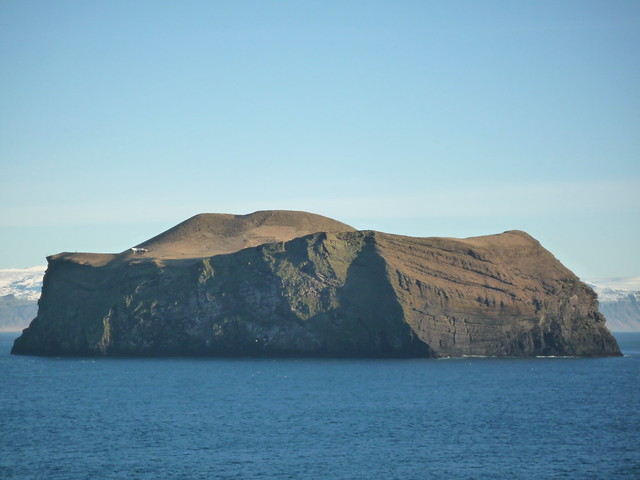
I ended up going to the bus station much earlier than necessary, just for the warmth. The bus pulled away as the sun rose spectacularly over the city (at 10am). I slept, read, and planned more of the trip on the bus and ferry rides to the Vestmannaeyjar islands. As we approached Haimaey, the largest island, I could see Surtsey and other little spires of rock rising out of the water. Surtsey is one of the most recent natural islands in the world. Fishermen saw it come smoking out of the deep in 1963. Named for a fire giant, it continuously erupted for nearly four years and has been gradually eroding away since. It has been studied by biologists to see how life colonizes new barren ground.
The birth of Surtsey pales in comparison to the awe inspiring eruption on Haemaey. I watched a documentary on the plane ride over (which I'm pretty sure I also saw as a child with my dad) about the sudden appearance of Eldfell, a new volcano, near the central crater of the island's main volcanic cone. Overnight on January 23, 1973, flat ground exploded up into a mountain, and a rent split the entire East end of the island asunder, spewing lava high into the air along the entire rift for days. The island was quickly evacuated, and thankfully no one was killed, but much of the town was destroyed. An unconventional volcanologist managed to convince those in charge to try to change the course of the lava flow, and remarkably it worked. They had to option to save either the town or the harbor, and the mayor said there wasn't any point to the fishing village without a harbor, so they pumped in sea water to cool the lava enough to redirect its flow. This was the first time that humans have successfully intervened in a volcanic eruption. Not only was the harbor saved, but the new square mile of land off the East end of the island actually makes it more protected.


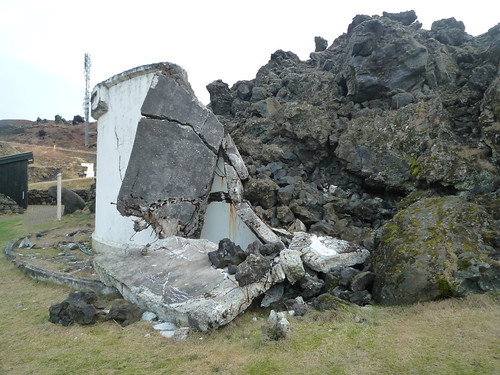
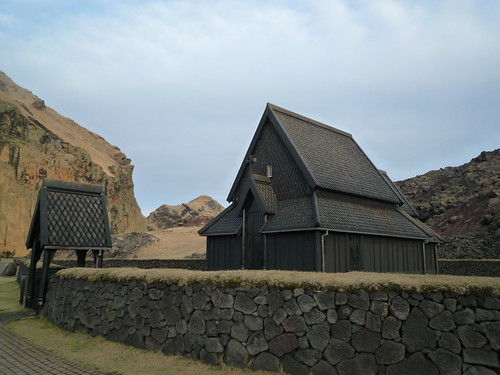
When I arrived on the island I took a quick walk out to where some cement water towers were half crushed by the lava flow. Just below the former water tanks was the island's oldest structure, a rock fort designed to defend the harbor against pirates (which didn't work out. More on that later). Nearby was a replica medieval stave church built in 2000 by Norwegians to honor 1000 years of Christianity in Iceland (you may recall from my adventures in Norway that I absolutely love the architecture of stave churches).


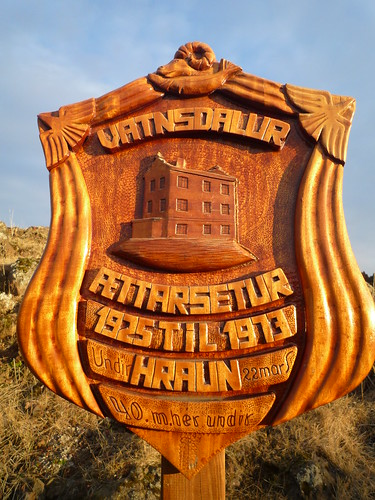
From there I walked on some rather new ground to the house graveyard. Here people have put up markers of the houses that they have lost, often also marking the depth under the lava where the house once was:


Yes, that's right. It says the house is 40 meters underground. I wandered the area for a while looking at lava formations and house markers, as well as a couple collapsed homes at the edge of the lava flow. I then checked into the local hostel and ate at the neighboring restaurant where I had puffin in a berry sauce. Puffin, in case you are curious, tastes like a cross between duck and mutton (i.e. it is surprisingly gamy for a bird. It was good though).

More pictures here.

Friday, October 15, 2010

Mindfulness and eating


My dinner at Sjávarkjallarinn as a visa commercial:

-Sunflower seed encrusted dark bread with mango sauce and crushed peanuts: free


-Slowly cooked salmon with melon salsa, lime jam, and a lime cracker: free


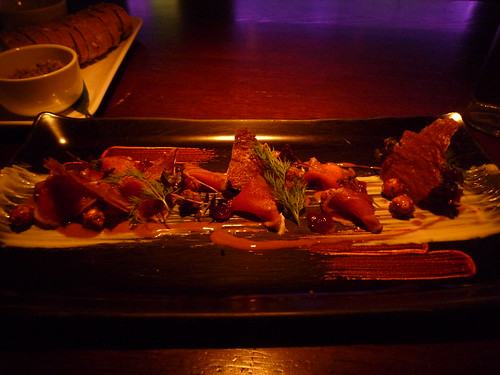
-reindeer carrpacio with cream cheese, cherry jelly, hazelnuts, balsamic cherry glaze sauce and beer oatmeal crackers: 2900 Icelandic Kroner ($23)


-Salmon with garlic potatomash, carrot purre, and asparagus; tuna with a purple potatomash rolled in mixed nuts and zeshuan pepper whipped cream; blue ling with smoked haddock and turmerick mash and artichoke purre; salted cod with peach purre, polenta, and miso foam: 4900 ISK ($38)


-Gianduja chocolate cake with cherry filling, cherries in syrup, pecan crumble, and cherryblossom icecream: 1900 ISK ($15)


-generous (by Icelandic standards) tip for excellent service from a beautiful waitress indulgent enough to write down all of the descriptions she verbalized: 1500 ISK ($12)


-insight into the nature of experience: priceless


I realize now that I had approached the gourmet food experience in entirely the wrong way up until this dinner, as epitomized by my annoyance at the price to quantity and quality disparity the night before. I had always evaluated food by how much good food you could get for how little money. This night, however, I decided to forget price entirely and simply order whatever looked good. In doing so I realized why gourmet food is so delicious. It isn't really the better ingredients, the expertise put into it, the presentation, the atmosphere, the service, etc. What gourmet meals really do is to get you to think that your meal is worth the outlandish price you are paying. I always did this backwards: I tasted the food and then tried to evaluate what it was worth. The better way is to decide that the food is worth what you are paying for it (or more) and then be determined to get that much pleasure out of it. If you think every mouthful of the meal you are eating is worth as much as an entire meal at another restaurant you don't just wolf down your food and you don't half pay attention to it while you watch TV or listen to your dinner companions or think about what you are going to do later that night; you give your full attention to the taste and texture of the forkful of food in your mouth.


My favorite idea from Buddhism is the concept of mindfulness, of truly experiencing the present as it happens and to completely paying attention to it. Life is so much richer and more enjoyable when you can get into a mindful mindset: you see profound beauty in the smallest details that you would never even notice otherwise. Gourmet food essentially is a foray into mindfulness for non-Buddhists. When I realized this I also realized that I don't need the gourmet price tag to experience the pleasure that a foodie gets from a gourmet meal. A fifty cent mango now brings me more joy than any meal could ever had given me before. The money I spent on this meal was a minuscule price to pay for this new perspective where every morsel, every sip of water, is priceless.

An introduction to Reykjavik


My flight from Halifax took me through Boston on to Iceland. I got a preview of things Icelandic with two documentaries: one about Sigur Ros and the other about the eruption Haimaey, both of which I will talk about more in a couple posts. I arrived at the Keflavik airport early in the morning on January twenty fifth. Of course, early in the morning is essentially dark when the sun rises at 10am. I took a rainy bus ride to Reykjavik, where I wandered around in the dark, eating fresh-baked bread and looking at the buildings and sculptures. I did a pretty good circuit of the main part of the city, scouting out many of the places I wanted to go once they opened. Gata is Icelandic for street, and Iceland once worshiped the Norse pantheon, resulting in the following street sign which my inner video game nerd found exceedingly satisfying:

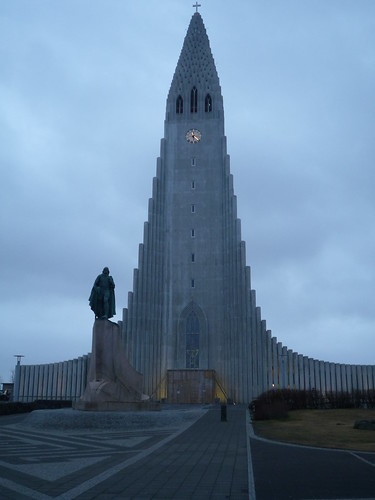
In the background you can see Reykjavik's most iconic building, Hallgrímskirkja (also seen at the beginning of the post as well as in many other of my all-too-many pictures). This church's design is meant to evoke basalt columns, which are prevalent both as a motif and as actual building materials in this uber-volcanic nation. Despite the streets in the area all being named for Norse gods (be still my heart), the church is Christian. Iceland converted to Christianity during a meeting of their assembly where they opted to leave the decision to a single man. More on that later. The worship of the Norse pantheon has actually started again, or perhaps resurfaced from quiet continuation as they claim, though sadly I wasn't able to figure out where exactly their temple was.
During business hours I went to all three branches of the National Gallery of Iceland, which conveniently was both free on Mondays and also one of few activities open on the first day of the week. Considering that Iceland has a population one fifth that of Daejeon's it has an amazing art scene. The music is pretty well known internationally, or at least Björk and Sigur Ros are. One of my new favorites is Emiliana Torrini. The visual arts are well represented too, which is what was on display in these museums. My favorite artist, Anastasia Ax, turned out to be Swedish and was on display as part of an exhibit of Nordic winners of the Carnegie Art Award. The wreckage of her performance piece and the video of it were gripping (as you can see for yourself on her myspace page). I was inspired to write this short story afterward. Other museum highlights were listening to cello and bassoon provide appropriately haunting music for the viewing of the paintings of Ásgrimur Jónsson and Jóhannes Kjarval, and seeing weird contemporary works painted onto the walls. I should note that these highlights were at different branches across town and that the music was in the National Gallery. I only got to see the sculpture garden outside the third branch since it was closed for the season.

After the museums closed I walked the five kilometers out to the area around the cheaper of the two city hostels. A recent trend in Iceland is to serve gourmet food made from traditional Icelandic ingredients. I decided to try this out at a restaurant called Vox (whose name inevitably made me think of the Reed organization with the same name that kept the dorms stocked with condoms, etc). I balked at the prices, so instead of getting what I really wanted I ordered a lamb soup that I still felt was overpriced for what I got. From there I went and checked in at the hostel (where I declined to smoke hash with my roommate) and went to the neighboring Laugardalslaug hot springs and swimming pool. I enjoyed sitting in the hot water with the locals as light rain fell upon us.


The following day I struck out early for Perlan, a former water treatment plant that houses the saga museum. Sagas are Icelandic tales of old, about the vikings who first colonized the island and of their early descendants. These tomes are not structured as we now expect stories to be with a beginning middle climax and end. Instead they just relate the events as they supposedly happened, often skipping to the juicy bits by saying "and then nothing much happened for a while" as a form of ellipses. Perlan features statues molded from local citizens and are remarkably lifelike. They even went so far as to sew individual hairs into what are essentially life-like masks and bodysuits. The statues depict various characters of legend and history in the saga period, roughly 1000 years ago. Notable figures include an older woman warrior who put a sword to her naked breast to freak out her enemies, a woman burned as a witch, and the aforementioned guy who decided on Iceland's official religion. The roof of Perlan has been converted to have a nice glass dome that houses an expensive restaurant (where I surreptitiously scrounged a bit) with great views over the city. The formerly-water-filled tanks are on a high otherwise undeveloped hill overlooking the city. Outside the complex there are two artificial geysers, though they weren't going on the day I went. I wasn't too disappointed since I'd be seeing the real thing soon enough.

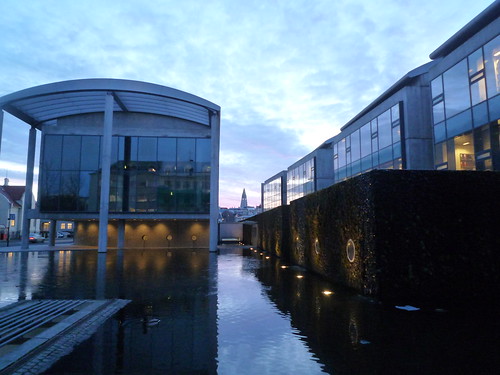
From there I walked back to town past Tjörnin (literally: the pond), the small lake in the historical center of the city. On the lake's shore lies the city hall, Ráðhús Reykjavíkur. Lonely planet claims that everyone either loves or hates the postmodern design, but I found myself ambivalent. I didn't find the design particularly amazing, but it has its good points. I especially liked the rear entrance by way of a stairwell straight down into a pond, and how the glass and water reflect each other and the spectacular sunsets.

One nice thing about there only being six hours of daylight: you see every sunrise and sunset, both of which last for quite some time. However, I'm getting ahead of myself. During the daylight hours I also went to a museum with the unusual name of
Reykjavik 871+/- 2. It is named for the estimated date (including the margin of error) of construction of its contents, Reykjavik's oldest discovered building. The museum creatively uses holograms to project what the home would be like over the remains of the home itself, and explains in detail the all that archeologists have discovered through interesting interactive displays.

That night I dined at Sjávarkjallarinn, where I learned to understand gourmet. The meal was so exquisite that it is deserving of its own post.


I slept in the salvation army guesthouse which is right downtown and marginally cheaper than the distant city hostel. I was initially worried by jesus-heavy lobby, but it was totally fine otherwise. Before crashing for the evening, I went to an internet cafe (which I now think of as PC bongs after living in Korea and have to stop a minute to remember that we don't call them that in English). On Mark's recommendation I checked out Dragon Age, a video game that I now own and will rave about for hours if you let me (it's as much a super long choose-your-adventure movie as a video game, really).


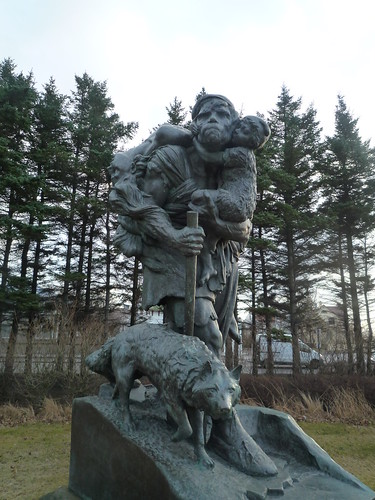
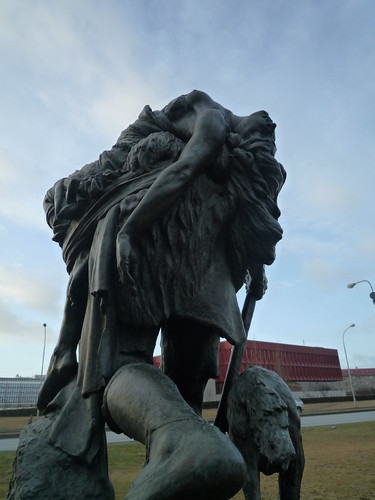
On Wednesday I indulged my European Hobo roots and visited the city graveyard. Just before entering the cemetery I saw the first of several castings I would see of The Outcast, a statue by Einar Jonsson, and one of my favorite artworks in the country.

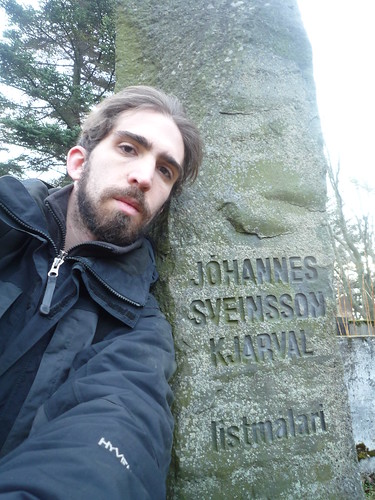
Inside I posed with the basalt headstone of the famed painter Jóhannes Kjarval.
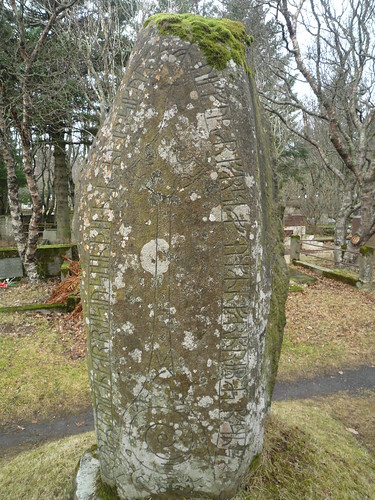
Basalt was quite a common stone to use in the cemetery. The hexagonal columns are both common in Iceland and rather striking looking, so I guess that isn't surprising. Basalt was used laid horizontally or standing vertically or as bookends on more traditional headstones. I also thoroughly enjoyed the grave of an archivist and historian who had runes carved over his tombstone:
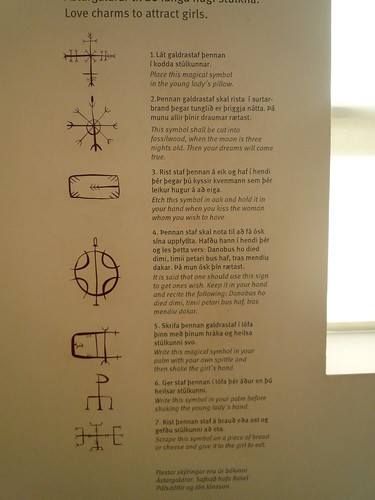
I proceeded across the street to the National Museum. Highlights include a remarkably well-preserved and intricately carved 13th century church door, burials complete with hordes, collections of viking weapons, and runic love charms to attract girls:
That evening I put my new-found appreciation of gourmet food to good use by savoring some tandoori salmon. I then walked out and 'slept' out by Perlon. Sadly, sleeping outside without a sleeping bag or tent or anything in Iceland in winter was about as successful as one would expect. I found a comfortable and secluded place under some trees with a rock ledge provided a wind block, but I still ended up getting up frequently to do push-ups, sit-ups, to run in place, or other physical activities that warmed me up. I learned to tuck my towel into my coat along my back to provide another layer between me and the cold ground, but it was still just too damned cold to sleep. I was able to catch some rest on the bus and ferry rides to Heimaey the next day.

Monday, October 11, 2010

Noncronological update


By request, here's a brief update on my life in the present before I dive into the my trip to Iceland and Britain. I'm now in Bundang, South Korea, which is South-Southeast of Seoul. It's on the subway system but pretty far out of town really. I've been absurdly busy with work; I usually spent twelve or thirteen hours there plus another hour's worth of grading that I take home. I doubt I'll have much time for extracurricular activities, which is a shame since continuing with Taekwondo was one of my motivations for coming back to Korea. I am enjoying the teaching for the most part, and I think I'm a much better teacher this time around, which is a good feeling. I've gone out on a few adventures and have a few more lined up, but I'll get to those when I catch up with my other travels. We now resume our regularly (ha) scheduled blogging.

  © Blogger template 'Minimalist G' by Ourblogtemplates.com 2008

Back to TOP