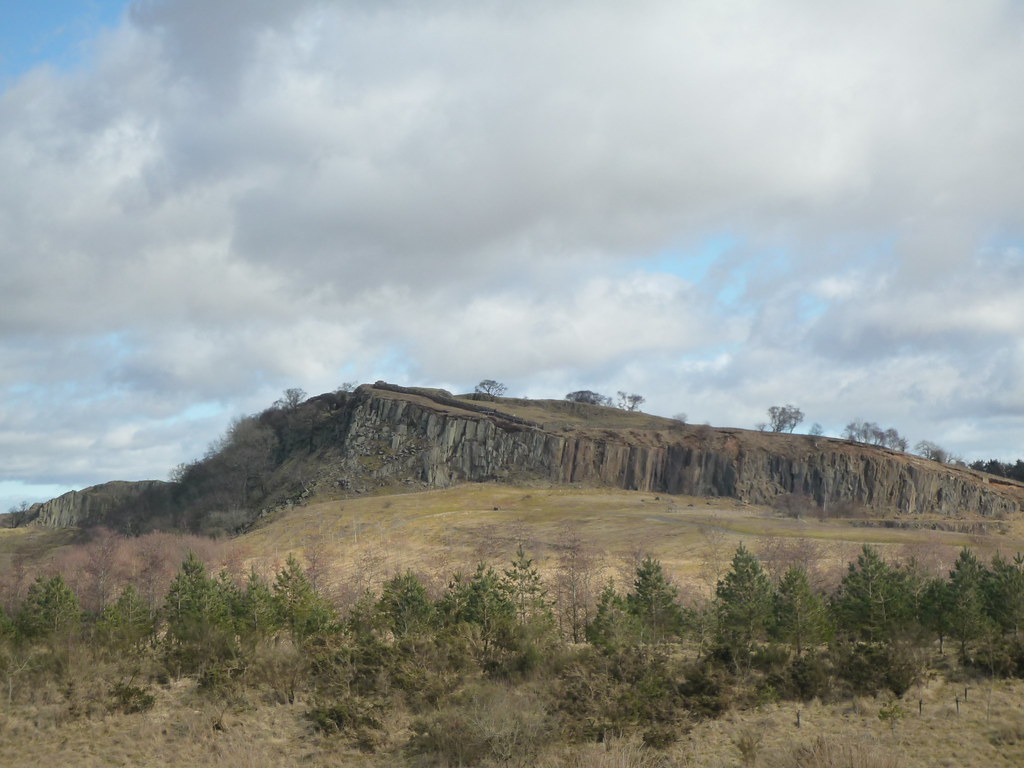
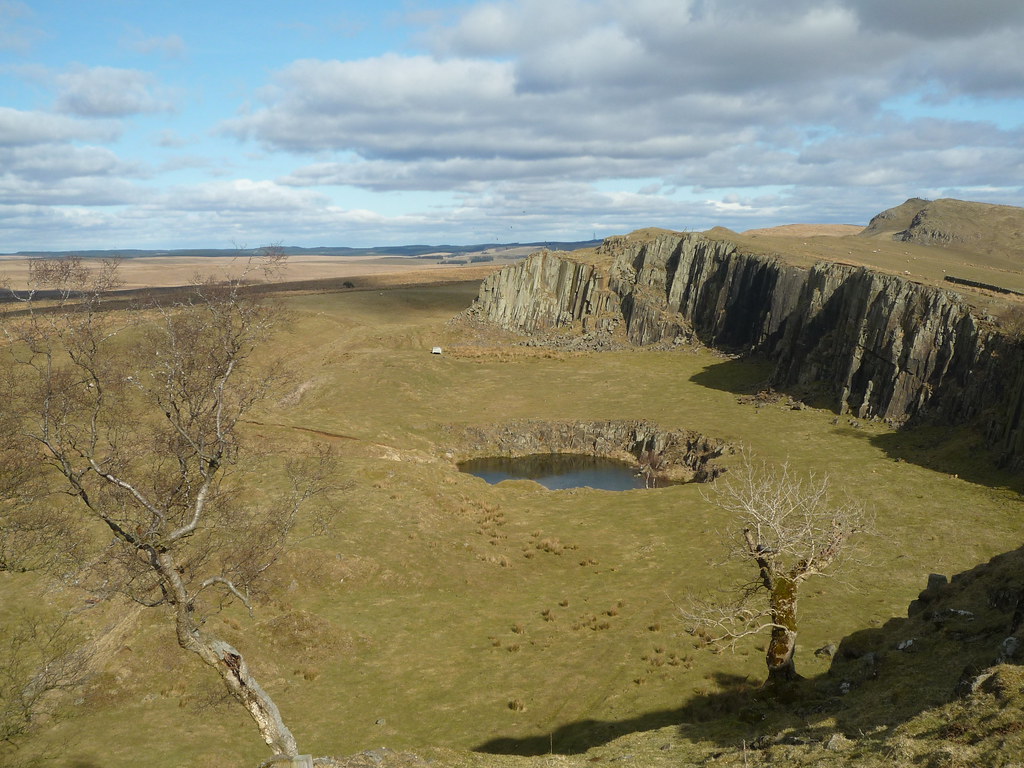
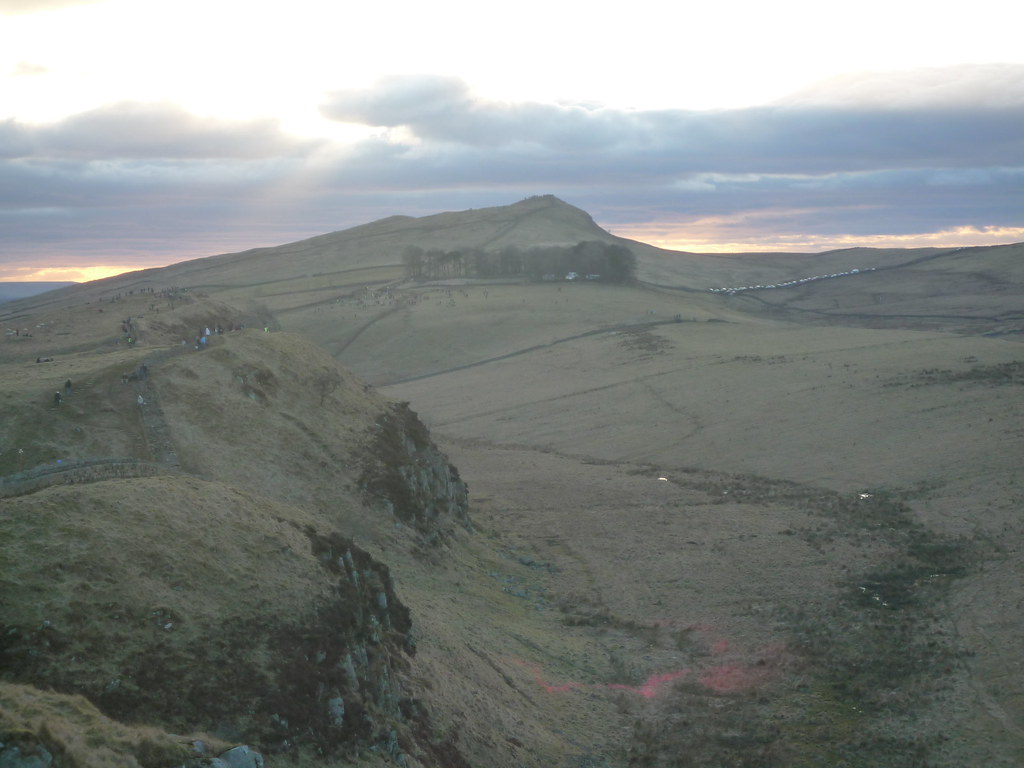
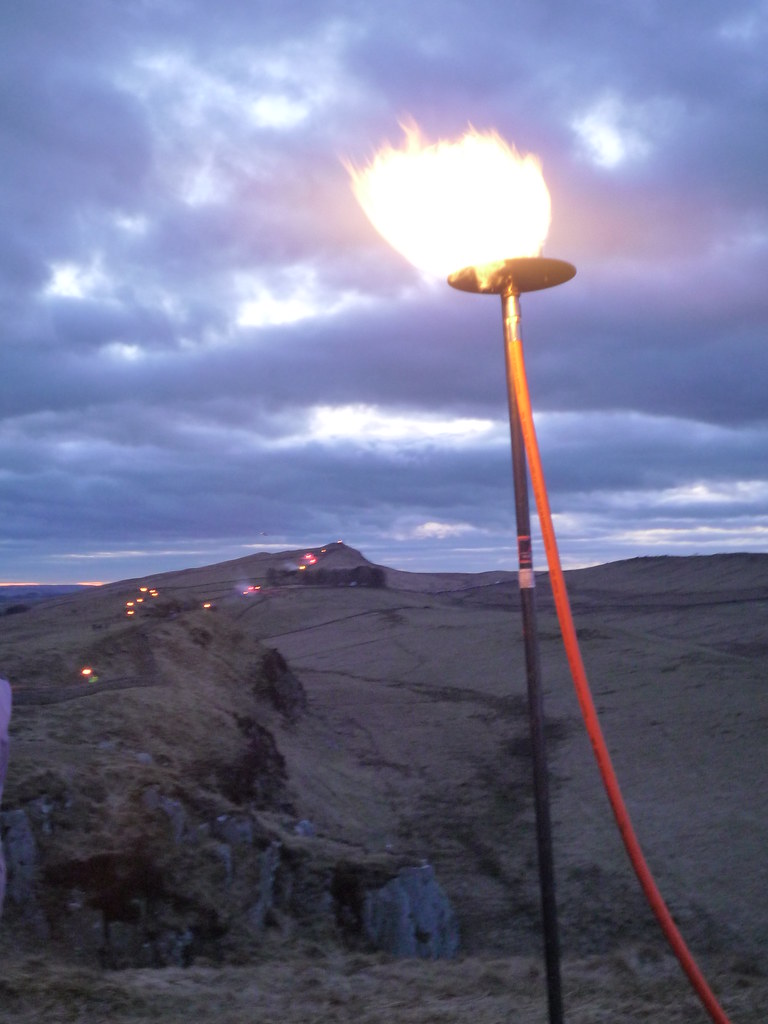
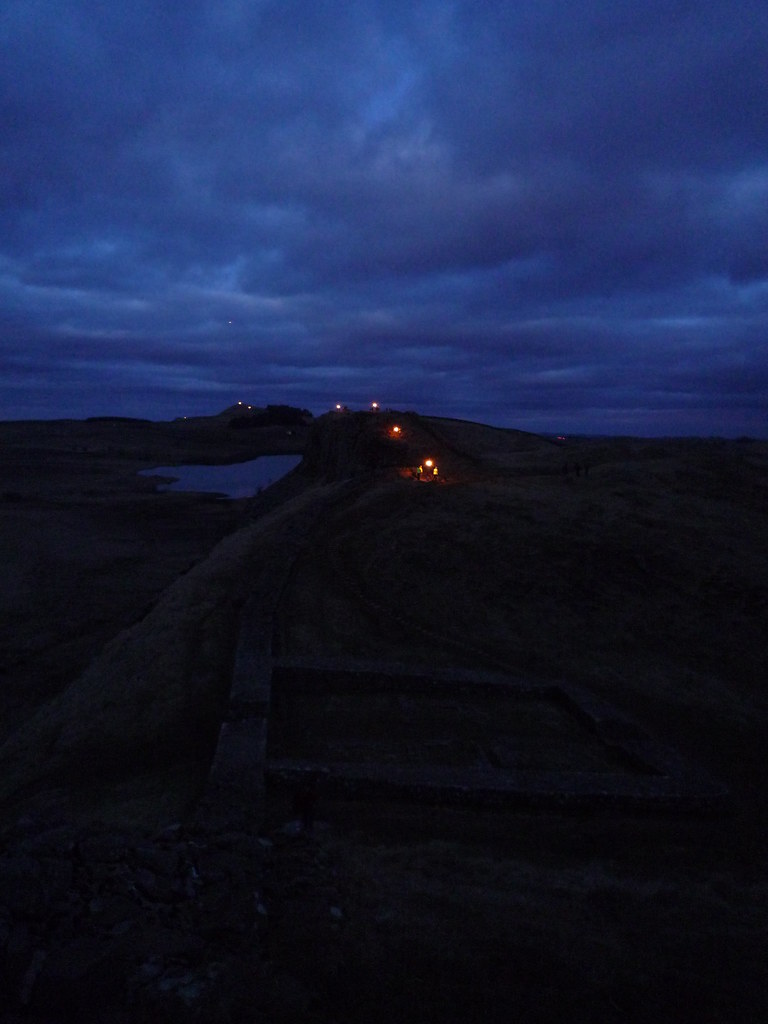
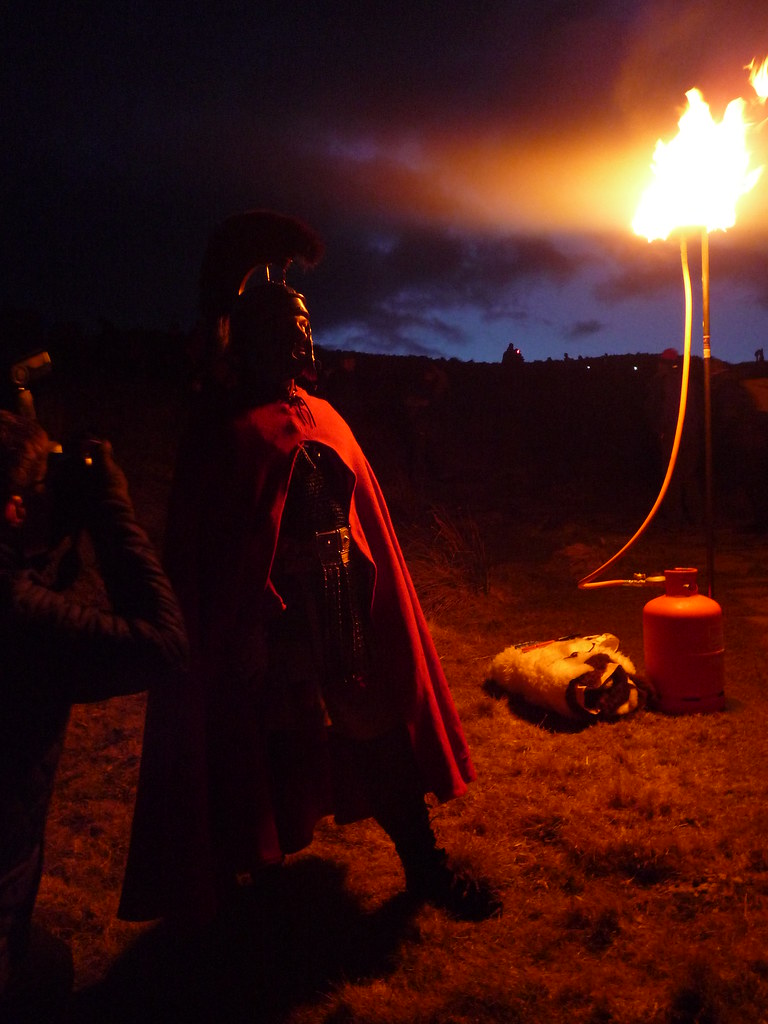
I happened to be in Britain with good timing. I was able to make it to the event Illuminating Hadrian's Wall, a celebration of the 1600th anniversary of the end of Roman rule in Britain. Large gas torches were set up every 250 meters, and these 500 torches would light up like signal fires, spreading from Wallsend, on the east coast near Newcastle, all the way to the west coast.
I started and ended my Hadrian's Wall adventure in Carlisle. This whole area suffered a dearth of couchsurf hosts and hostels, so I sought out a place to spend the night outdoors. I found a fairly secluded place at the base of the castle wall around back. Judging from the broken bottles I swept away with my foot, more traditional hobos had slept there before this travel hobo. However, like
the night spent out in Reykjavik, 'slept' isn't really the right term for how I spent the night. I practiced my Taekwondo forms and exercised a lot, and there was some time lying down before the cold of the ground would seep into my very bones and I would need to get up and run around again. Of course, after doing sprints it is hard to calm down enough to sleep before the heat dissipates. I was quite happy to see the sun rise, and I definitely got an early start, taking the first bus to Haltwhistle. The bicycle rental place didn't seem to exist, at least not during that season, so I walked towards the Roman barrier and fort.
First, though, I had to admire this sign:
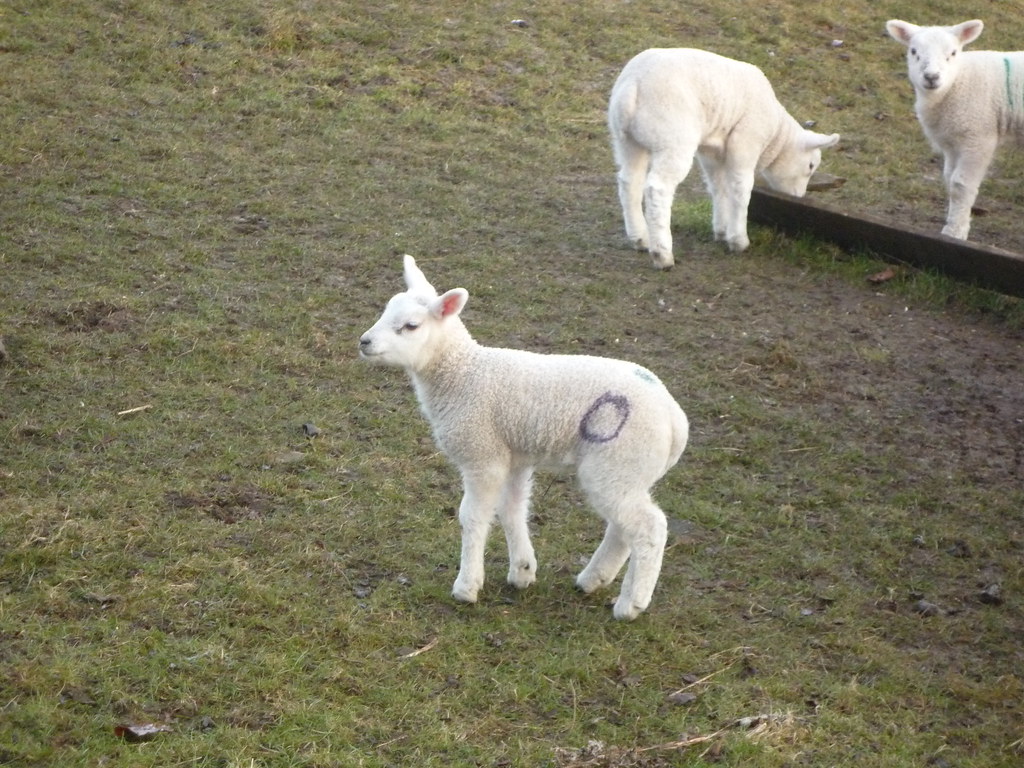
It was the season for lambs to be wandering about cutely.
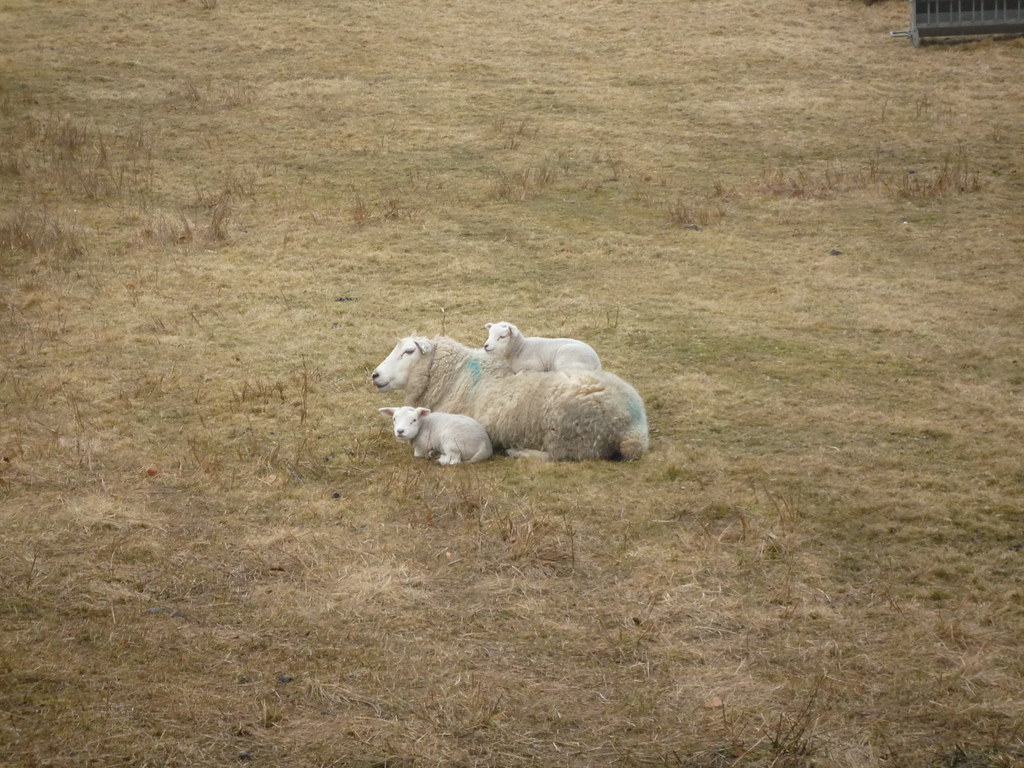
Or sitting on their mother's back:
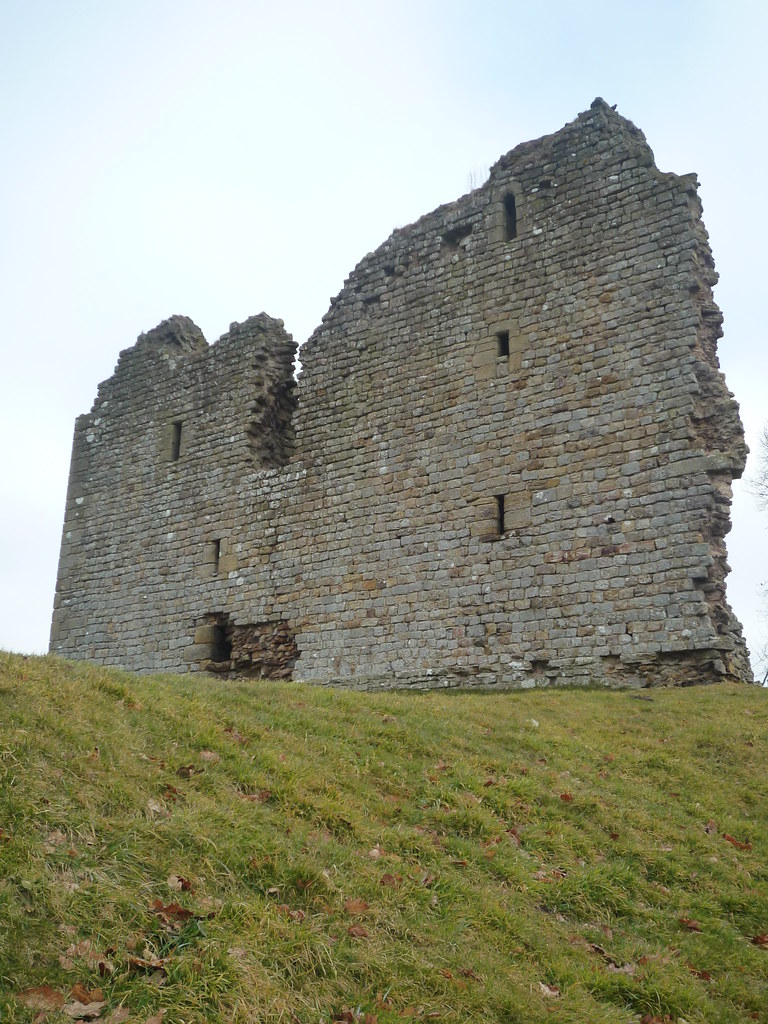
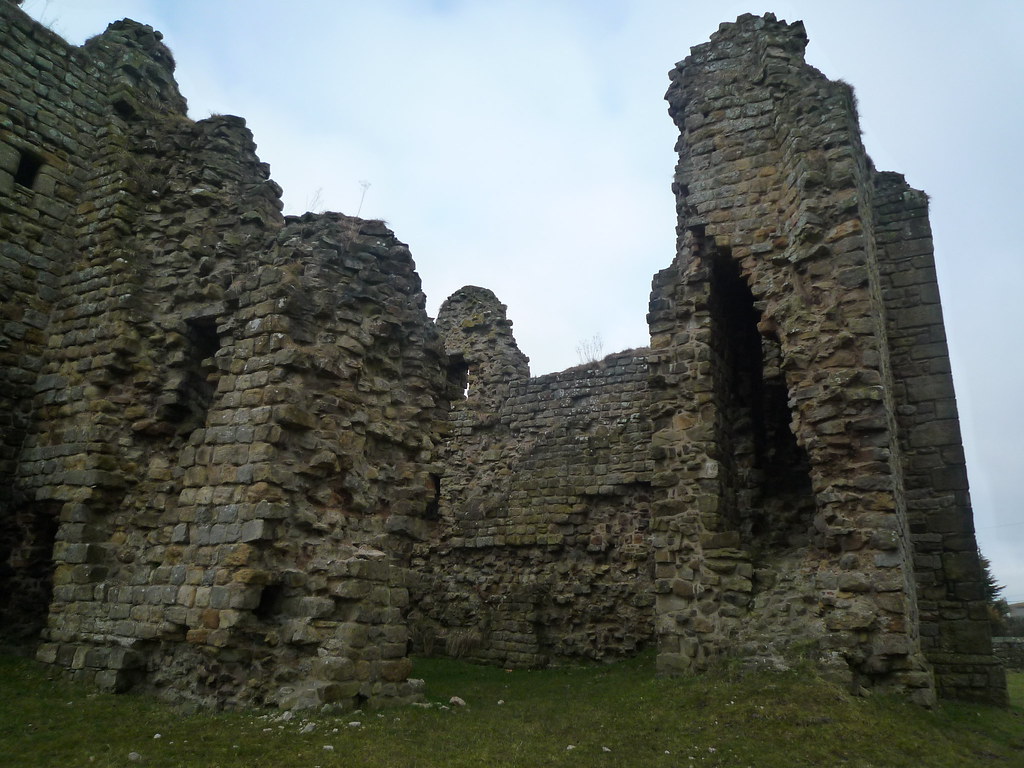
I stumbled upon Thirlwall Castle, or what little is left of it. Though I normally love castles, I don't approve of stealing from Roman ruins to build them.
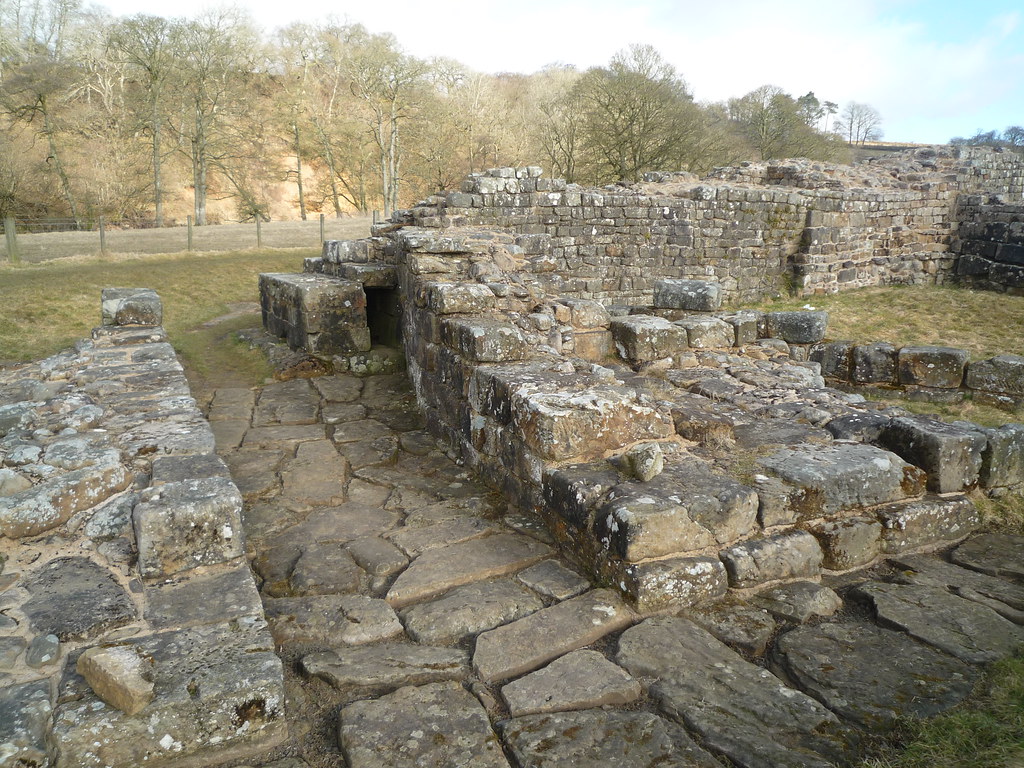
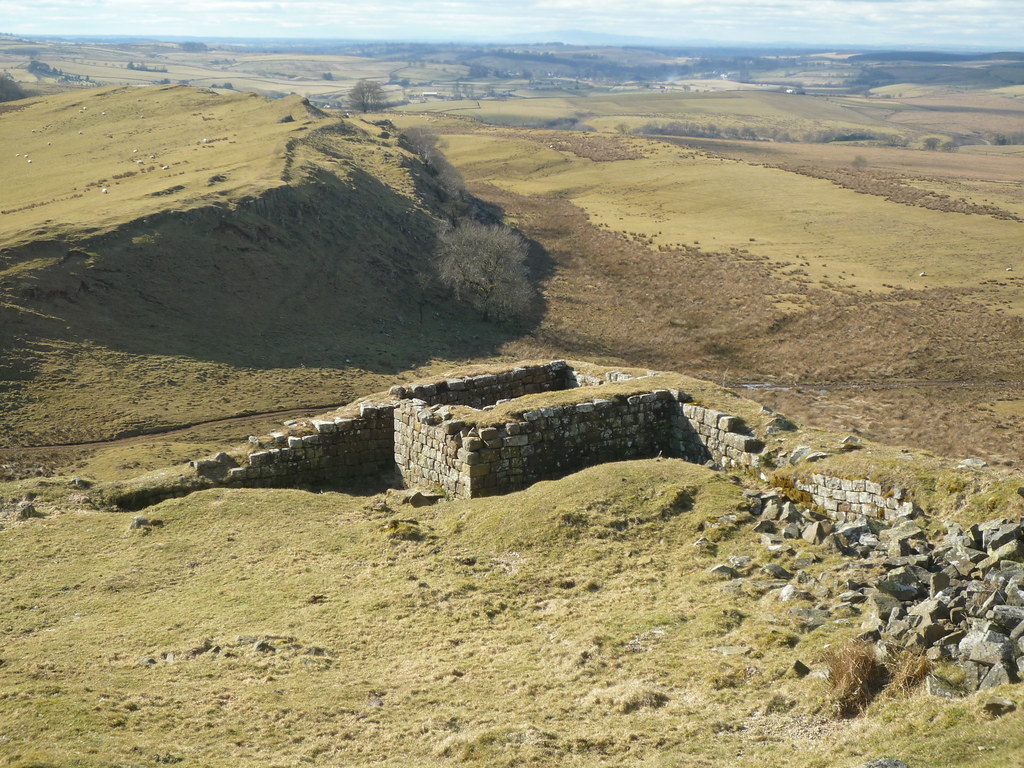
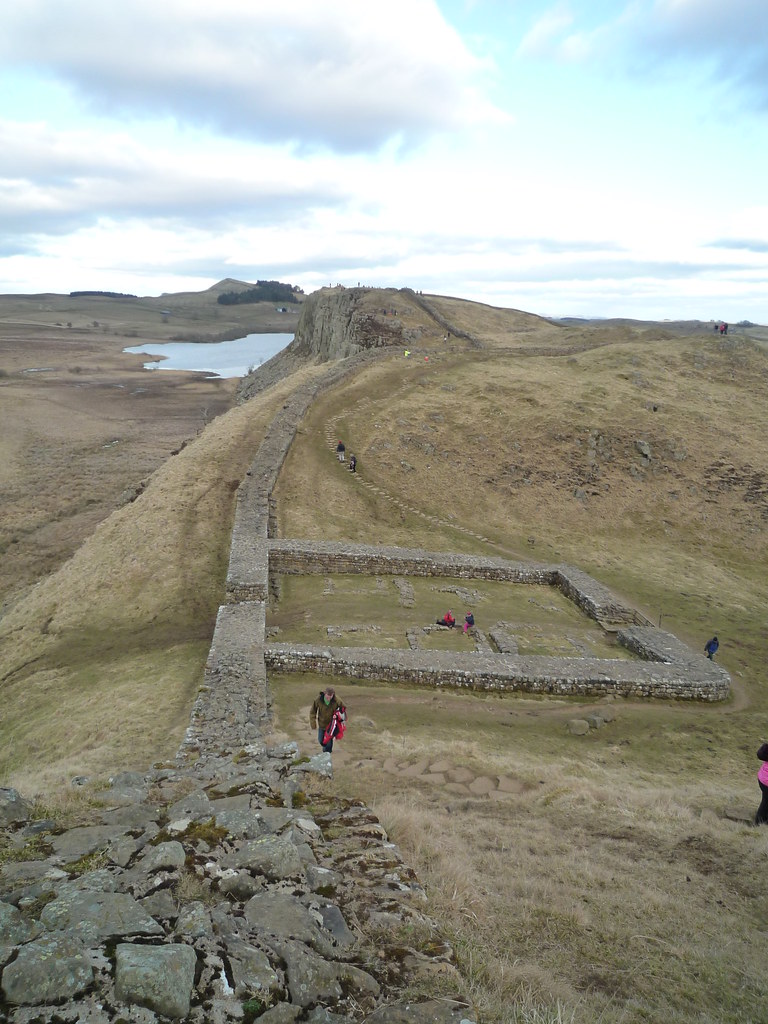
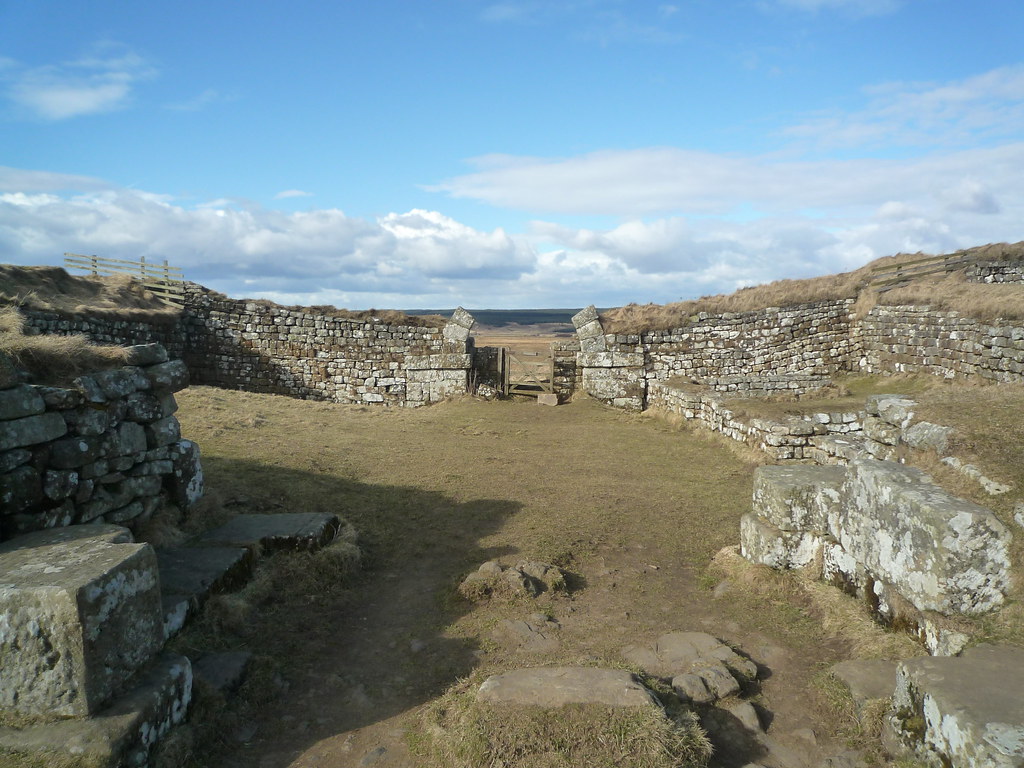
Down the path was a Roman mile fort, or rather, the foundations of one. Perhaps this is a good time to discuss the history of the wall. Emperor Hadrian decided that instead of constant expansion, the Roman Empire would draw borders that were reasonable to hold. In Britain they built a massive wall stretching from coast to coast, which was more a show of strength than an actual deterrent since the wall could be scaled and even at the height of patrols, soldiers couldn't monitor every part of that absurd length all the time. Ever Roman mile, give or take a little to account for the terrain, a fortified barracks was built, and these mile forts made it possible for the Roman soldiers to live by the border they guarded.
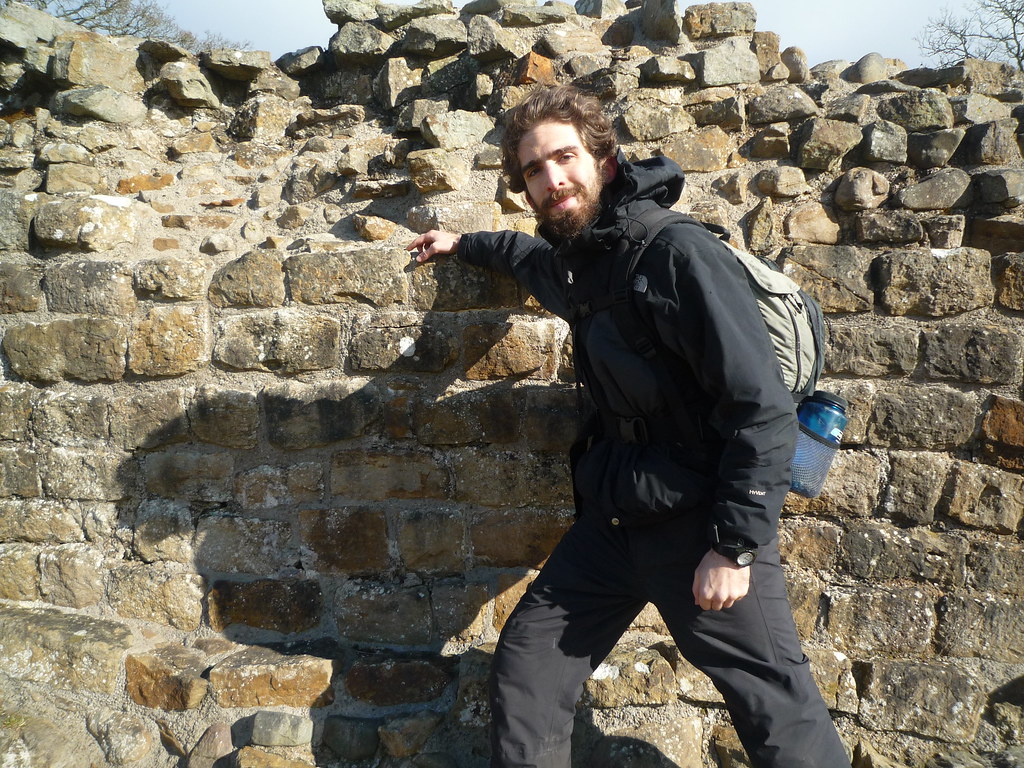
I took Latin for four years in high school because I love Roman history. Hence my smile at first seeing this monument to the glory of Rome.
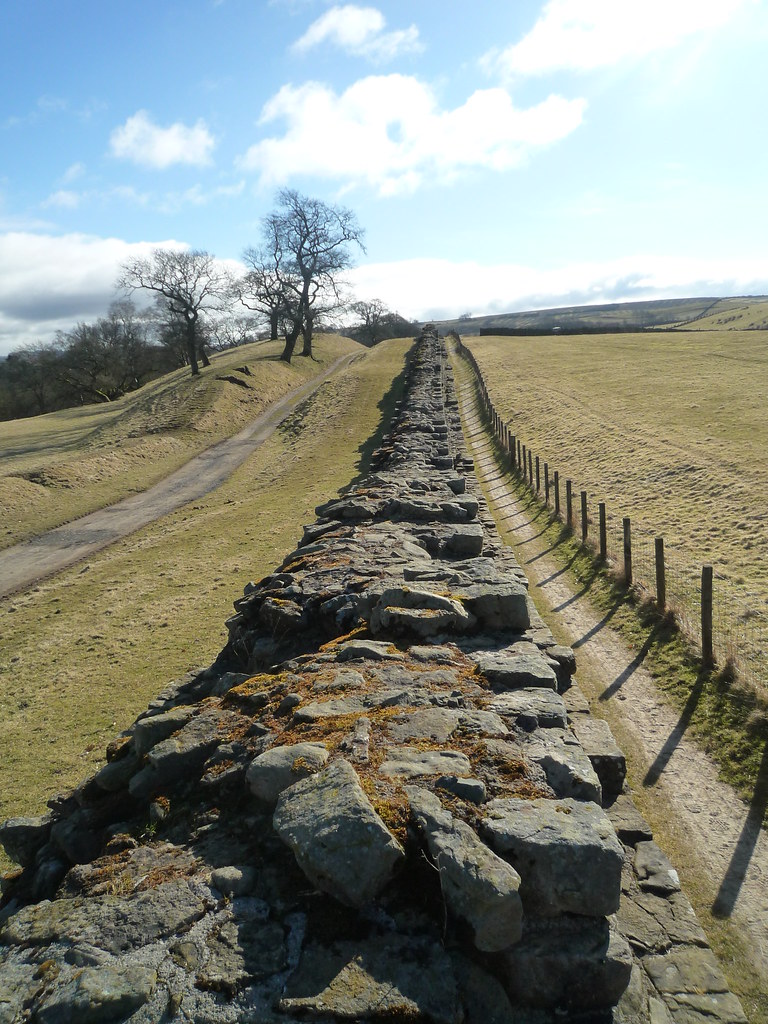
It stretches on for a while. I actually have a lot of pictures that look like this, in case you like
pictures of stone walls or something.
I walked West until I reached Birdoswald Roman Fort. Volunteers were setting up for the night's festivities, so my tour of the foundations was brief.
Then I turned around and followed the wall back East. I stopped for my packed lunch at Thirlwall Castle. When I passed where I began I kept going.
Walking along the wall path also introduced me to a wonderful concept utilized in Britain: the right of way. I hear the phrase and think of who gets to go at an intersection, but in Britain the right of way is a beautiful human right: the right to have a path across the country. As long as the path is used at least once a year, no one has the right to stop a path with fence or wall. It can cut across private land, and sometimes goes over said barriers, but it isn't trespassing to walk here; it's a right. Sometimes you even walk through people's yards. I love it, and now want to walk from one extreme of Britain to the other.
The Romans were no fools, and used natural barriers to maximize the wall's effectiveness.
I found it surreal to see animals grazing among side ancient ruins.
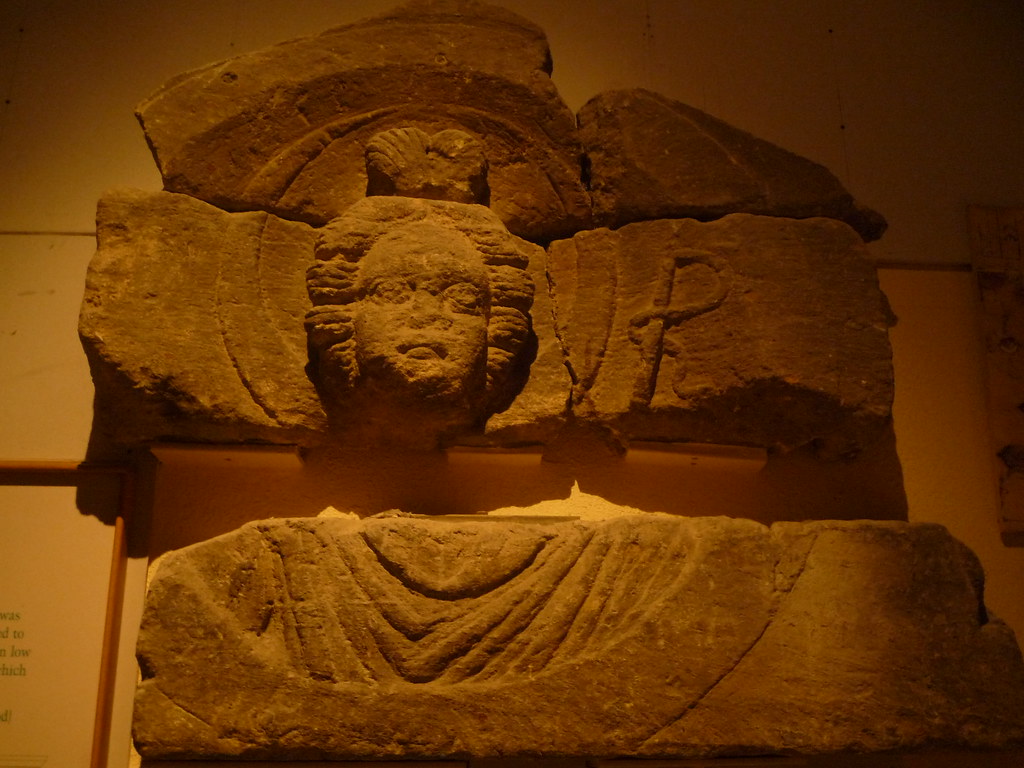
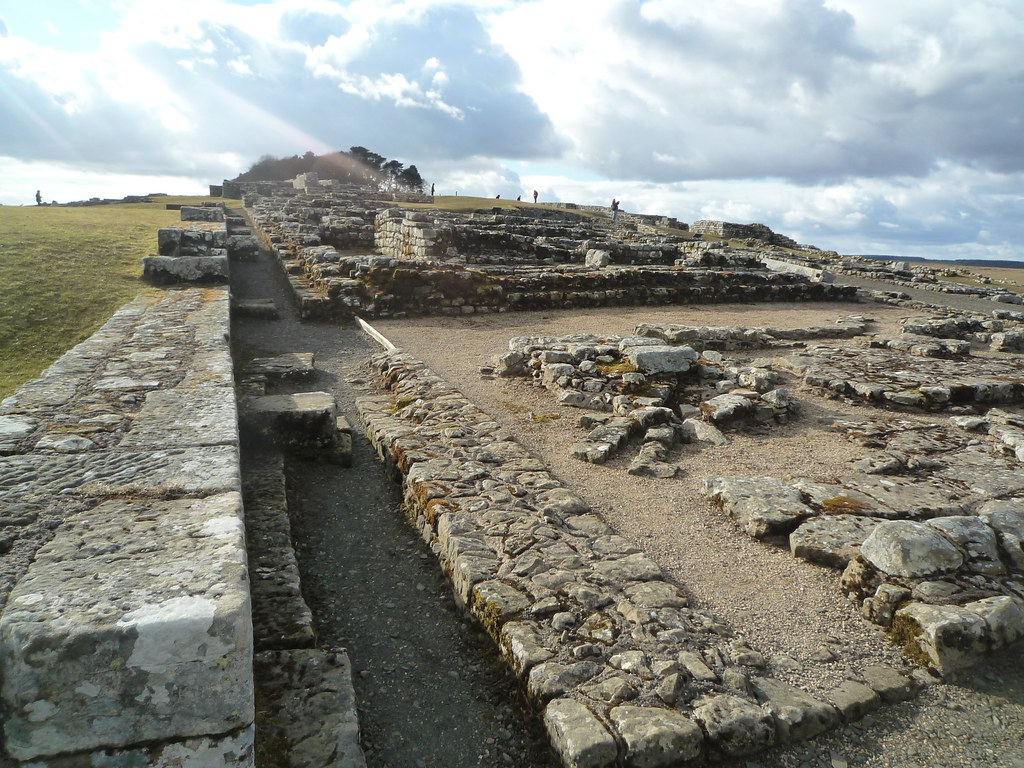
I stopped by another ruin, Housesteads Fort, which had a small museum displaying some jewelry and small statues found on the sites.
In the evening I staked out a good spot among the crowd up on the bluffs to see the approach of lights. Then I realized that it was a while until the torches would even begin to be lit on the coast, much less until they got here. At this point the nagging feeling that I had been forgetting to do something that I'd had for days suddenly crystallized into the insight that I had intended to book a place at the hostel here for the night. I visited the hostel anyway just in case, but of course they had been booked solid long earlier. They did have an all-you-can-eat buffet, though, and sustenance is important when you intend to sleep out in the cold.
Having eaten my fill I headed back up the bluffs to find a good place to see the torches in both directions. There was a lot of waiting in painfully cold wind, but we finally say fires in the distance coming our way.
The torch beside me was lit and I watched the fire crop up along the wall on ridges I had walked along hours earlier.
Earlier in the day I had seen a helicopter that later in the evening made a film documenting the giant flammable version of the wave.
The resulting video is a bit self-congratulatory and cheesy, but pretty good nonetheless.
After the ceremony I had the oh so brilliant idea that I would sleep in one of the mile fort ruins. Of course, this was actually private property, and there was a small group of authority figures of some sort (probably volunteers) patrolling the area to keep everyone behaving and picking up after ourselves. I lay down inside the foundation walls and tried to rest, but was paranoid about being discovered some reason. I was terribly startled by some passersby who turned out to be star gazers. Once they passed I decided I was entirely too high strung being in that spot, so I picked up my pack and walked towards the morning's destination: Vindolanda Fort. I found a small outcropping of trees and hid myself among them for another cold night's 'sleep'. I got a bit more rest than at the castle the night before, but mostly out of exhaustion.
In the morning I wandered about the area until the fort and museum opened. This was an amazing archaeological find. The museum held remarkably well preserved scraps of writing on tablets, which ranged from shopping lists to love letters to a student's graded paper to a note that accompanied a care letter from mom and dad to orders for this military town. Also well preserved were some sandals and one of the famed crested helmets, complete with its original vibrant red-dyed horse hair mane. The best finds of were under water, keeping the artifacts from oxygen and decay. This site was much larger than the other forts and was off a bit from the wall. It was a garrison and a proper town instead of just an outpost.
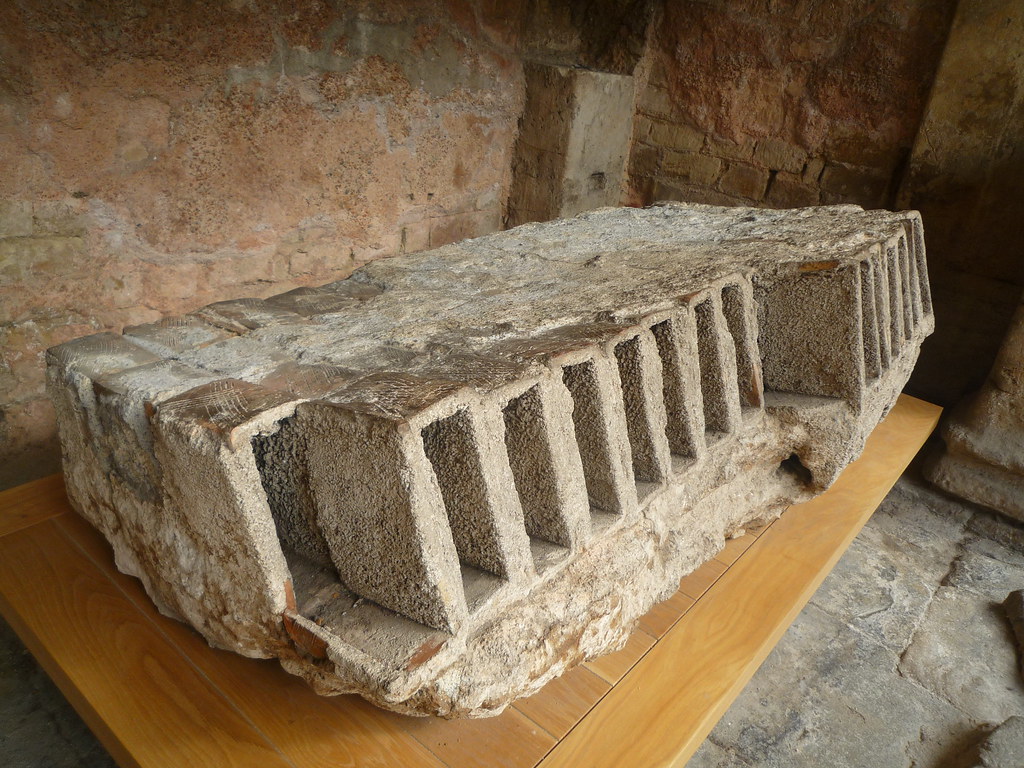
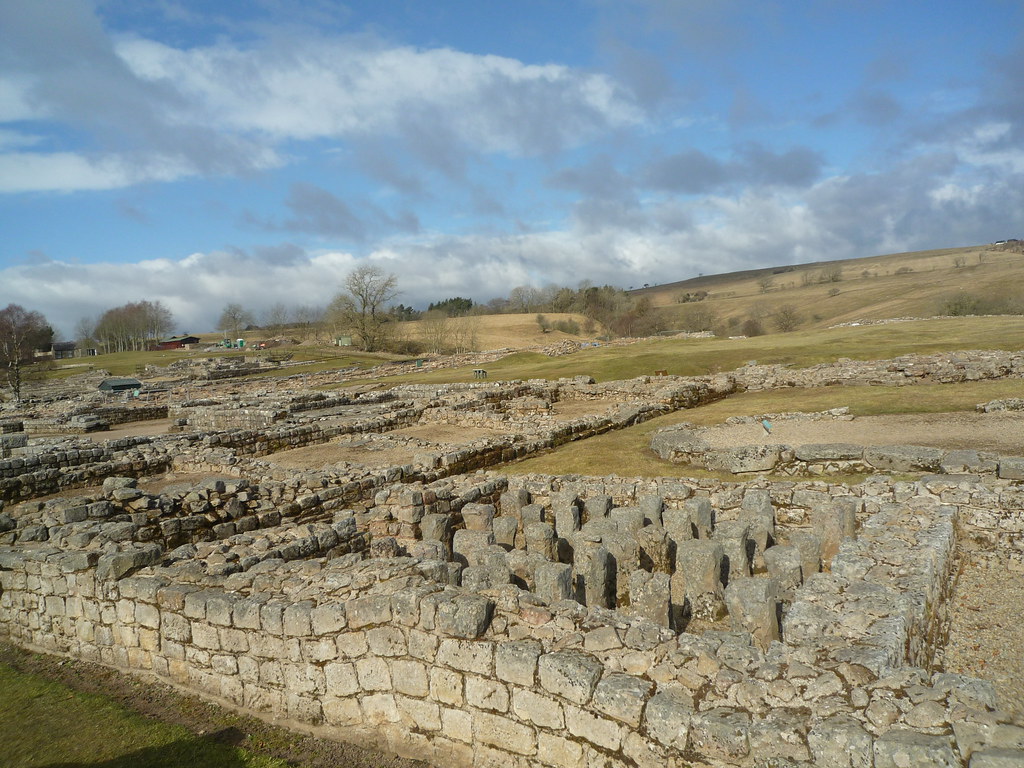
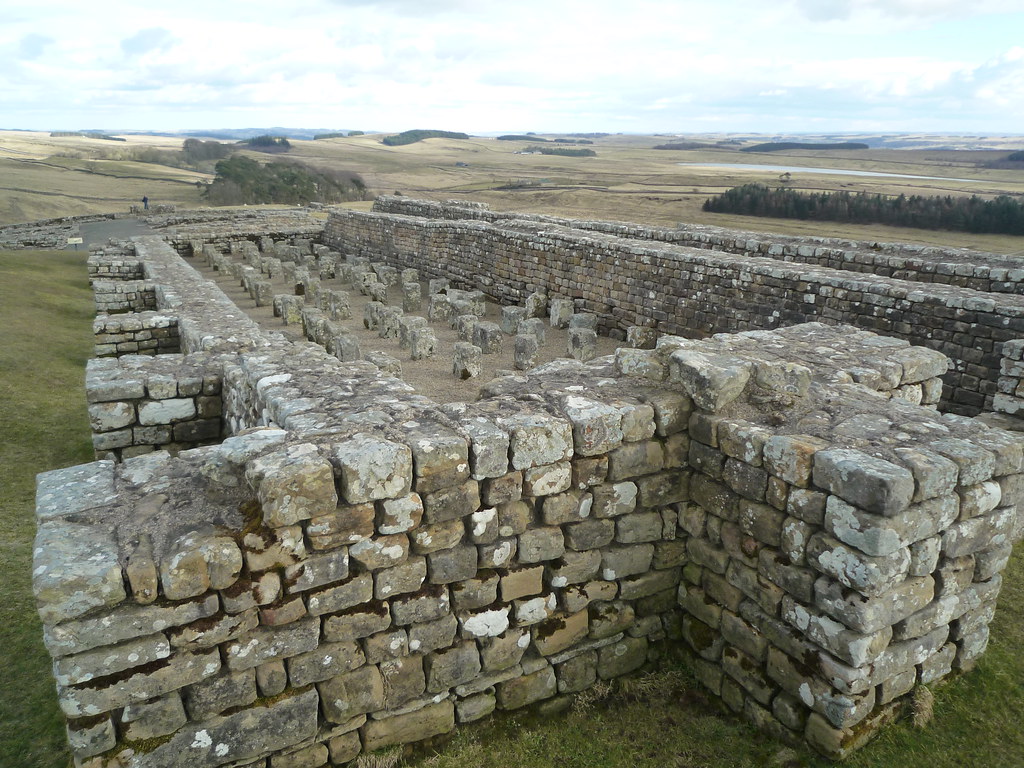
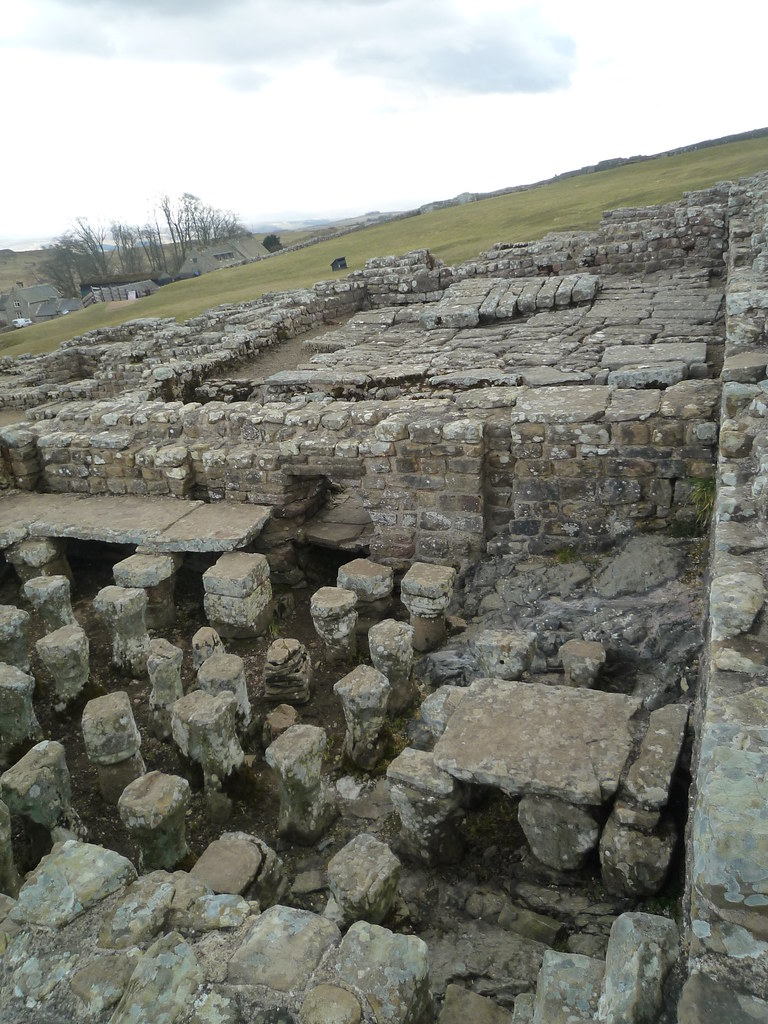
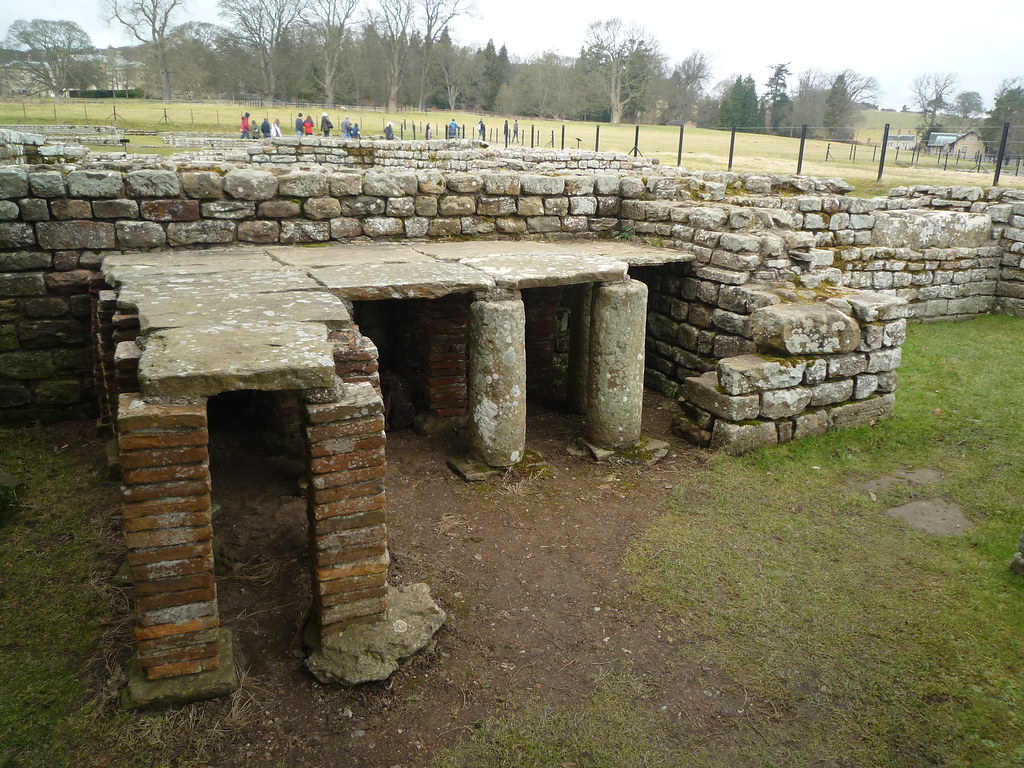
All of the buildings were off of the ground for the sake of sewage control and heating. A lot of the remains are the stones that once held up the floor.
This communal lavatory had an impressive capacity.
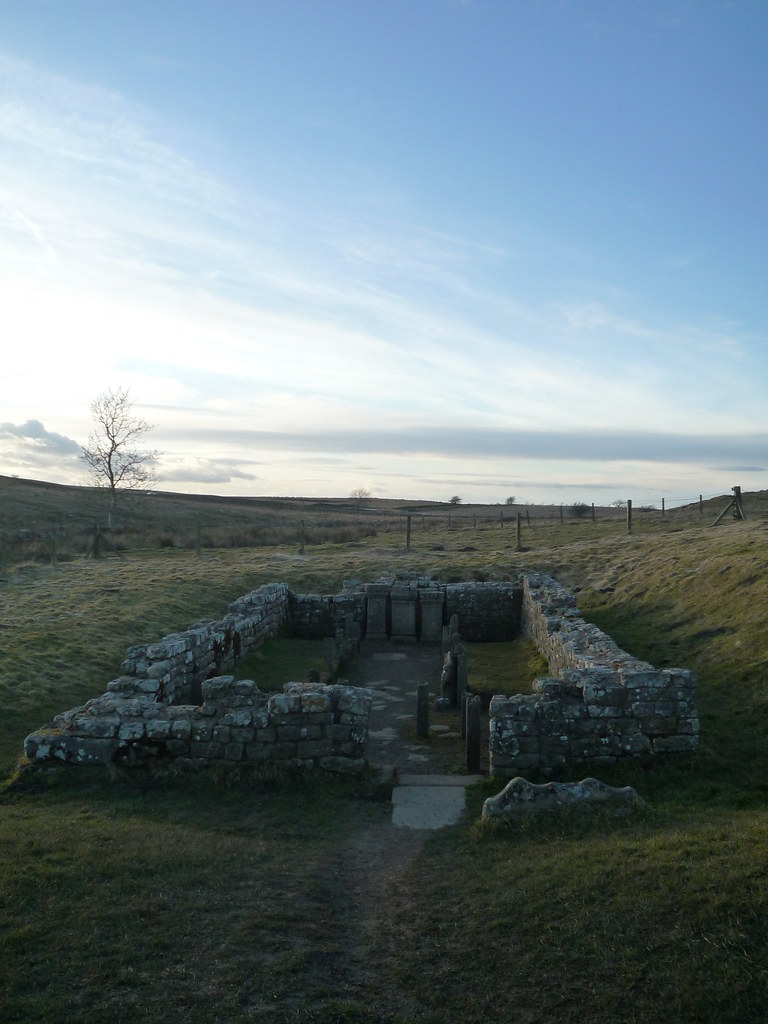
From there I took a long walk along the wall. I eventually came to a shrine of a cult to
Mithras that was adopted by some of the soldiers. This is the original shrine of the replica I
saw in the Great North Museum in Newcastle-Upon-Tyne.
After a long day of walking, I eventually reached Chesters Fort, which was a station for cavalry.
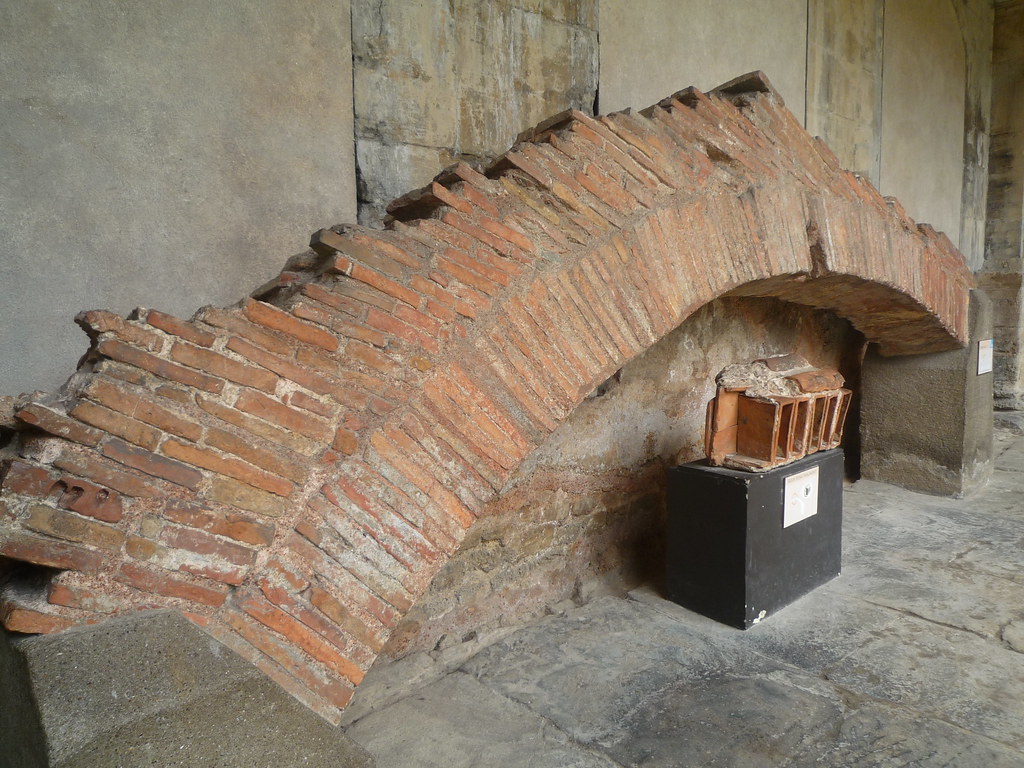
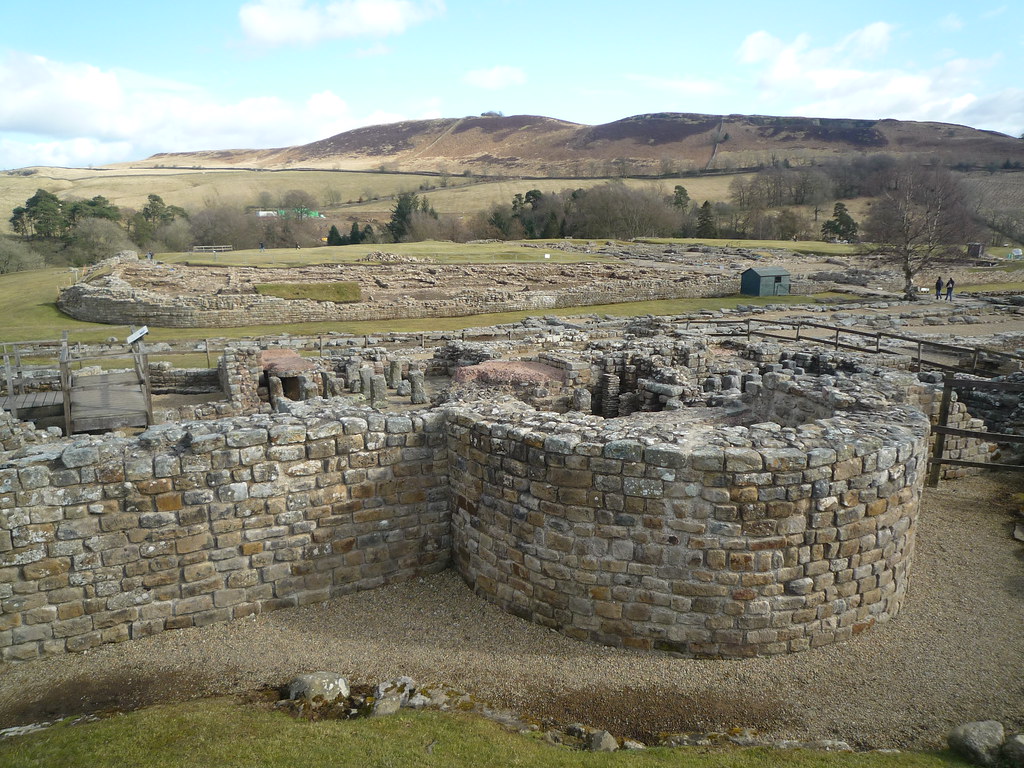
The bathhouse was fairly interesting, with the heating areas under floor visible like a cutout in an illustrated guide due to the ruined state of the fort.
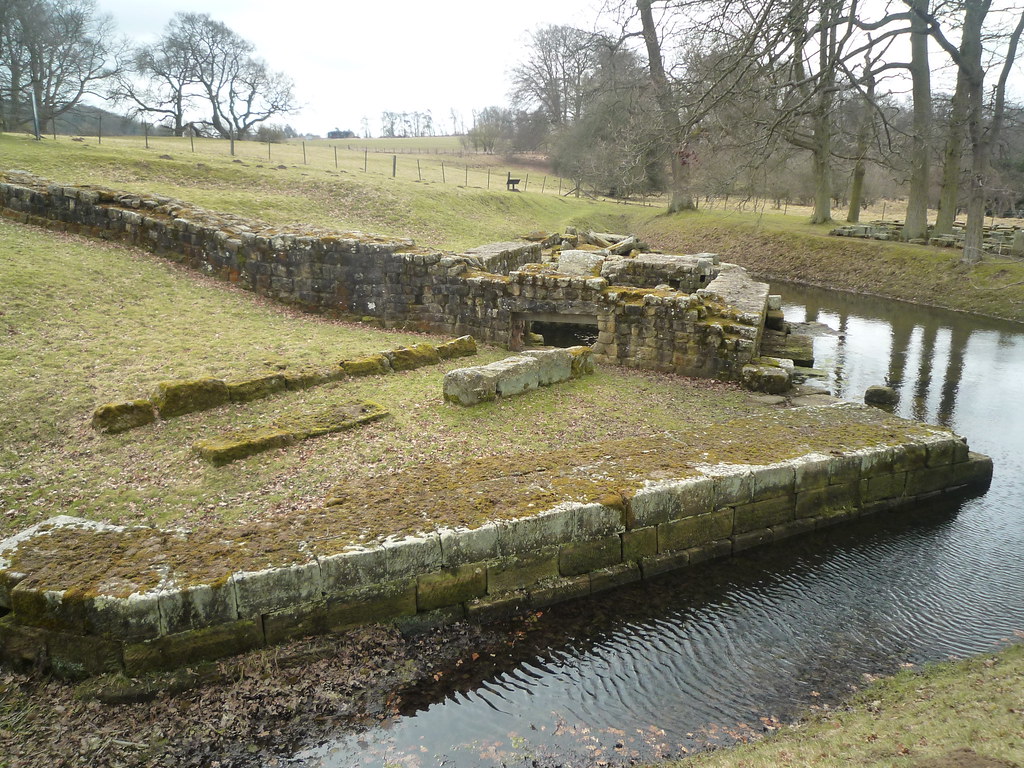
The base of a bridge also remained.

I of course felt the need to view it from both sides, which took a fair amount of my energy reserves that I had left after two days of constant trekking without much in the way of sleep. All said, I think I walked about forty kilometers along the wall, including the time backtracking. The entire path is about 135 kilometers, so I suppose I could have given it a few more days and walked the whole thing, but as always I felt compelled to hurry onward. This night, though, it was all I could do to stumble into a town before dark. I of course found that the hostel where I had intended to sleep was closed for the season and balked at the idea of a third night in a row sleeping out, so I treated myself to a rather nice hotel (because it was the only one around at all). It included a nice dinner, and I had time to clean off the layers of filth before eating so I didn't feel like I was imposing by being in a dining room the way I often do when traveling. I still felt ridiculous for spending sixty-five pounds, but I treated it as an exercise in assuming that what I had bought was worth what I spent for it and became determined to get that much value out of it. I think the bath alone was worth just about anything after my walking. Also, a comfortable bed, warmth, internet and tons of included food slowly eroded away my buyer's remorse. By morning I was convinced it was worth it after ten hours of sleep and an all-you-can-eat
breakfast buffet, where I consumed four plates of ham ('bacon'), fried eggs, beans,
sausages, hash browns, bananas, grapefruit, oranges, prunes, yogurt, and cheese (though I didn't eat the baked tomato to make it a proper English
breakfast).