Showing posts with label books. Show all posts

Tuesday, February 4, 2014

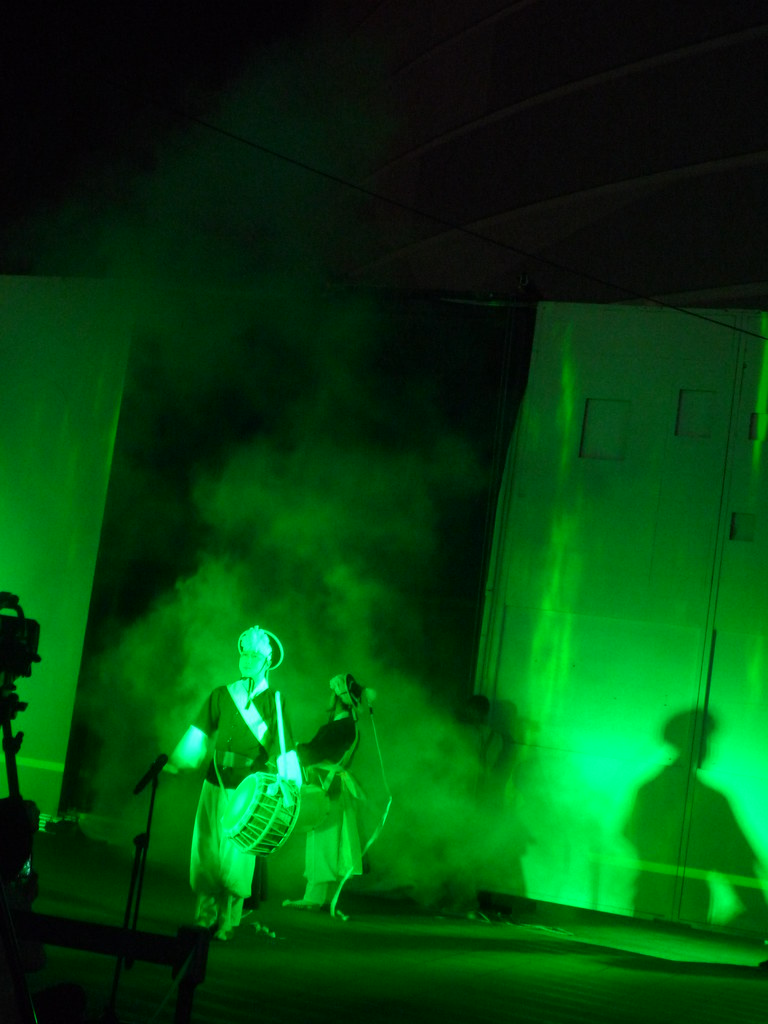
Seoul Lantern Festival for Buddha's Birthday

My previous year in Korea, I had missed the lantern festival because I thought it was the weekend after Buddha's Birthday, when in fact it is the weekend before it. I did not make the same mistake twice, and made sure I was in Seoul for the event. On the subway ride into the city, I started rereading Herman Hesse's Siddhartha, which certainly seemed appropriate. I had read it in high school, but my freshman year English teacher saw so many metaphors of her own invention in the texts that we barely discussed the ideas that were actually there, which soured me on the books we read. I found myself quite liking Siddhartha the second time around.

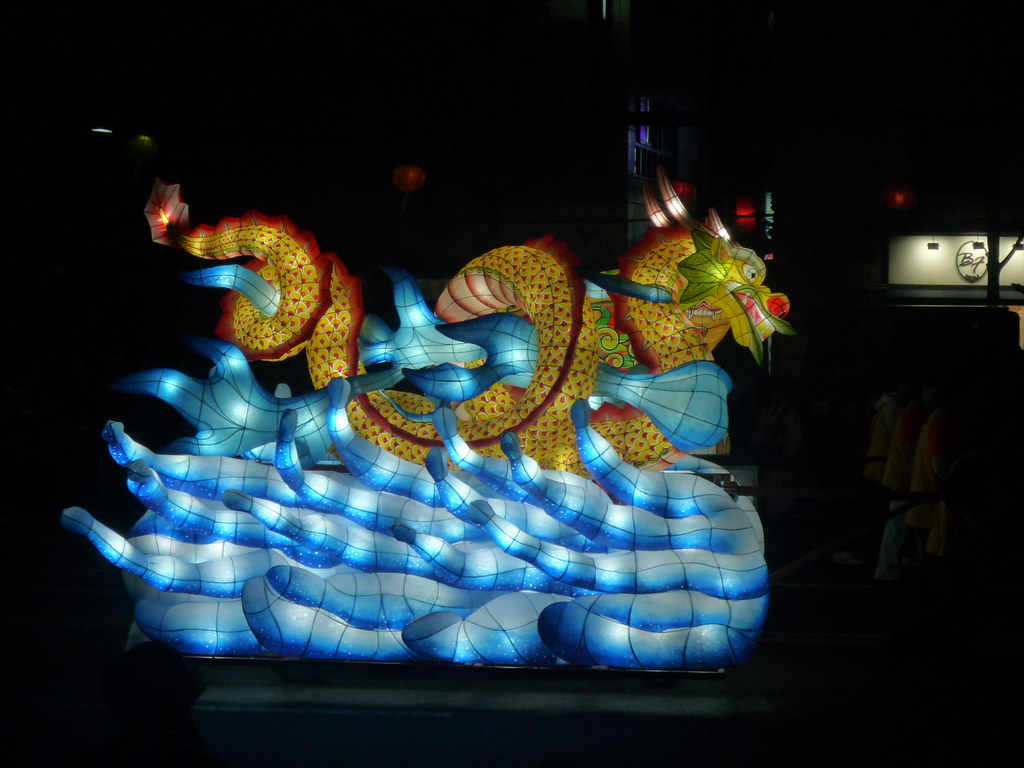
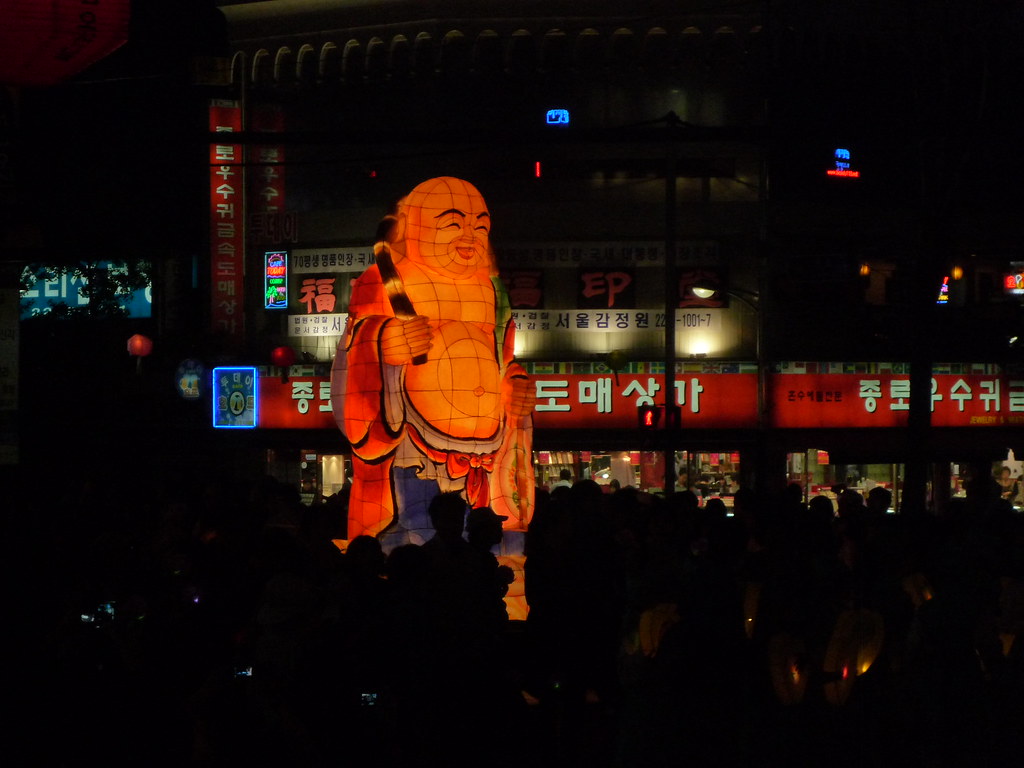
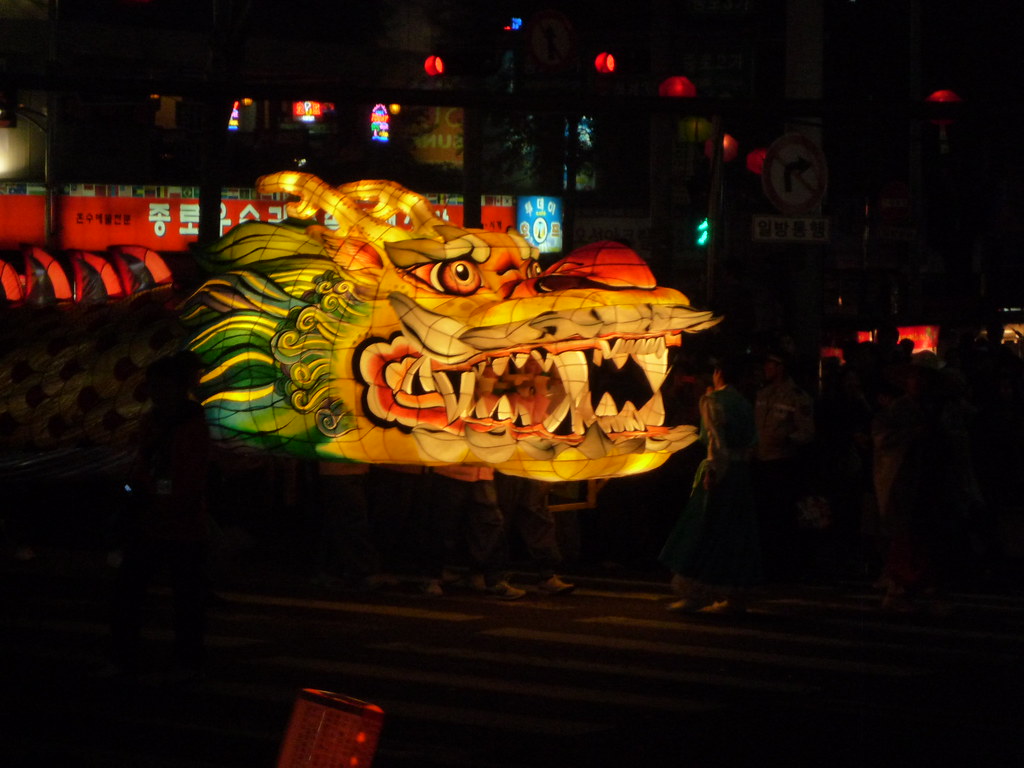
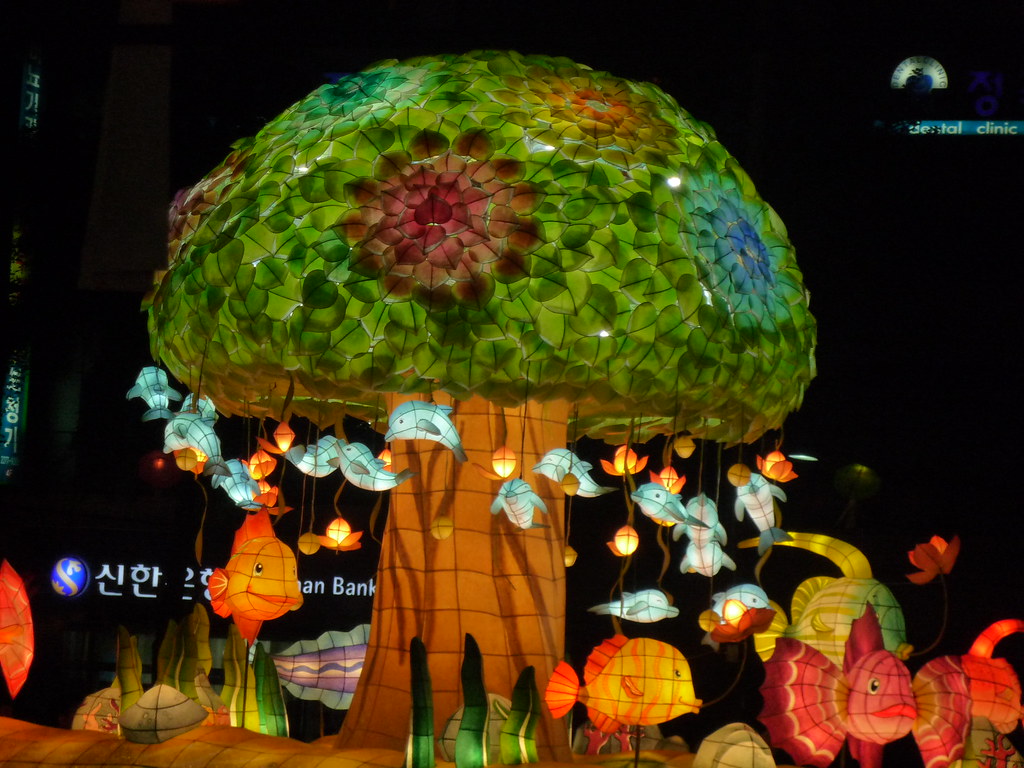
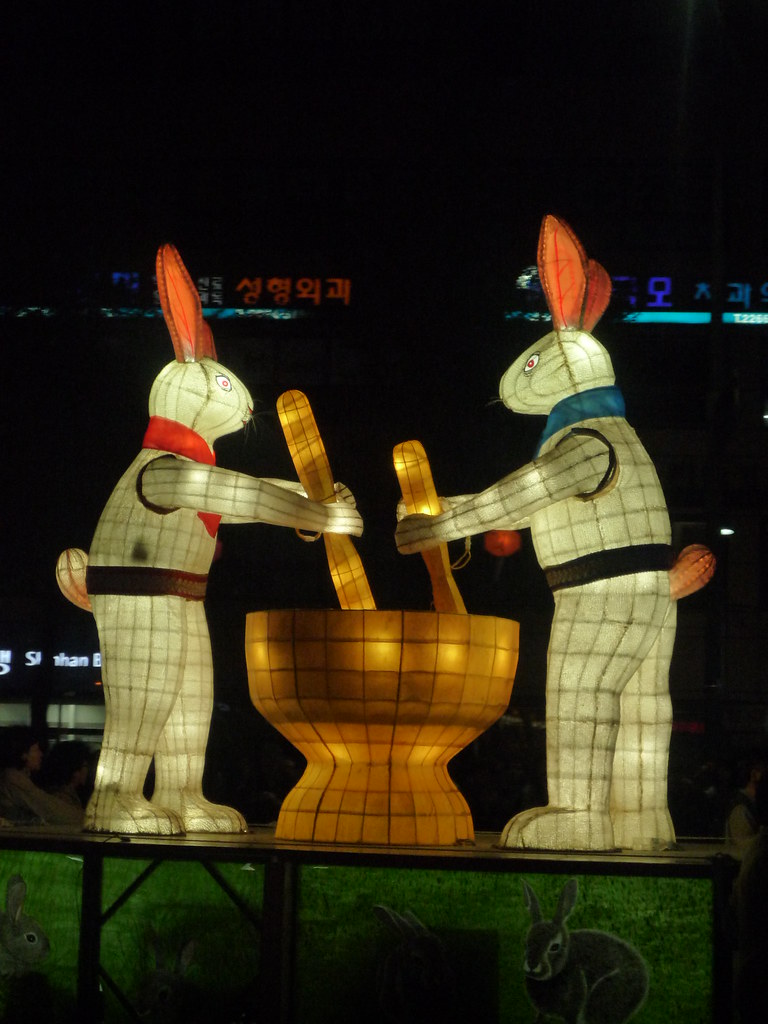
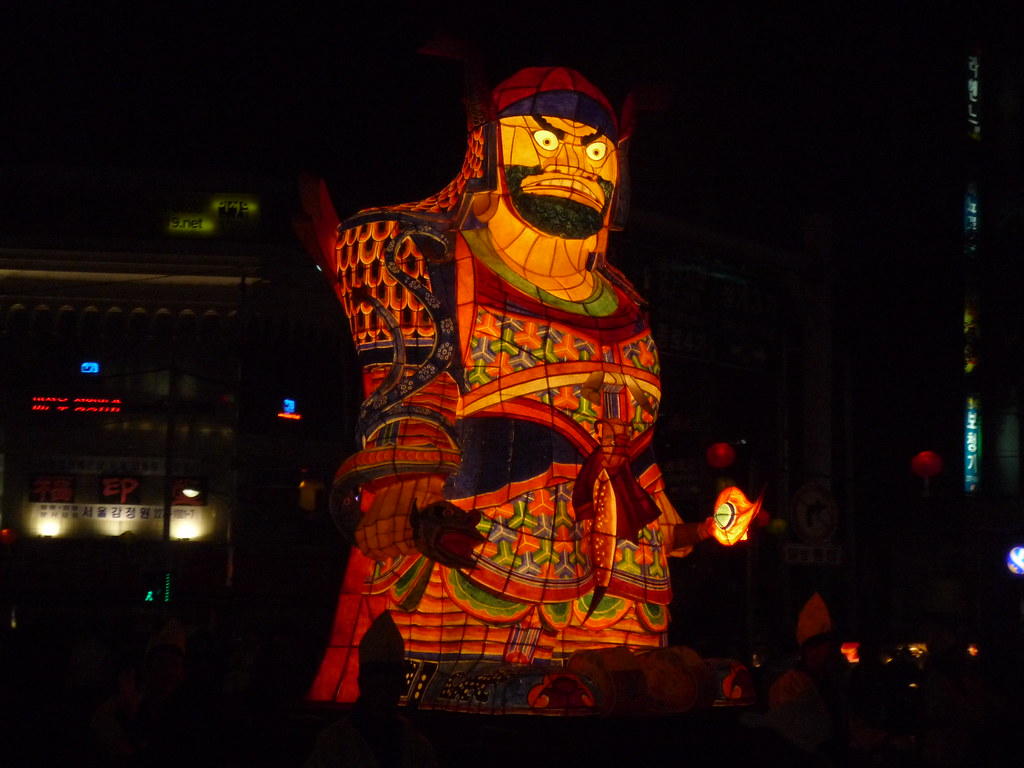
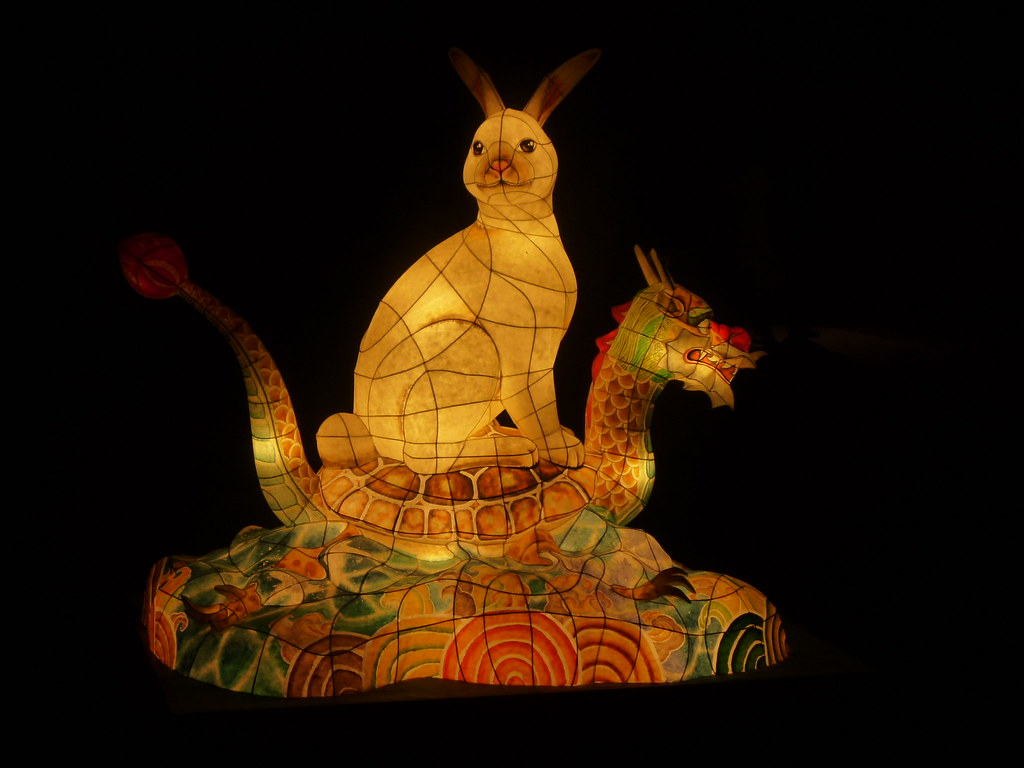
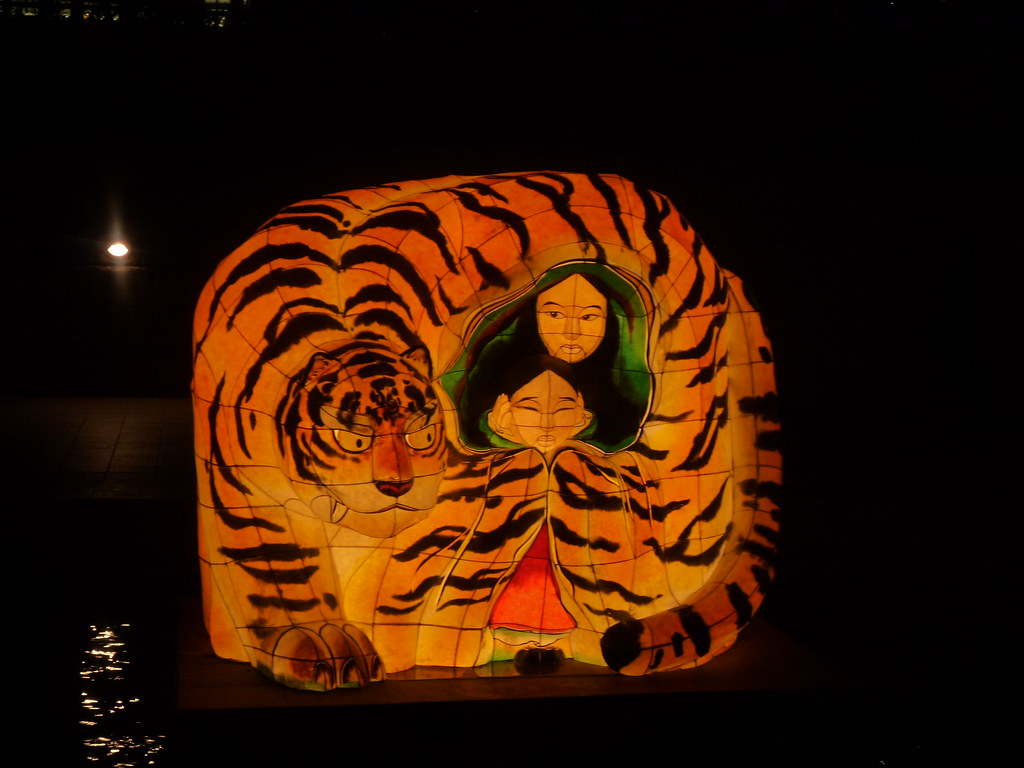
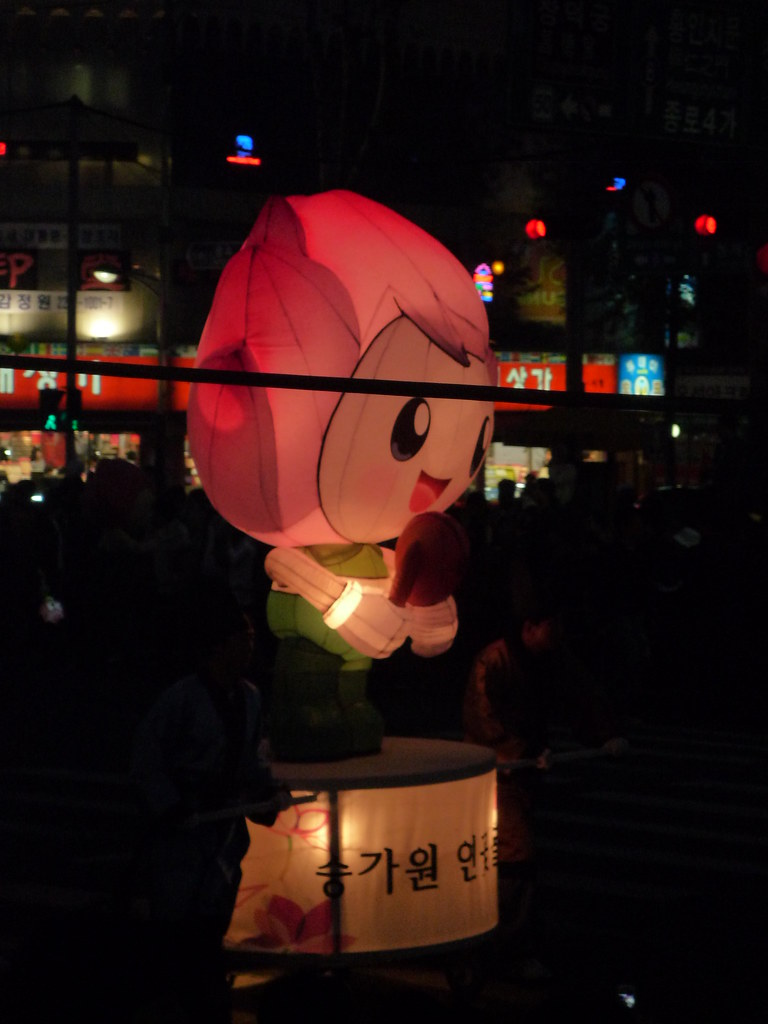
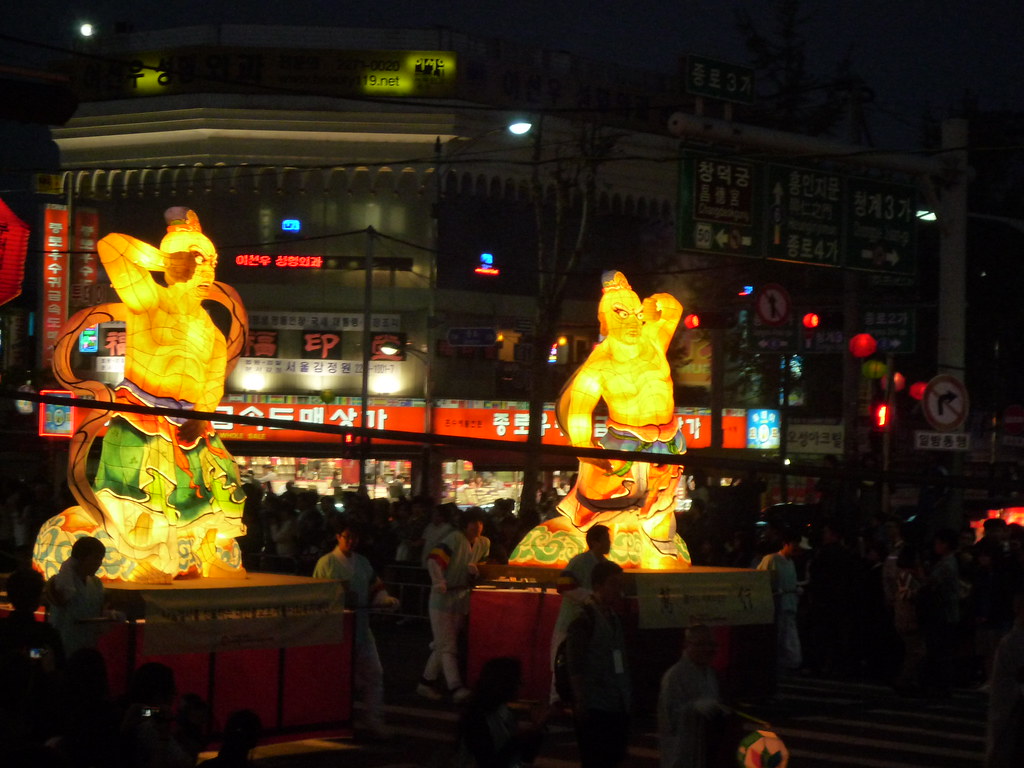
The Lantern Festival is nearly as elaborate and impressive as the Tournament of Roses Parade in Pasadena. The floats clearly take a great deal of work and effort to build.


Some lanterns had animatronic elements. 


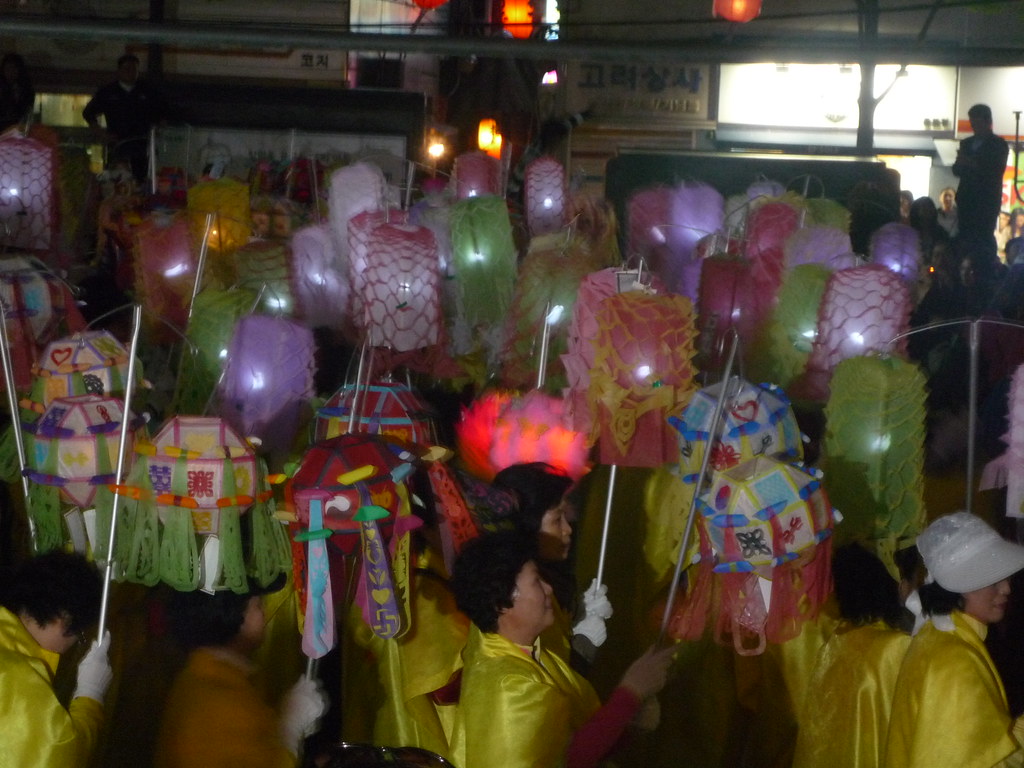
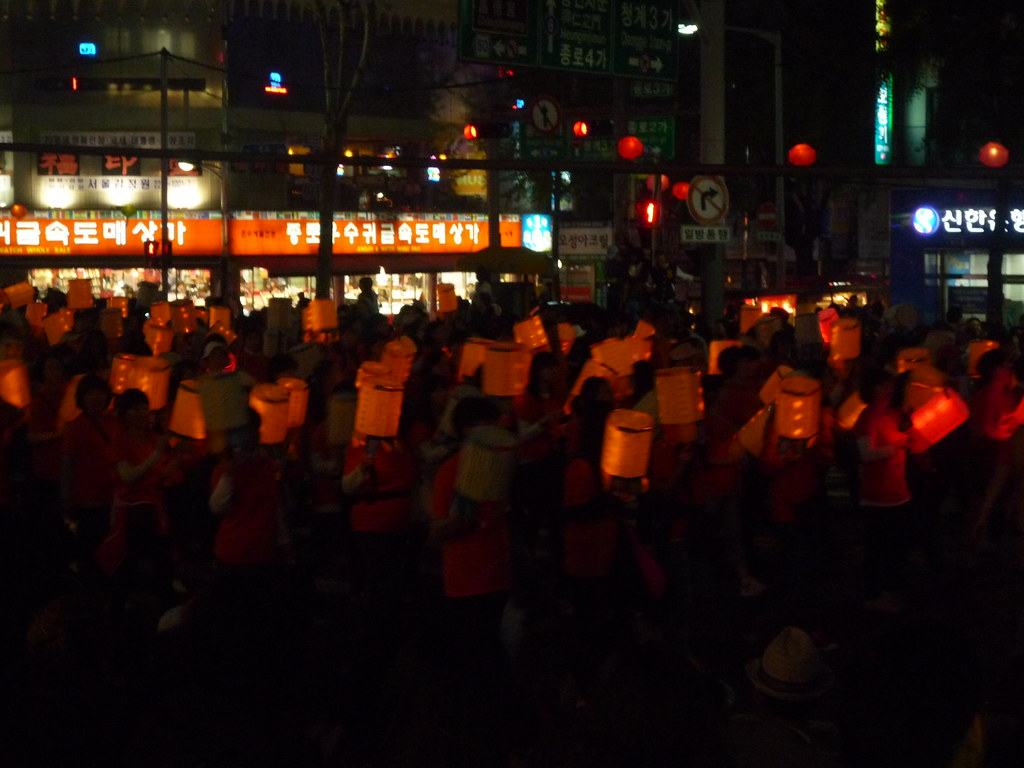
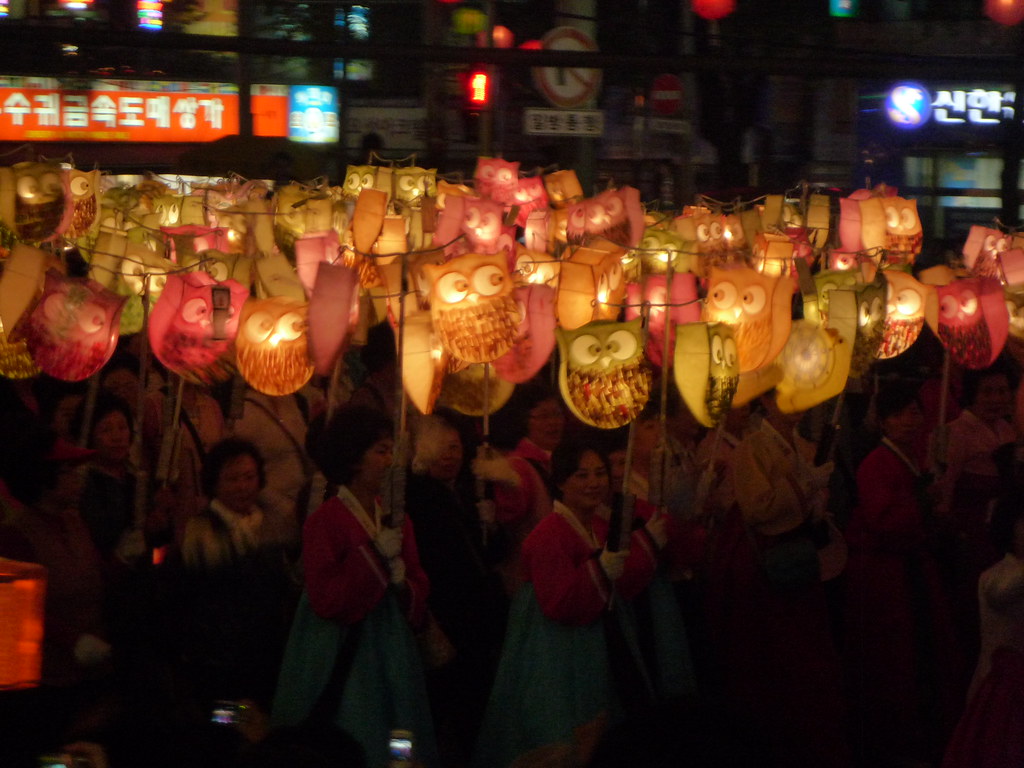
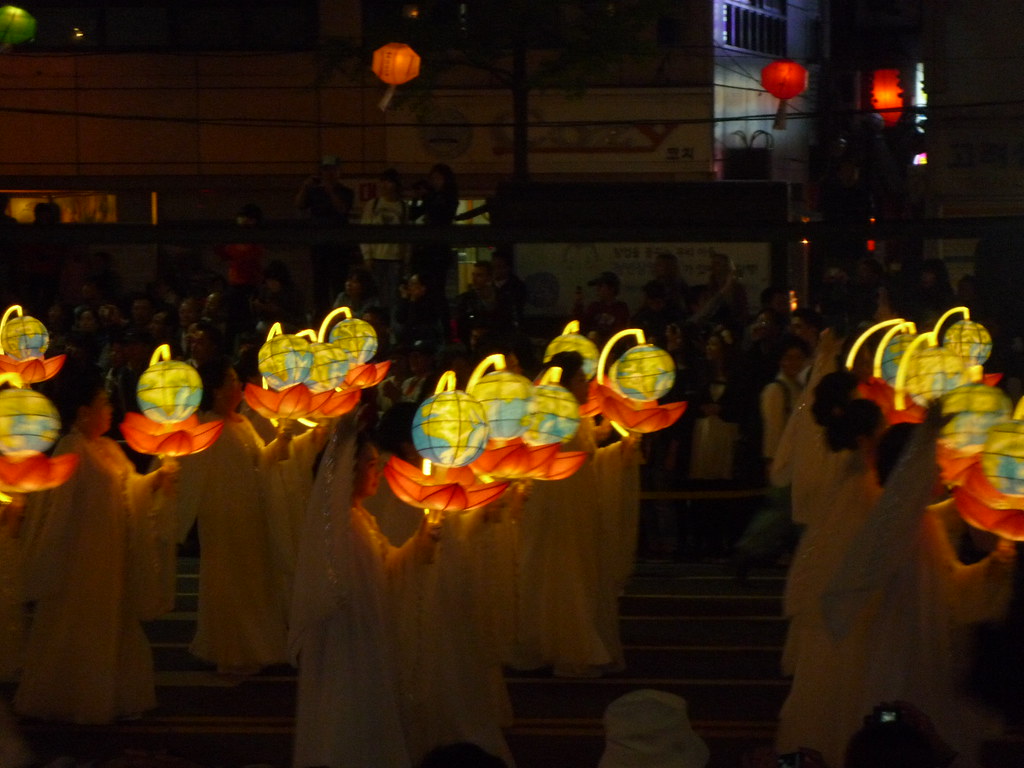
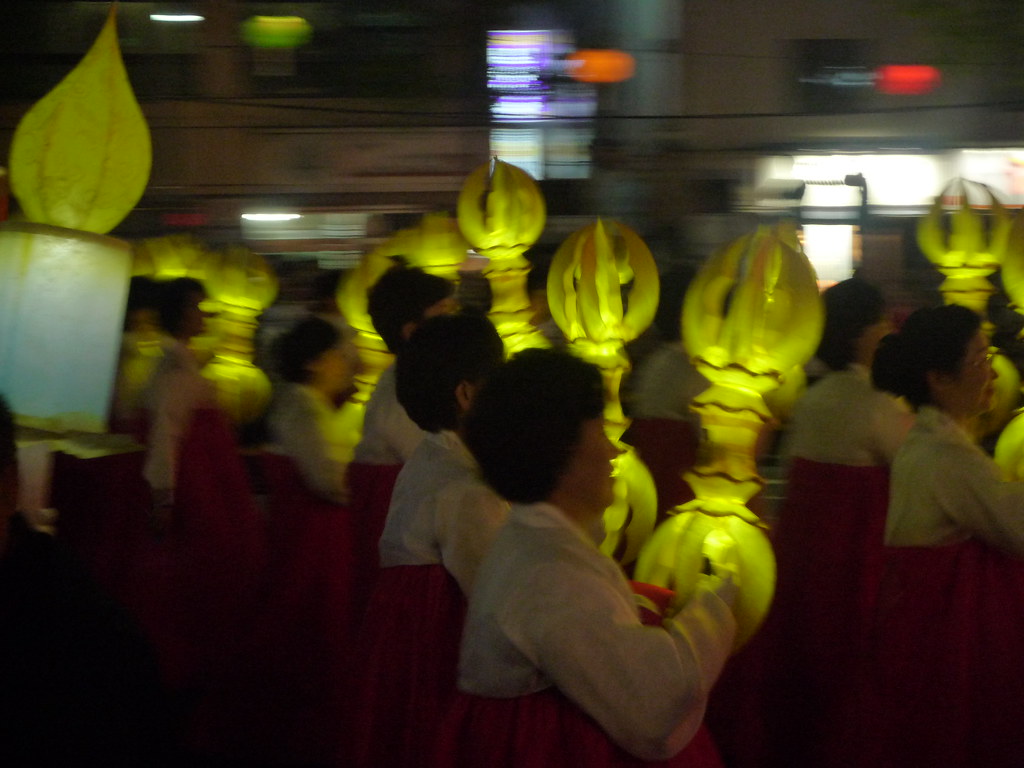
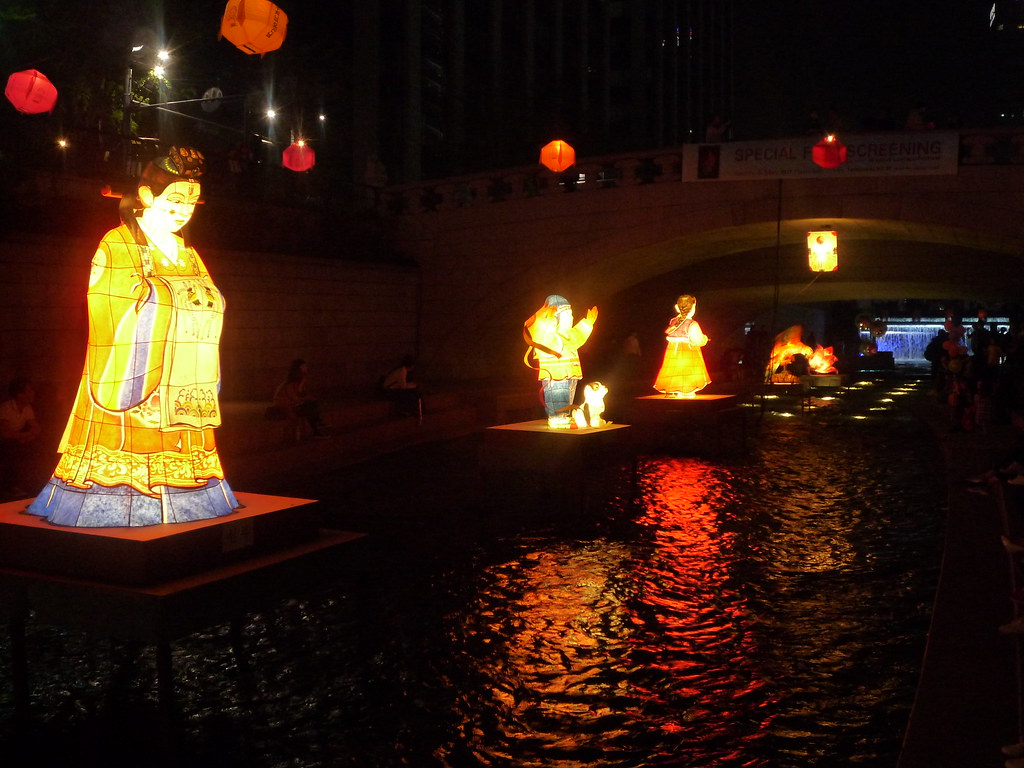
Between the large shaped lanterns were scores of people - usually in traditional dress -carrying handheld lanterns of various shapes and colors. 


It wouldn't be Korea without a depiction of Admiral Yi Sun Sin's Turtle Ships. 


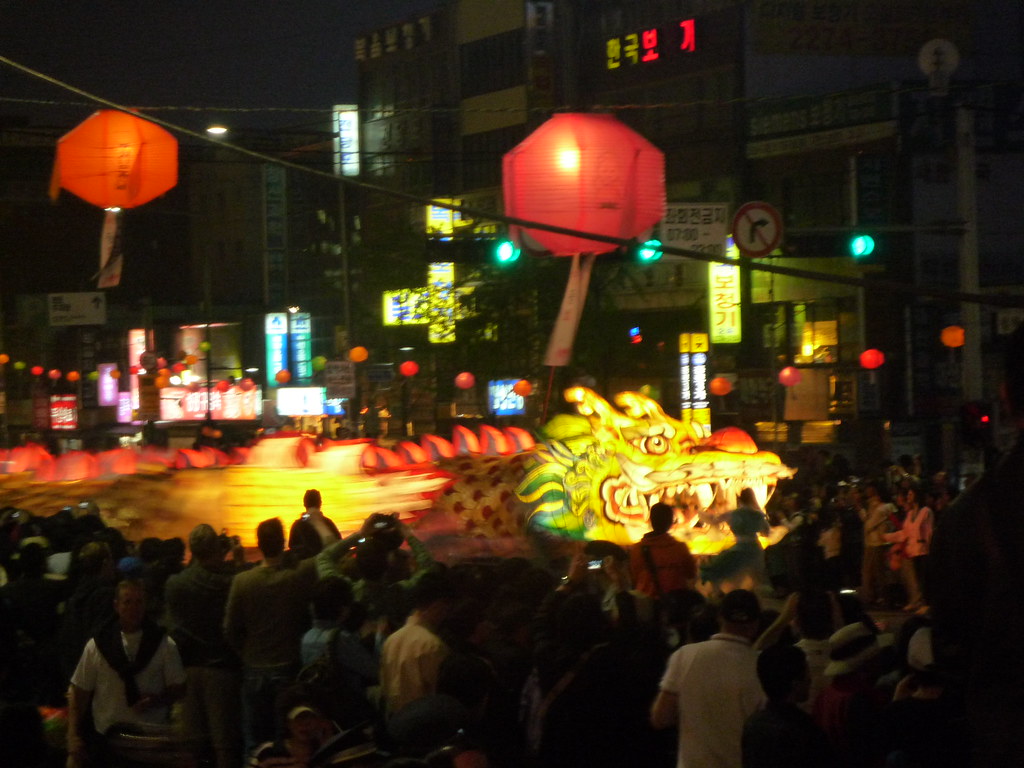
I was watching the parade from an intersection that had low power lines, so I saw many lanterns that had to change shape or otherwise lower themselves to avoid the obstacles overhead. 


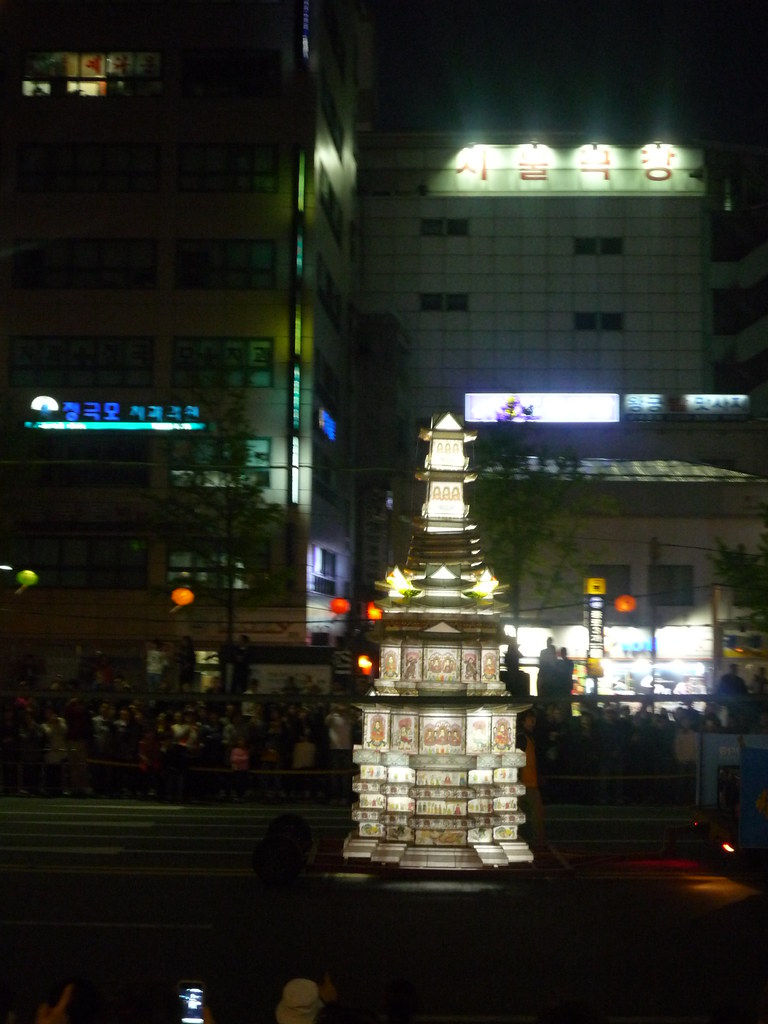
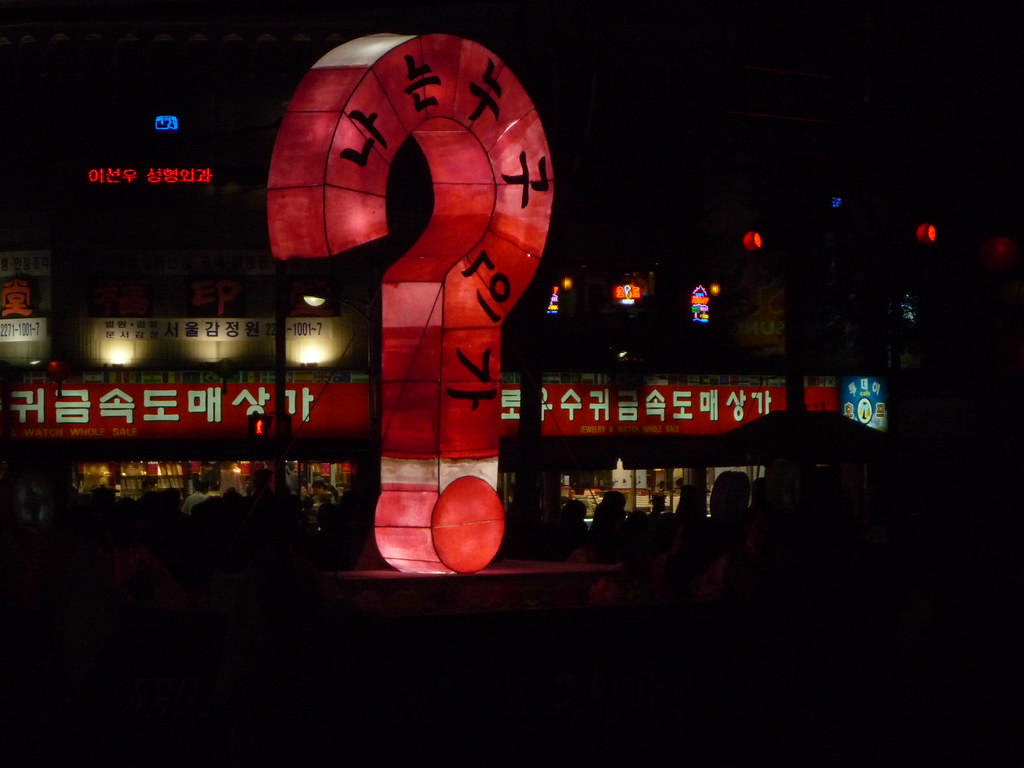
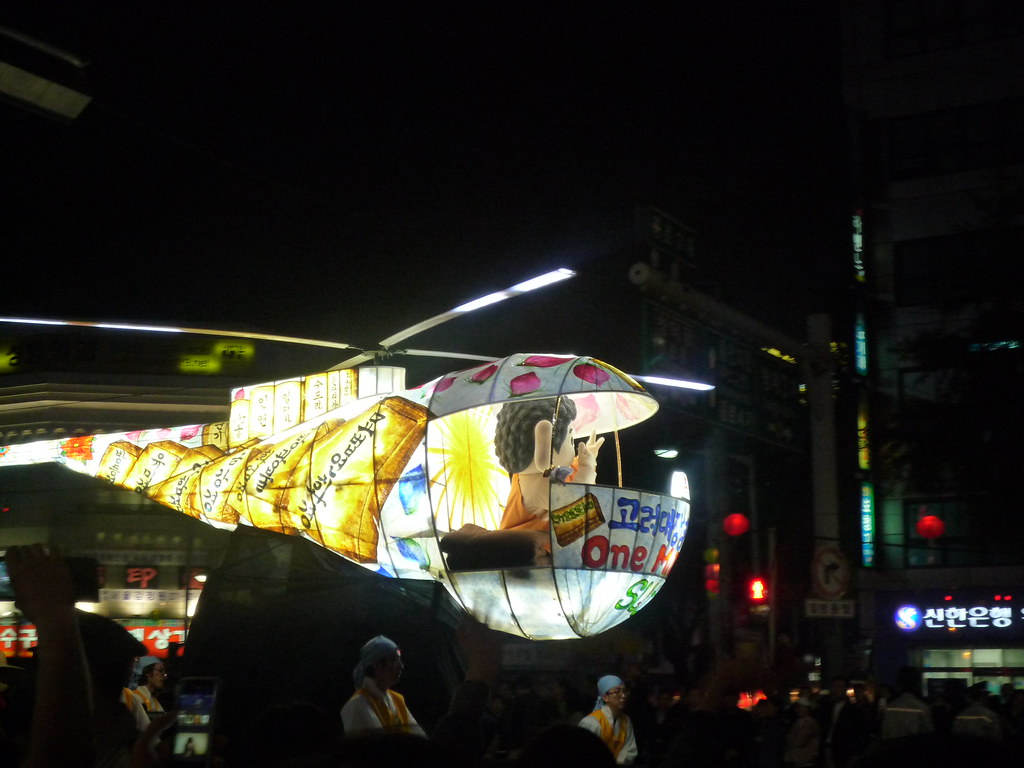
Some floats were more Buddhist themed than others. 


I instantly recognized the Vajra, the symbolic weapon for removing temptation. The symbol had been all over the Guinsa temple complex, and I have noticed it in Buddhist art ever since then.


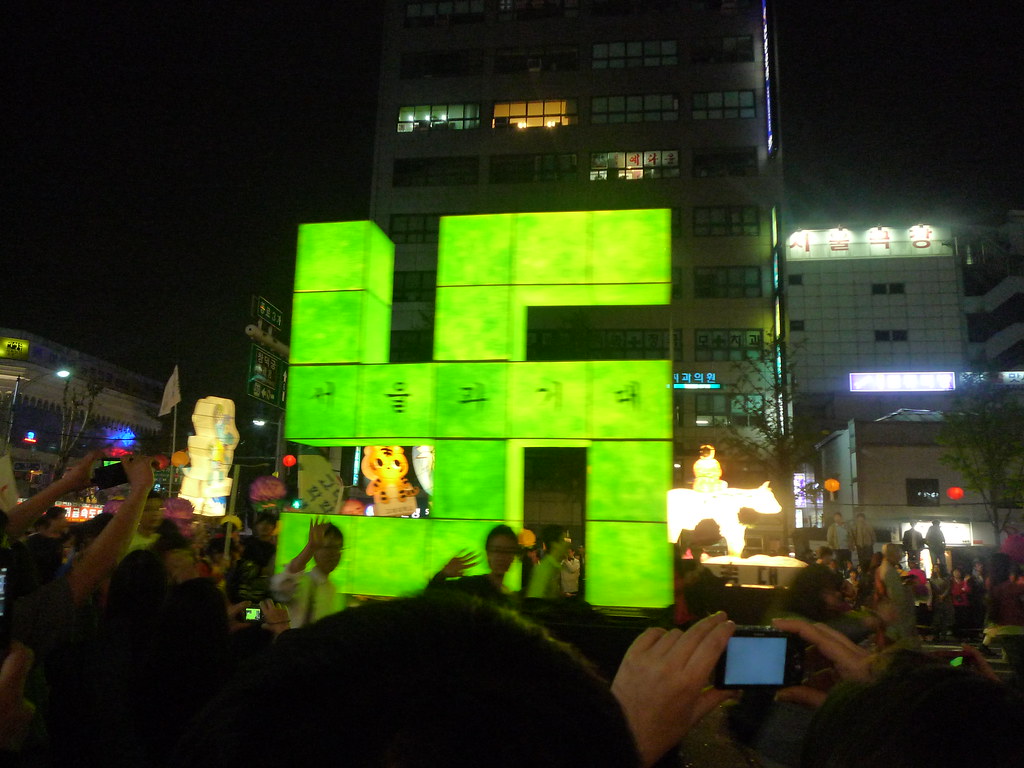
A convenient way to remember the usage of swastikas is that the top arm of the Buddist one faces left, while the Nazi swastika faces right (which maps nicely onto our terms for the political spectrum). I suppose this lantern had the arms facing the correct way for Buddhism from the perspective of the other side of the street...


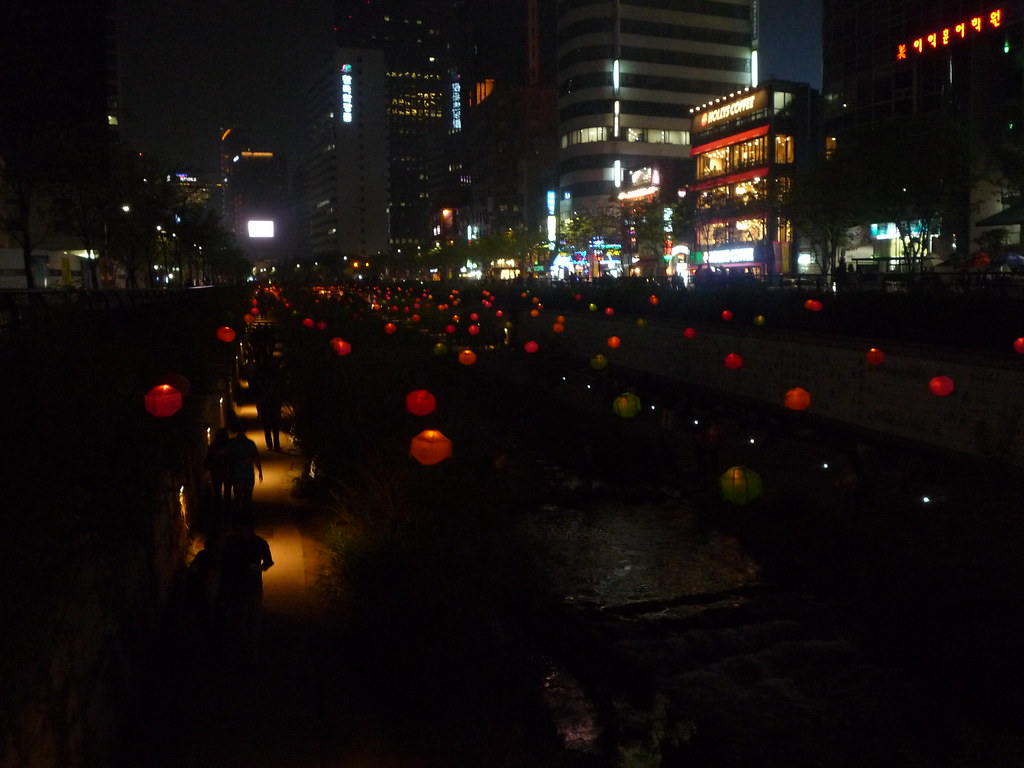
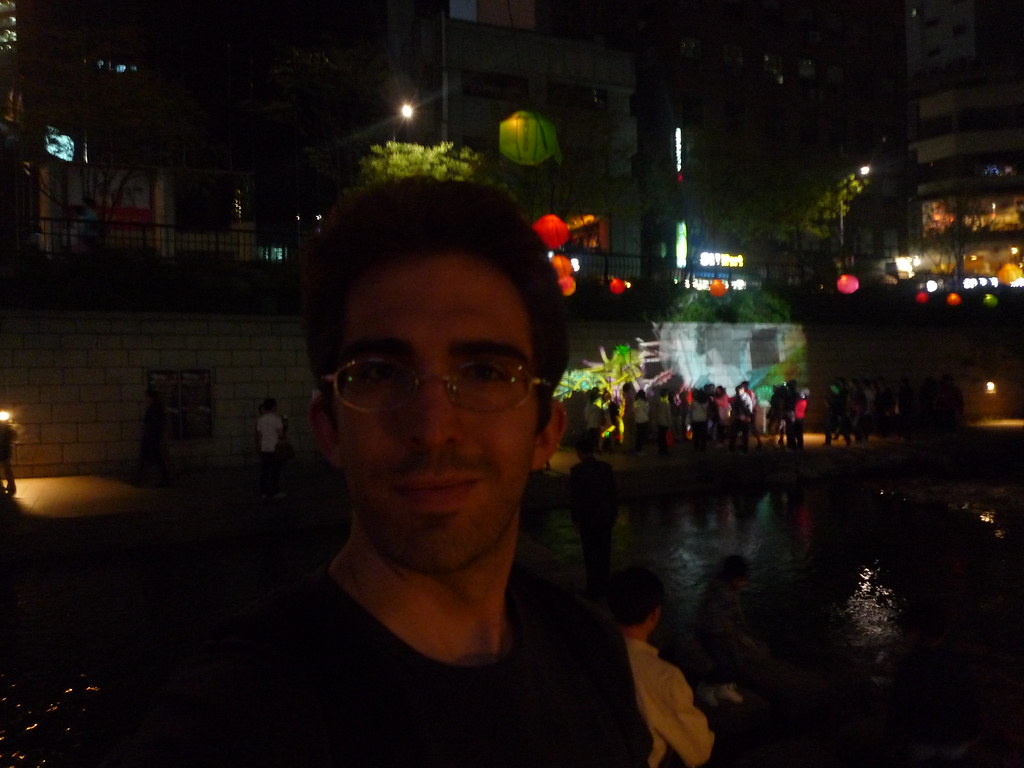
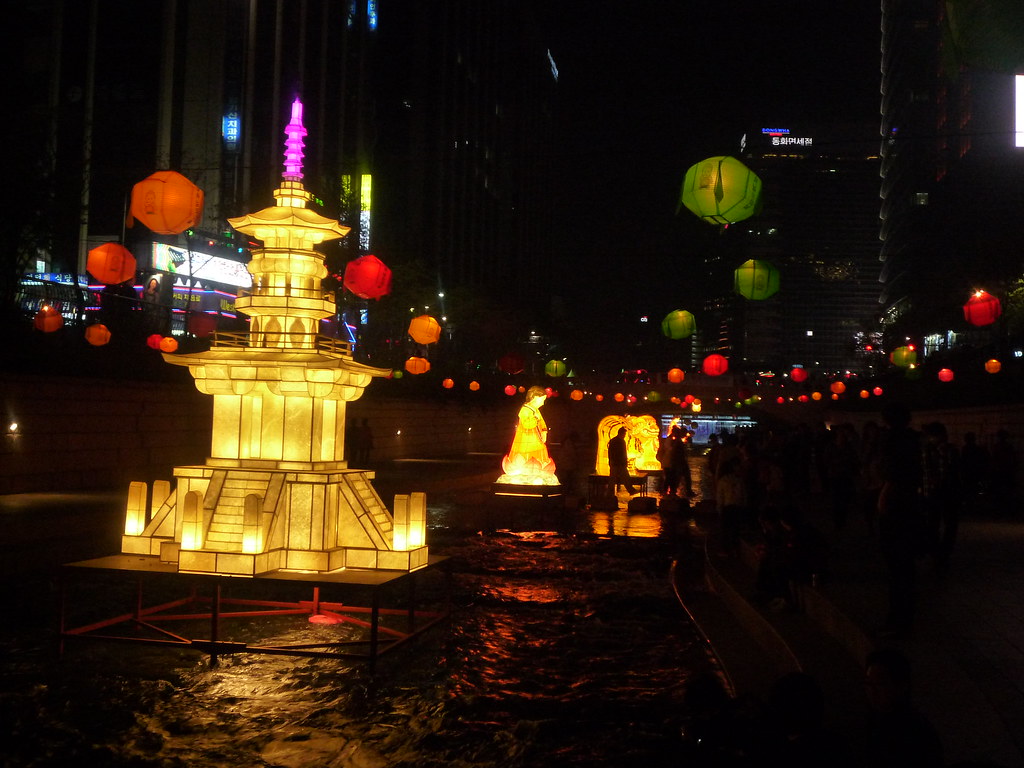
After the parade, I wandered the artificial stream than runs through Seoul, and which had been decorated for the occasion. 


The projections on the wall looked surprisingly three dimensional. 


I have no idea what Donald Rumsfeld was doing in the long chain of various images. 


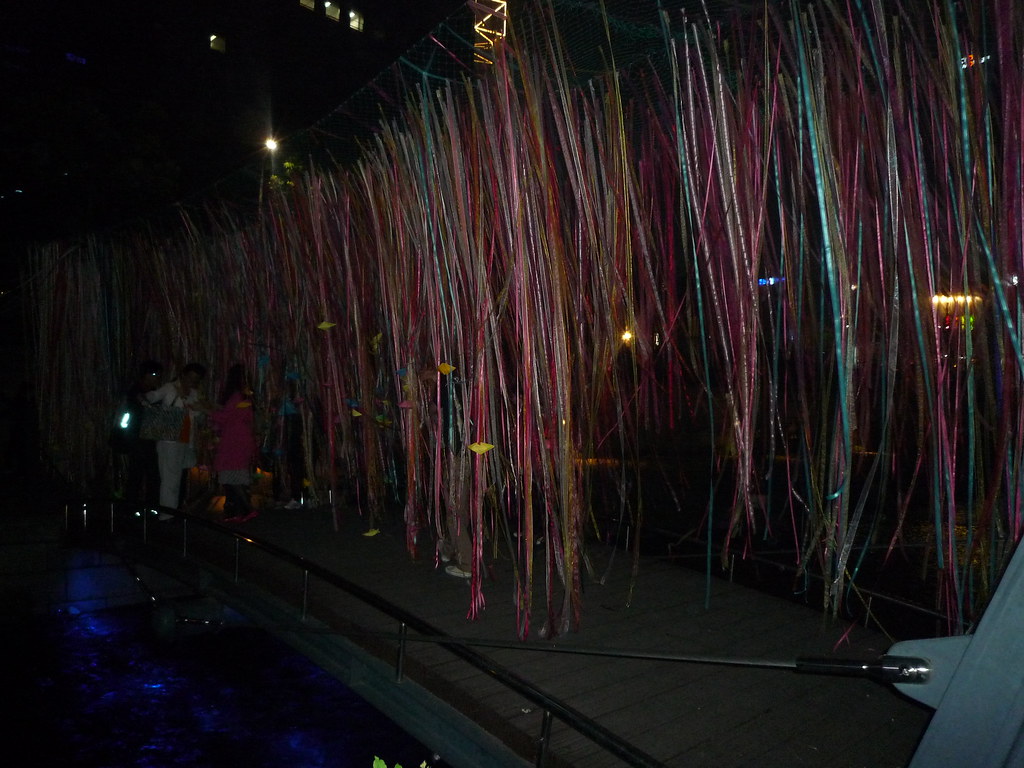
Some of the decorations reminded me of Renn Fayre at Reet. 


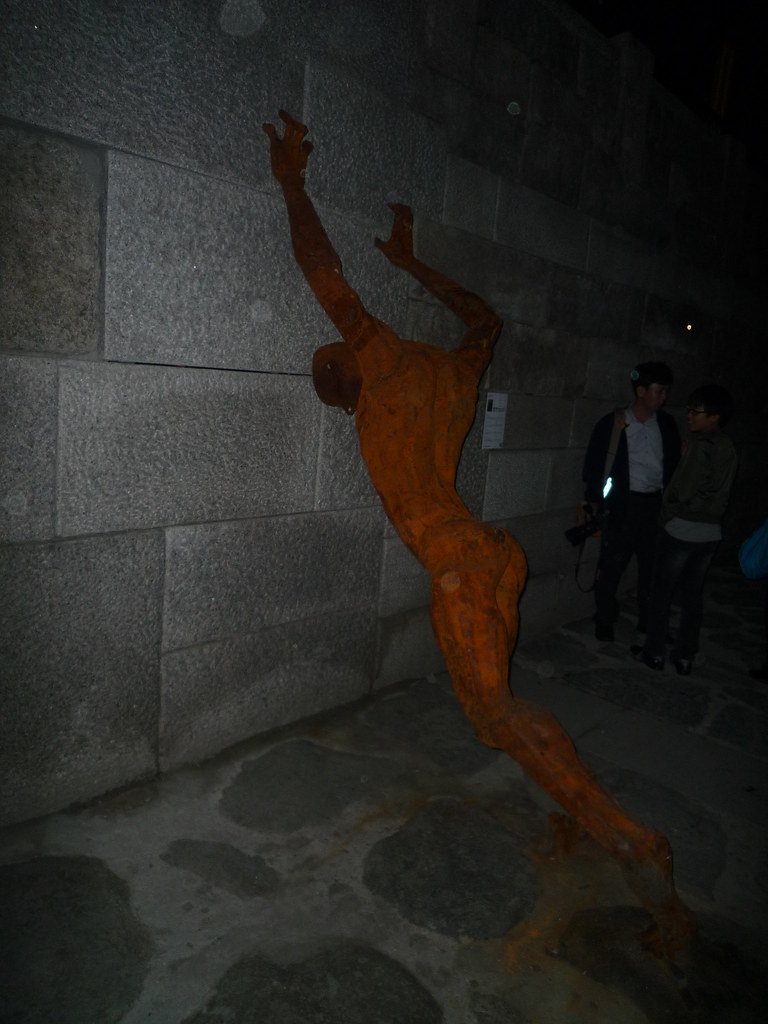
I liked some of the more permanent artworks along the stream as well as the festival decorations.


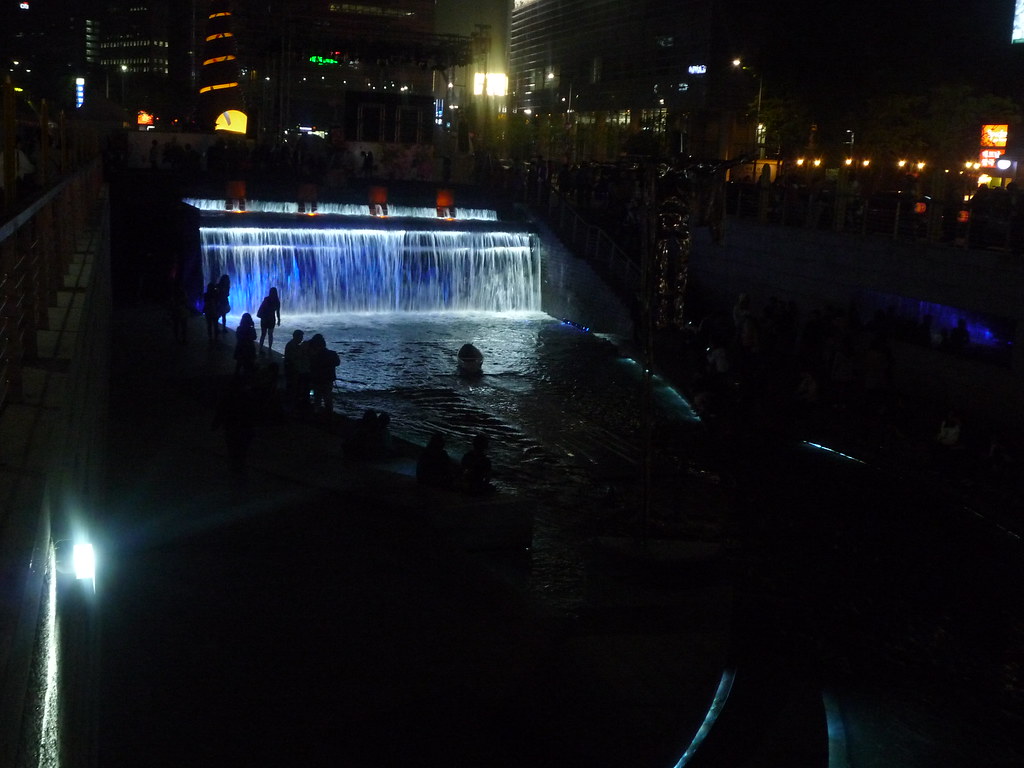
The pumped in waterfall that begins the stream has a pool beneath it, and several lanterns were placed there. 


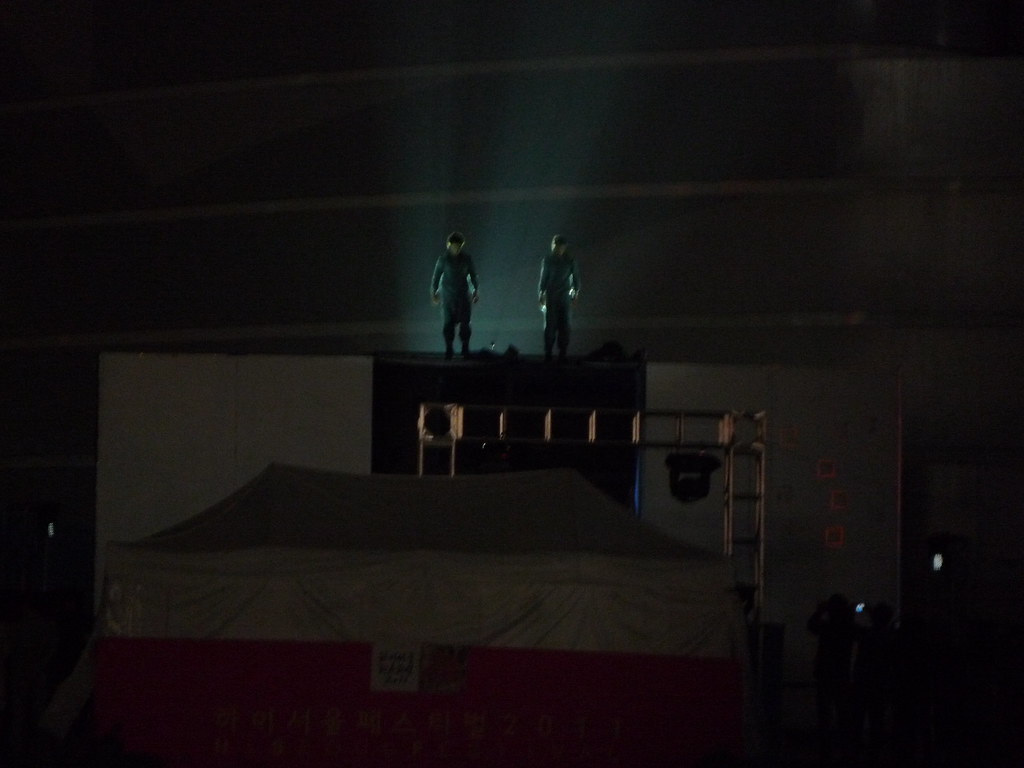
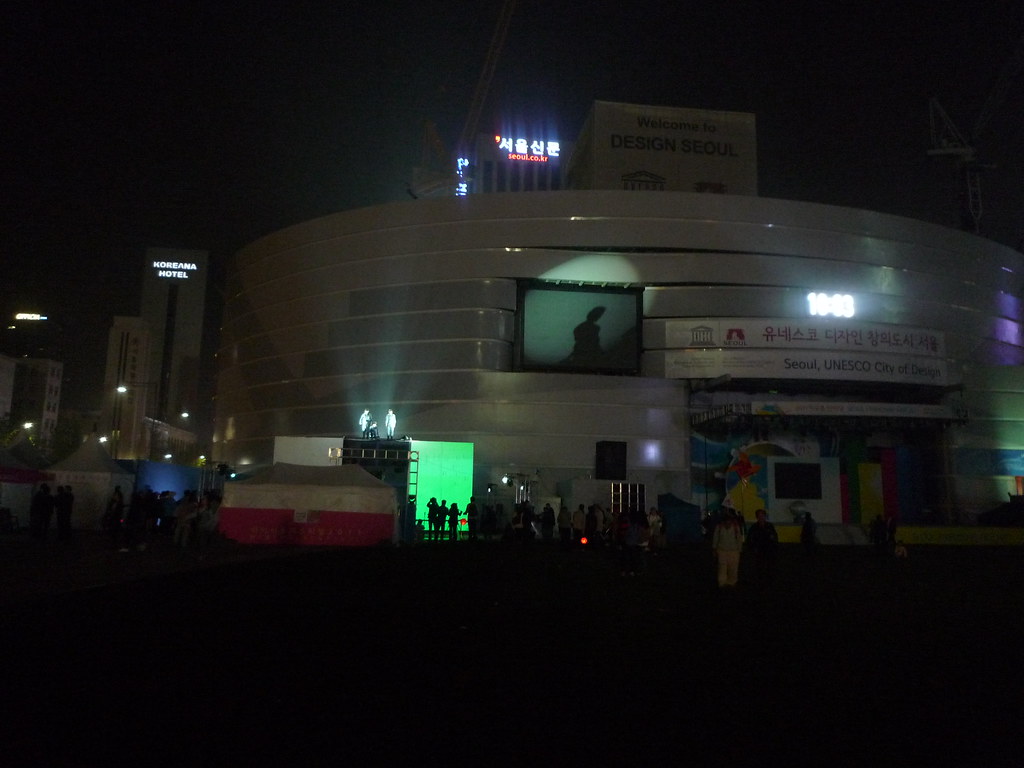
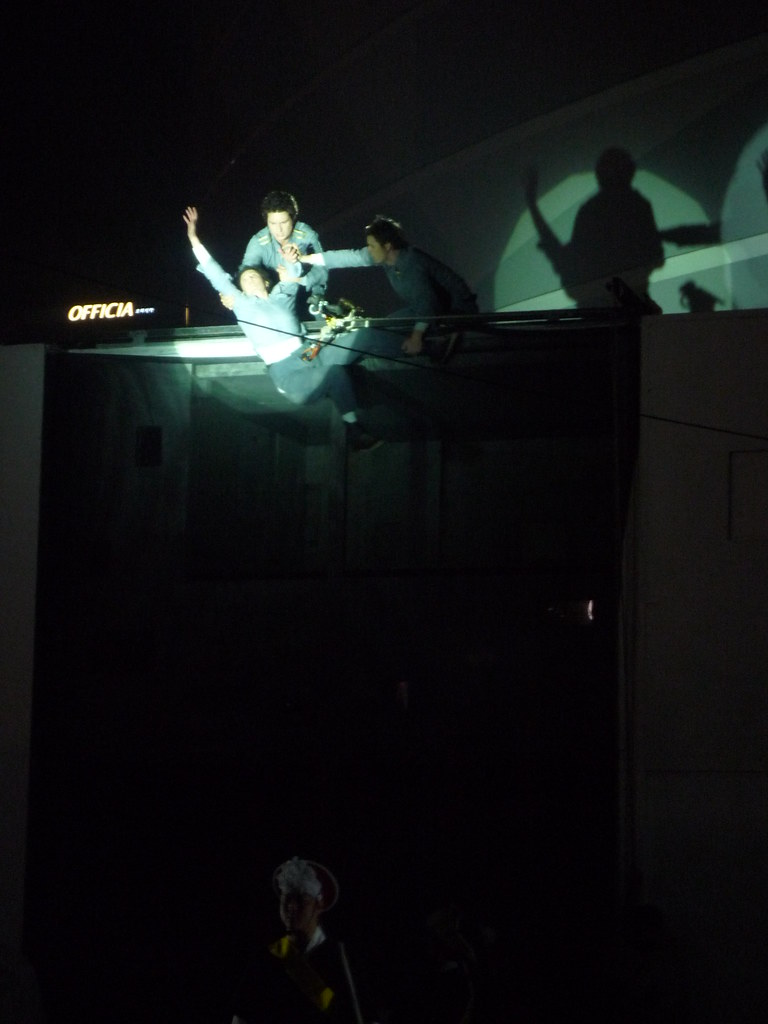
Not far away, I noticed shadows projected onto buildings, and caught the end of a very modern theatre production. 


The actors were roped into harnesses, and there was a great moment where one 'fell' in slow motion. 


On the subway home, I finished reading Siddhartha. I can't believe how much I dismissed the wisdom of the book the first time I read it, bad teacher or no. I was so excited and full of life and the joy of existence that instead of going to sleep right away, I wandered the stream near my apartment, enjoying the sounds of the stream or of two rocks clinking together. 

Friday, March 12, 2010

Leo Tolstoy Book Review

When my parents asked me what I wanted from home in Korea I answered without hesitation: books. English language books can be ordered from What the Book in Seoul (they even do free shipping to anywhere in the country), but Daejeon only had small and expensive selections. Among the authors I requested was Tolstoy since I'd never read any, and my mom sent all three of his massive novels (he wrote some other stuff too, but nothing remotely on the same scale). I just finished the last one, so here's my thoughts:

War and Peace:
This is one of those books that I assumed was read just because it was a classic without regard to quality, but it really is fantastic and absolutely worth slogging through the hundreds of long Russian names. I actually didn't like or relate to a single one of those hundreds of characters, but it was a very readable and entertaining look into the life of the Russian upper crust during the Napoleonic wars. The one character I did like and always found fascinating was Tolstoy himself as the narrator, who really was a character in his own right (though I don't think Tolstoy really intended it that way) and he has wonderfully amusing analogies and intriguing analysis and theories about those wars and war and the human condition in general. My favorite chapters were the ones with only the narrator laying out the current situation as he saw it. I don't know enough about the history of the time to say if it is accurate, but his analysis certainly was plausible and thought provoking.

On an amusing note, Tolstoy gives a description of one of the characters at the end, who at no point resembles me or my mindset, that describes me perfectly (with the aid of a couple of strategic ellipses to take the quote out of context):

He felt like a man who, after straining his eyes to see into a great distance, finds what he sought at his very feet. All his life he had looked over the heads of the men around him, when he should have merely looked in front of him without straining his eyes... In everything near and comprehensible he had seen only what was limited, petty, commonplace, and senseless. He had equipped himself with a mental telescope and looked into remote space, where that petty worldliness, hiding itself in misty distance, had seemed to him great and infinite merely because it was not clearly seen... but even then, at moments of weakness as he had accounted them, his mind had penetrated to those distances and he had there seen the same pettiness, worldliness, and senselessness. Now, however, he had learnt to see the great, eternal and infinite in everything, and therefore--to see it and enjoy its contemplation--he naturally threw away the telescope through which he had till now gazed over men's heads, and gladly regarded the ever-changing, eternally great, unfathomable and infinite life around him. And the closer he looked the more tranquil and happy he became. That dreadful question, What for? which had formerly destroyed all his mental edifices, not longer existed for him.
Anna Karenina:
This book continues the record of Tolstoy as a superb writer but with unlikable characters. I should clarify what I mean by superb writer: He doesn't write prettily or artfully. It isn't poetry. What he does is write descriptions that really give you the sense of a person and place, pointing out the little quirks and details of a person that fully fleshes them out. His writing fully engages the reader. The experience is like watching a high quality but not artsy film: it pulls you in so that you just experience the story without really noticing the medium though which you are perceiving it. As to the story and characters, the situation is rather foreign to us (or at least me). I kept thinking You have money and power. If your current lives are intolerable then leave and start a new life that isn't being strangled by weird upper class Russian social etiquette.' Actually, the main characters do leave for a while, but end up hanging out with other Russians and generally not escaping the suffocating social structure like they really easily could have. Some of the side stories are quite interesting, and Tolstoy uses one of them to discuss the nature of peasants and landowners of the time in a rather interesting way.

Resurrection:
Twenty years passed from the completion of Anna Karenina and Tolstoy's next full length novel. In the meanwhile he lost none of his talent but added a painful dose of moralizing to his writing. He became obsessed with his own brand of Christianity (which got him excommunicated from the Russian Orthodox church) and this work is full of 'lessons' that he wants people to draw. In previous works characters had certain moral and religious beliefs but the omniscient narrator stayed neutral as to their accuracy. Not so here. Every description is infused with moral judgment, making it rather difficult for me to read despite Tolstoy's powerful leading narrative voice. Tolstoy was very sympathetic to early revolutionaries and mentions Marx. He also passingly has a very minor character say that marriage between men is perfectly acceptable (though Tolstoy and his mouthpiece of a protagonist viscerally disagree). Even Nietzsche gets mentioned, though Tolstoy thinks he is quoting Nietzsche when he is actually quoting Nietzsche quoting the original Assassins (nothing is forbidden, everything is permitted), and of course totally misunderstanding the philosopher by taking his statements out of context (as the vast majority of Nietzsche's readers always have). Anyway, if you can get past the narrator's constant moralizing, Resurrection is a decent read.

Overall, I would highly recommend War and Peace if you have even a passing interest in warfare, history, Russia, or amusing analogies. Anna Karenina is pretty good, and Resurrection is very readable but not all that enjoyable.

Tuesday, December 23, 2008

Et tu, Orson?

Andrew Sullivan has started the voting on the Daily Dish Awards in journalism (or lack thereof in supposed journalists). One nominee that stuck out was author Orson Scott Card:

Regardless of law, marriage has only one definition, and any government that attempts to change it is my mortal enemy. I will act to destroy that government and bring it down, so it can be replaced with a government that will respect and support marriage, and help me raise my children in a society where they will expect to marry in their turn. Biological imperatives trump laws. American government cannot fight against marriage and hope to endure. If the Constitution is defined in such a way as to destroy the privileged position of marriage, it is that insane Constitution, not marriage, that will die.
I just reread the Ender's Game and Ender's Shadow series, and I have trouble reconciling the author of those books, who clearly understands the atheistic world view, with the author of the Mormon Times op-ed piece, who clearly has no comprehension of the fact that there could even be any view other than his own. I know better than most how much people can change, so I guess I shouldn't be too surprised. RIP old Orson. Shut up new Orson.

Update of sorts: It isn't as surprising when Pope Palpatine is as disgustingly bigoted:
Pope Benedict XVI has said that saving humanity from homosexual or transsexual behaviour is just as important as saving the rainforest from destruction.

Sunday, November 16, 2008

David Foster Wallace book reviews

As I mentioned in a previous post, one of my favorite authors--David Foster Wallace--killed himself this last September. This summer I read (or reread) all of his published books, and I thought I would share my reactions to them.

Nonfiction:

Wallace is a brilliant essayist, whose insights into American cultures in particular and humanity at large are staggering.The essay collections are by far my favorites of his works and are certainly among my favorite books. However, I am an academic at heart, and the essay format is not for everyone. These aren't dry, humorless works, though, so you should give them a shot even if you prefer your insights to come through fiction. I probably laughed thrice as often reading these essays than I did during his novels.

  • A Supposedly Fun Thing I'll Never Do Again: This is the first DFW book I read, back when I was in high school and had to read it with a dictionary in front of me (A word of warning: DFW's vocabulary can be intimidating, but is more than worth it. He is not simply showing off but rather is using precisely the right word in every situation, where every connotation of the word is considered and well used). The book is a collection of essays on various topics, from the connections he made as a child between tennis and calculus, to the film director David Lynch. Wallace had a gift for understanding and clearly explaining points that I at some level recognized and was affected by yet was unable to articulate. A prime example is our shared dislike of television as a medium, which I usually have trouble defending but that Wallace not only defends but uses that defense as a way of making sense of American culture, something which I am completely unable to do by myself. Wallace gives me an understanding of elements of American culture where I am clueless, which is impressive because I don't really even want to understand those people, I just want them to go away or change. "Getting Away from Already Being Pretty Much Away from It All," an essay about the Illinoise State Fair, makes sense of behavior at state fairs that completely dumbfound those of us who are not from rural areas, such as all going to the food stands at the same time and having to wait in enormous lines instead of just coming back in a few hours when no one else is there. The short and witless version is that people from rural areas --unlike people who have lived in cities--rarely see even their closest neighbors and never are in crowds and lines, so while we would go to be secluded as a break from our ordinary lives, they go to be in a mass of people for a change of pace. Wallace is full of such insight (I am overusing this word, but my vocabulary is orders of magnitude more limited than DFW's and anything less sells him short), only with more humor and humanity than I know how to express. The book's title essay is my favorite. He was sent to go write about a cruise, and it sums up better than I ever could the disgust that I feel as a tourist and the shame at being with fellow Americans at their most gluttonous and materialistic (especially when traveling abroad). I highly recommend at least trying this book to any of my friends.
  • Consider the Lobster: This book is another collection of essays quite similar to A Supposedly Fun Thing I'll Never Do Again. The opening paragraphs of the opening essay, "Big Red Son," are reason enough to love Wallace. I won't even summarize it because I can't do it justice. In "The View from Mrs. Thompson's" he deals with being in a red state on September 11th, 2001, going to a neighbor's because he didn't own a TV. He deals with the red/blue divide in a way that illuminates both sides without hating either. "Up, Simba" is an account of his travels on the Straight Talk Express, back in 2000 when McCain seemed like a decent human being who loved his country and truly wanted to serve it. It is a must read for political junkies, and a good read for anyone else (the essay was recently republished alone as McCain's Promise: Aboard the Straight Talk Express with John McCain and a Whole Bunch of Actual Reporters, Thinking About Hope in an effort by his publishers to make more money in light of McCain's 2008 run). The title piece was actually published in Gourmet magazine, which is hilarious because it is about how weird and gross it is to eat lobster. He was sent to cover a Lobster festival in Maine, and comes up with a piece similar to the one about the state fair. Basically, people in groups are weird, and DFW know how to capture why [why both as in in what manner and as in the motivating and causal factors] they are weird. One of my favorites, but one which is mostly appealing because I'm a huge philosophy nerd, is "Authority and American Usage." This essay is seriously a review of a dictionary, and it is one of the most fascinating things I've ever read. Basically, it shows how to be a language nazi in the face of postmodernism, and as an added bonus explains (the later) Wittgenstein in a few pages more clearly than Wittgenstein ever explained himself [this one is not for the faint of heart because it is longer and dryer than his usual essay, so if it doesn't grab your interest you might skip over it]. The final essay, "Host," shows just how disgusting a parasitic conservative radio personalities can be. It is also probably the weirdest layout I have seen other than certain sections of Mark Z. Danielewski's House of Leaves. Wallace does not write in a linear fashion. He always uses a lot of footnotes to talk about tangent (much the way I use parentheticals, except that footnotes don't interrupt the flow of the main text as much). In "Host," instead of littering it with footnotes he uses boxes of text with arrows drawn to them, which works surprisingly well. Anyway, the books of essays are my favorites of DFW and my first and highest recommendations.
  • Everything and More: A Compact History of Infinity: This isn't a book of essays. It is an explanation of the concept of trans-finite numbers (numbers bigger than infinity). As such, there is a lot of math in addition to a lot of history of math. If you don't care about what the hell trans-finite numbers are or about the utter weirdness of infinity, seriously don't read this. If you are interested and aren't a math major, this book is definitely for you. It is a book about math that is actually funny and entertaining and (relatively) easy to understand.
Fiction:

-Short story collections:

These, honestly aren't my favorites of David Foster Wallace. I still like them, but they don't have the life altering, paradigm shifting power of his novels or essays. However, you might like them more than I do if you are a fan of post-modern fiction (though not all of it is), literary criticism, or literature classes.
  • Girl with Curious Hair: There is a lot of stuff in here (and in the other short story collections, but this book the most) about meta-fiction and postmodernism. I typically dislike postmodernist fiction (and despise postmodernism in many other topics [more on that in a later post]), but I love DFW's metafiction. For history/political buffs, there is a great historical fiction piece featuring Lyndon Johnson. "Westward the Course of Empire Takes Its Way" is amazing meta-fiction about a book of meta-fiction (which I haven't read), John Barth's Lost in the Funhouse. It is also about McDonald's.
  • Brief Interviews with Hideous Men: The first time I read this book, it made me deeply self aware of my attitudes towards relationships and sexuality, and made me want to change them. The second time I spent less time worrying as to whether or not I was a hideous man (both because I have changed and because I'm not sure that I would care if I were) and more time enjoying the stories (in particular, "Tri-Stan: I Sold Sissee Nar to Ecko" is a hilarious mix of commentary on the film/TV industry and Greek mythology, perfect for Reedies). "On His Deathbed, Holding Your Hand, the Acclaimed New Young Off-Broadway Playwright's Father Begs a Boon" expresses many of my fears and disgusts at the idea of having children. "Octet" is meta-meta fiction that is an amazingly open, unguarded, desperate, urgent attempt to connect with the reader. In addition to sexuality and having children, this book also deals with depression and the general disillusionment that comes with adulthood. It is my favorite of the short story collections, but depressing as hell [example of how depressing it is: there is a story titled "Suicide as a Sort of Present"].
  • Oblivion: Stories: A lot of stuff here on consumerism and corporate culture. Disturbing, but interesting. Frankly, I read all the short story collections in one day, so they sort of blur together, especially since DFW has a very distinctive style that permeates all his work. Much of the generalities I made about the previous two books also apply here.
-Novels:
  • The Broom of the System: There is a lot about Wittgenstein in this book (and it is even accurate!), and I am a Wittgenstinean, so of course I loved it. However, don't let that discourage you non-philosophy majors. This is most certainly not a philosophy book, it just happens to mention a particular philosopher and his theories a lot. Really, it is the most accessable and fastest read of anything by DFW. There aren't even footnotes. Lot's of good concepts explored here, like how we define ourselves and good body image/boundaries. Also, interesting characters.
  • Infinite Jest: This book is about four times as long and four times as dense as The Broom of the System. This tome took me a month of solid reading to finish, which is saying something. It was more than worth it, but it took me a while to get into it. I tried to read it once before and only got about thirty pages in, realized that there were three times as many pages of footnotes as that, and wasn't really laughing yet. I didn't find the book as funny as some of the reviewers lead me to believe I would (though there were some definite laugh out-loud moments). However, the imagery and ideas and characters will stay with me forever. This is a deep, deeply moving, indescribably insightful look into consumerism, depression, addiction, and other aspects of American life. You might have to work your way up to it, but if you do this book will change your outlook on life. It is also very sad, mostly because DFW understands depression so well that you know he had to have suffered from it himself, and that he suffered from so-called psychotic depression, which is infinitely worse than the melancholic depression I sometimes get. He talks about suicide too, so we know how bad it was for him to have to kill himself. He has a suicidal character describe suicide through an analogy to jumping from a burning building (this was written pre-9/11). Jumping from a sky scraper isn't any less terrifying or any more appealing than it would be on some random Tuesday afternoon. It's just that the fire is worse. Jumping doesn't seem like the more appealing alternative, just the less appalling. It is a tragedy for anyone to feel like that, and an even greater one to lose one of the greatest and most creative minds of our times. David Foster Wallace, you will be missed.
Update (9/18/13):


  •  "Deciderization 2007 — a Special Report" The introduction as guest editor to The Best American Essays 2007: Here Wallace introduces the concept of Total Noise: the overwhelming data available/pressed upon us in contemporary existence. He selected the essays in the book as examples of people able to draw out meaningful information from the total noise, and thinks they are exemplary for doing so. This is a short, easily digestible bit of insight that is definitely worth reading. Among the essays themselves, I was floored by the first one: Werner by Jo Anne Beard. It is so incredible that it reads like fiction, in part because Beard masterfully crafted the narrative to make the nearly unbelievable make sense, with every flashback adding in information that shows how the events of the main story line are possible. It packs a hell of an emotional punch, in addition to having the narrative structure that I will now forever be aiming for in my own writing. I read her other books: the novel In Zanesville and the collection of nonfiction autobiographical pieces The Boys of My Youth. They were both fairly good reads, but didn't come close to the absolute perfection of Werner (though holy shit did she have some intense experiences that I did not at all see coming). 
  • The Pale King: Wallace's posthumous last novel is not quite complete, yet is up to his usual standard of excellence. It deals with boredom, mundane existence, and the author's place in narration, among other things. Told as if he were an employee at the IRS, it is in many ways the expansion of the Total Noise concept, paired with a new definition of heroism wherein the trues heroes of the modern age are those who endure mind-shattering boredom to turn masses of meaningless data into useful information. 
  • Apparently there is a new collection of DFW essays entitled Both Flesh and Not! I need to acquire this book as soon as possible. 

Friday, November 7, 2008

Update

As long as I'm asking all of you what you are doing, it is only fair to update you on the last couple months of my life.

In mid-September I Craigslisted my way down to visit Ben and Elana in Berkeley. Besides catching up and hanging out with this much-missed pair, notable events include seeing several plays, attending a class of Ben's, and going to church. (Now that I'm back in Colorado Springs I'm struck by how much more tolerant I am of religion than when I last lived here, in large part due to meeting intelligent and tolerant religious people, first and foremost Ben.) Three of the four plays I saw were excellent, and one is worth discussing in detail. Ben, Elana, and I met up with Mark, Ginger, and Amory to see a production of MacBeth (sorry theatre people, I'm not superstitious, so I won't be eumphamistic) that is probably the finest piece of theatre I have ever witnessed. It took place in Fort Point, below the Golden Gate Bridge on a windy night with the ocean audibly pounding against the shore. The actors moved through the crowd, including us at times, such as the banquet scene where the actors pushed the feasting audience out of the way to talk to each other. One of my favorite moments was when the witches used bibliomancy, letting the wind blow the pages of a book for a few seconds before slamming down a peice of bone and reading the page that was chosen by fate. The play ended on the roof of the three story building, from which we had a spectacular view of the city across the bay below a full moon. Afterward I went with Amory and Ginger, who managed to light some lanterns in the wind, and eventually we celebrated the full moon with moon cakes and more lanterns in Oakland.

Oh, the other major event to occur while I was in Berkeley was that one of my absolute favorite authors, David Foster Wallace, killed himself. I read everything he ever published this last summer. He was one of the most insightful people I have ever read, and so I am saddened but not surprised that he found the world unbearable. This is especially so in light of his insights into depression, which were far too accurate and poignent to have been gained second hand.

After five days in the bay area I took the Craigslist express down to Pasadena to stay with my aunt, uncle and young cousins. My uncle was in the process of overseeing the editing of a short film he financed, produced, and directed, and which is actually very funny and well done. It may be picked up as a full length film or a TV series, so if you ever see something called The Breakup Guy you should check it out. My aunt and I volunteered some for Obama, and I spend most of my time obsessing over politics and watching movies. (Warning, a rant on the election is probably forthcoming [Obviously I'm a fan of parentheticals. I hope that doesn't end up being too distracting. What can I say, I'm a fan of David Foster Wallace, so you're lucky my posts aren't littered with footnotes as well]). While in the LA area I also caught up with a friend from highschool who is working on a ranch where they train animals for movies, combining her two passions of film and equestrian programs. While there I fed baby zebra, buffalo, and camels (one and two humped).

Eventually, after an enjoyable visit I took another craigslist ride share to Grand Junction, CO. People keep asking me about the craigslist experience, and in particular always ask if I felt safe. In short, yes. All three of my rides were offered by young women (aged 21-30), so I thought it was funny that the decent sized guy with a beard was the one people worried about (granted, it was my family that was doing the worrying). I like to point out that if the driver invites two other people who don't know each other in advance, then the odds of us both being crazy, and crazy in the same way, is highly unlikely, so rideshares are pretty safe. I also managed to end up with people who were all at least moderately interesting and none of whom were annoying. My last ride actually is also going to teach English in Korea. Small world.

Anyway, my maternal grandparents live in Grand Junction. I visited with them, and did a lot of chores that are difficult when you are under 5'7" and over 80 years old. (I am making a conscious effort to visit my relatives, and especially the older ones, before I leave. My grandfather is turning 87 this week, and I may be gone for as long as five years. It is strange to think about, especially since no one close to me has died [my paternal grandfather died well before I was born]. For that matter, my dad will be 54 in a couple months, which is much older than his father lived to be. I have no idea how I will react to the deaths that will surely occur in my family in my lifetime, assuming I don't end up dying first by doing something stupid in Asia [no Dan, we can't climb Everest {...but maybe a smaller Himilaya...}]) In Grand Junction I also met up with my paternal aunt and uncle (my dad and his brother are named Rock and Clay, by the way). They were stopping by their home in Colorado after returning from six months in Alaska and a couple weeks llama packing in the Rockies. They have since left again to go travel in India, Laos, Vietnam, Cambodia, Taiwan, and to visit friends in Stockholm, Sweeden. They are very much inspirations to me. They've been traveling thier whole lives, and being over 60 hasn't slowed them down at all. They introduced me to their latest toy, a laptop that only weighs two pounds and is small enough and durable enough to take backpacking. I expect to be blogging with one during my trans-Asian trek.

After a week with my grandparents I took the train to Denver, and stayed a couple nights with yet another aunt and uncle there. The train ride through the mountains is rather pretty, though very long. After that I finally went to my parents' house in Colorado Springs. Once here I applied to teach in Korea, then volunteered for the Obama campaign. A week ago my mom put new carpet in her bookstore, which involves packing up 70,000-ish books, putting them in a shipping container, moving all of the shelves, waiting for half the carpet to get done, then moving the shelves to the other half of the building, waiting for the rest of the carpet, moving the shelves to their original positions, unloading the books, and re-alphabetizing them. So, fun times. As soon as the heaviest labor was done, I started volunteering for Obama full time. In the last five days of the election I knocked on over 1000 doors. On Halloween I went trick or voting as an Obama yard sign. It was encouraging to see so many people support Obama in the fundamentalist christian hellhole that is Colorado Springs. In the end, my county went 40% Obama, which was precisely our goal. Mark's Uncle, Hal Bidlack, was running for the house seat in my district, but sadly lost badly. Otherwise, Colorado didn't fuck up (we went for Obama, Democratic Senator Mark Udall, and defeated an attempt to amend the constitution so that life is defined as the moment of conception [and by we I mean the people around me. I voted in Oregon, a decision vindicated by the fact that the Merkeley-Smith race was a lot closer than any race in CO, plus the fact that voting in Oregon is fun: you vote for the better candidate rather than the least bad one]. Also, the house seat of Tom "I want to end all legal immigration" Tancredo from the republican primary went to a Democrat).

Since then, I've mostly been savoring (most of) the election results and helping with the alphabetizing effort at the bookstore. Oh, and finishing my application process for going to Korea.
  © Blogger template 'Minimalist G' by Ourblogtemplates.com 2008

Back to TOP