Wednesday, November 25, 2009

Speech Contest

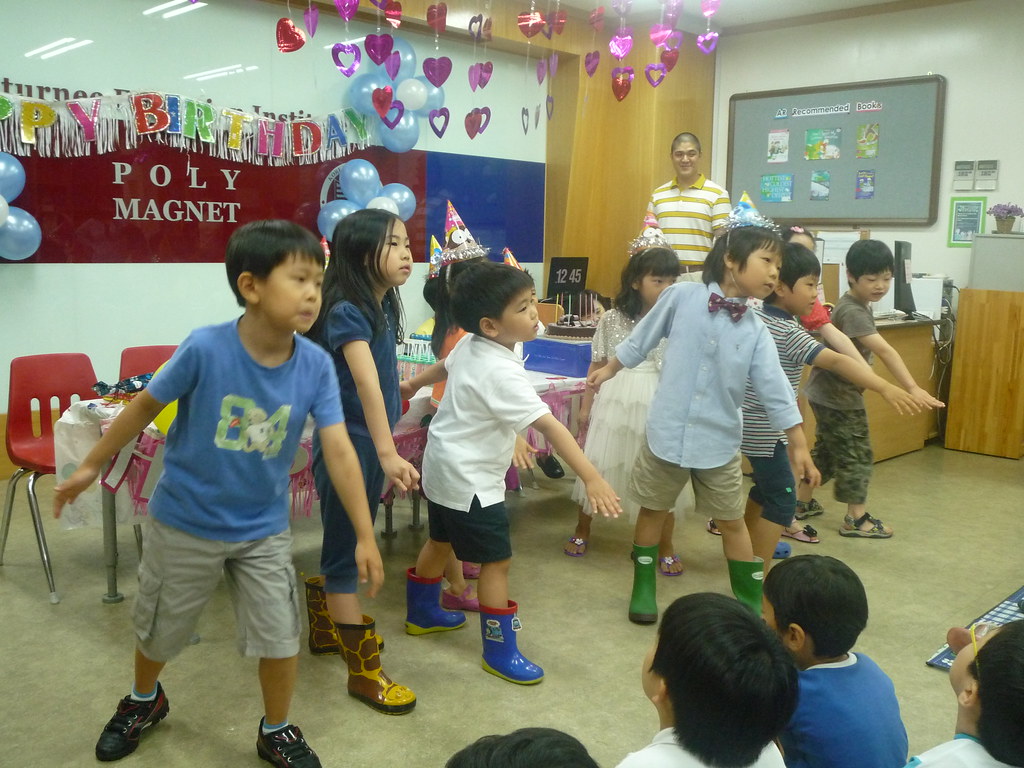
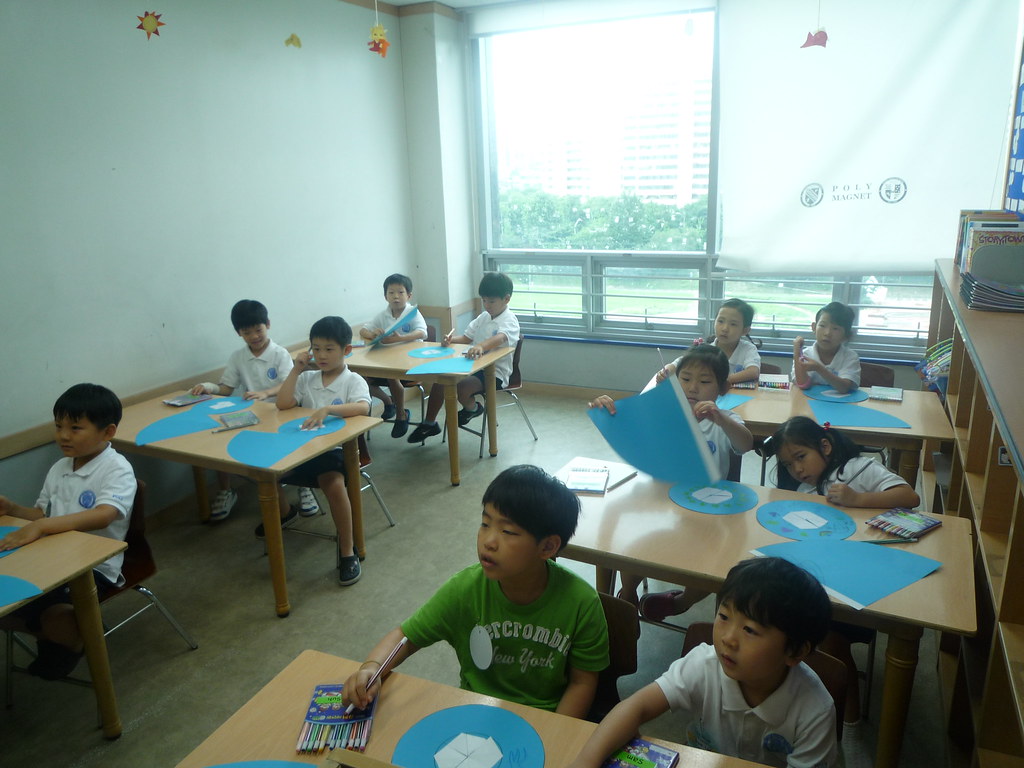
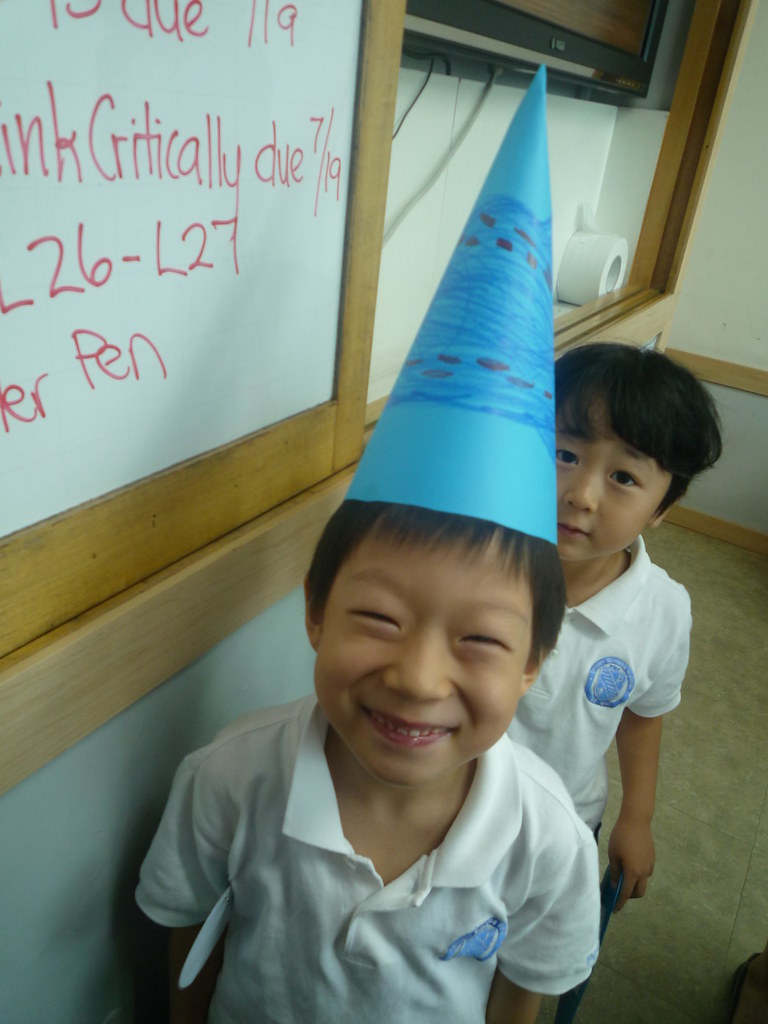
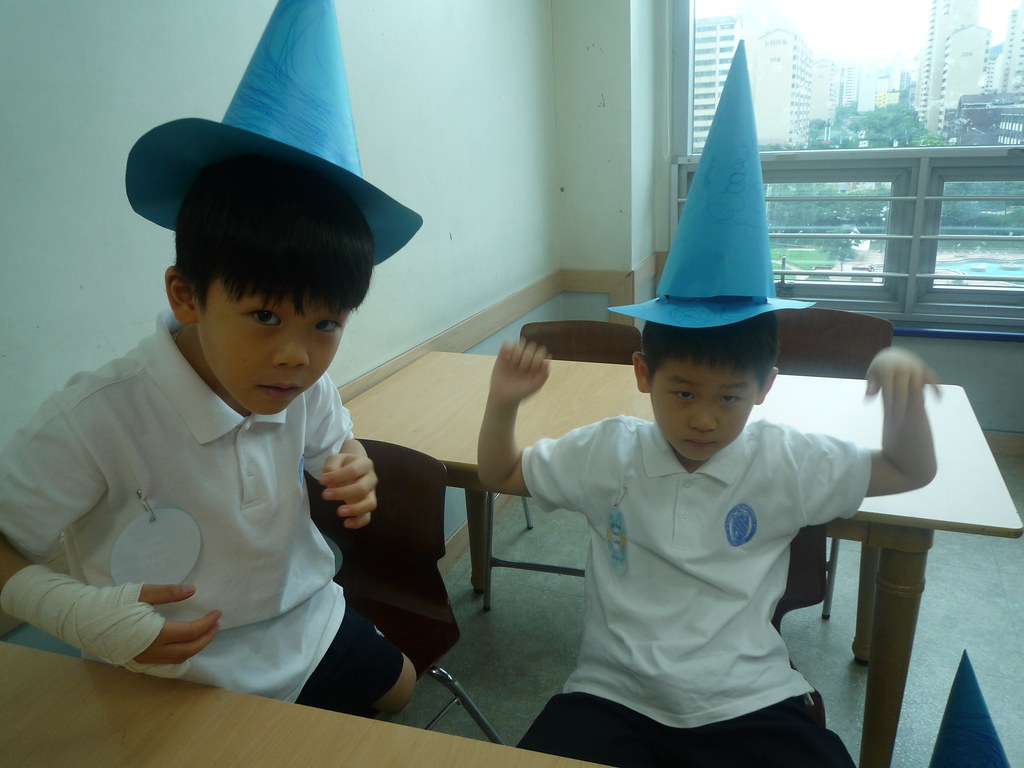
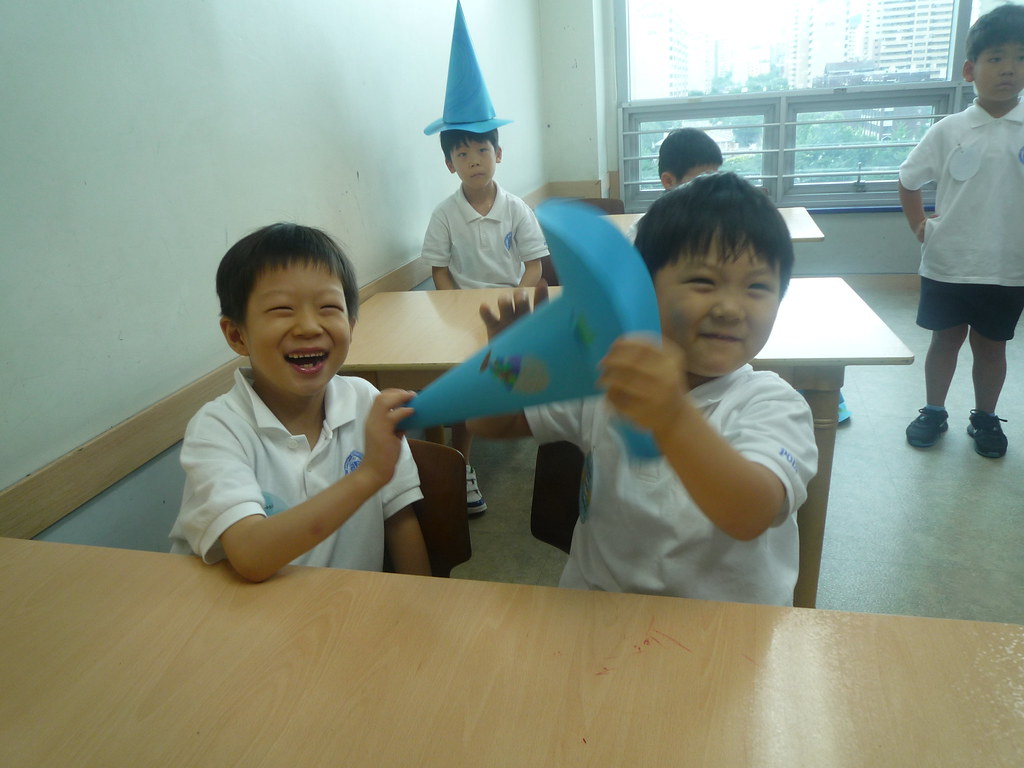
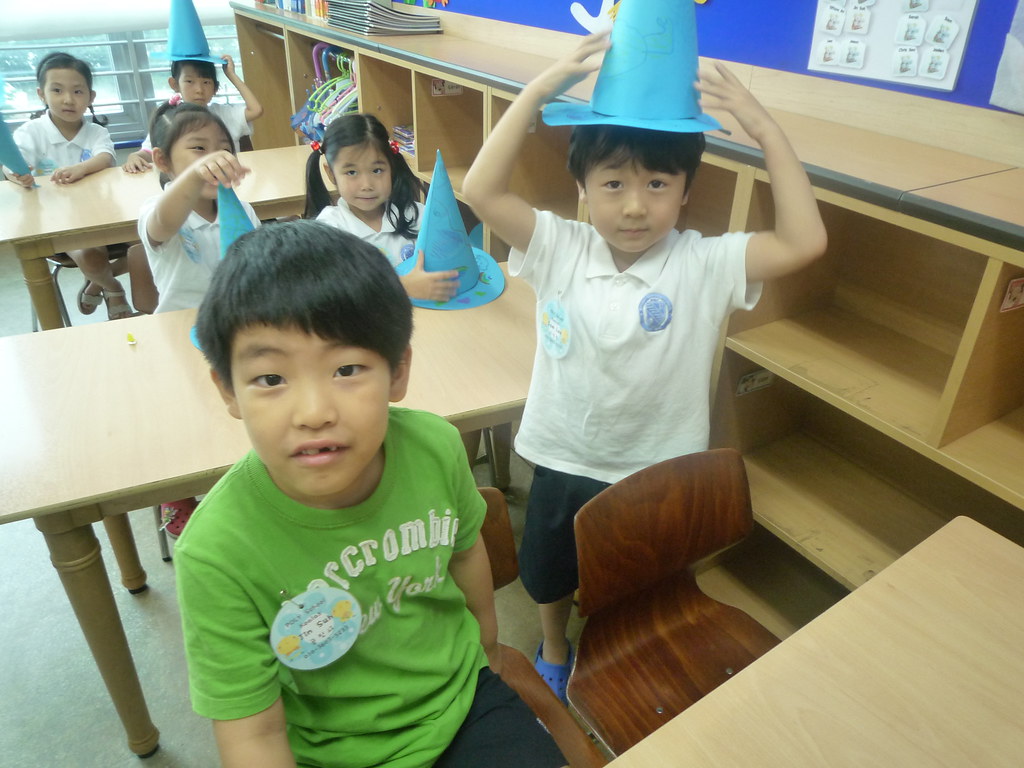
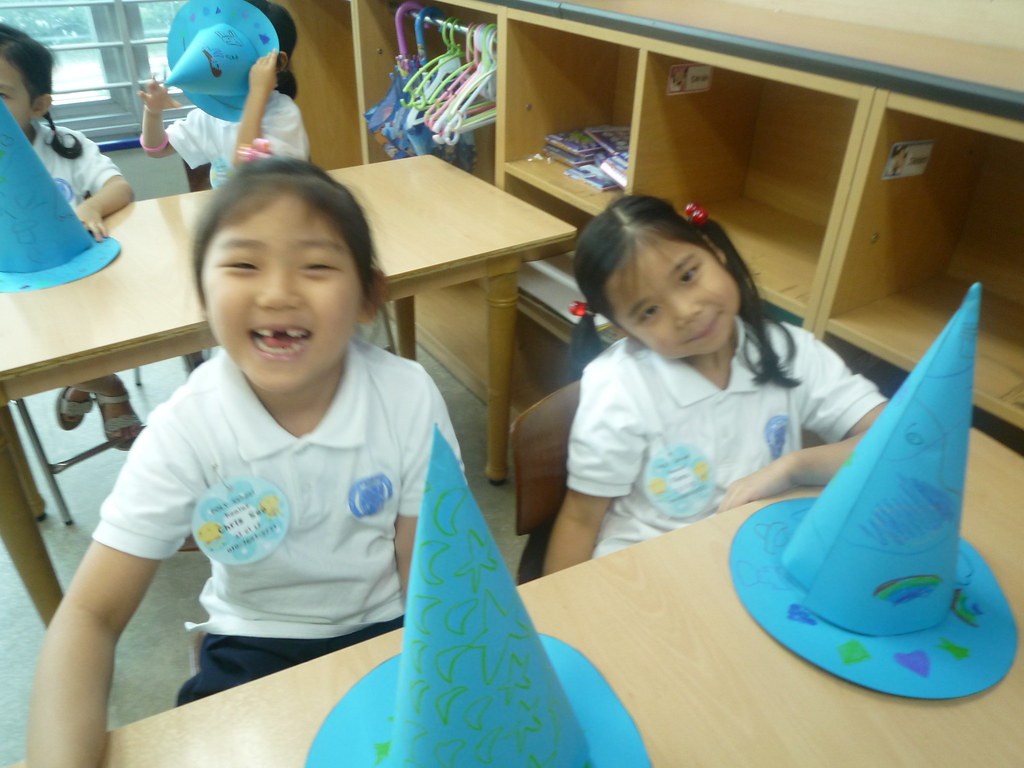
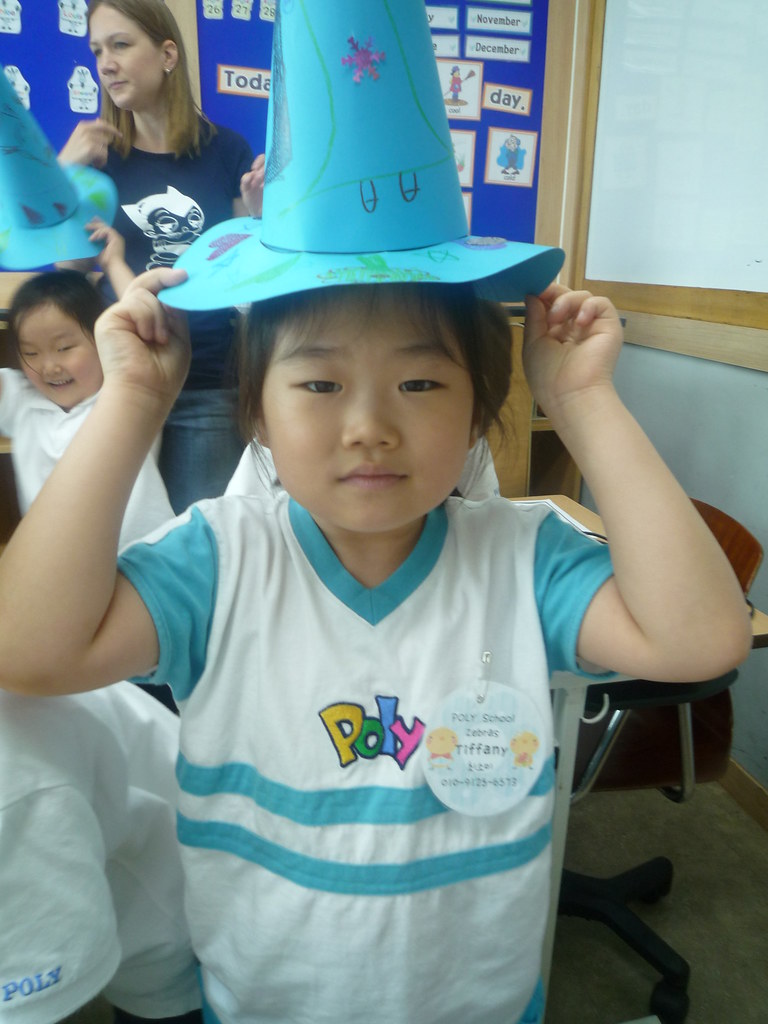
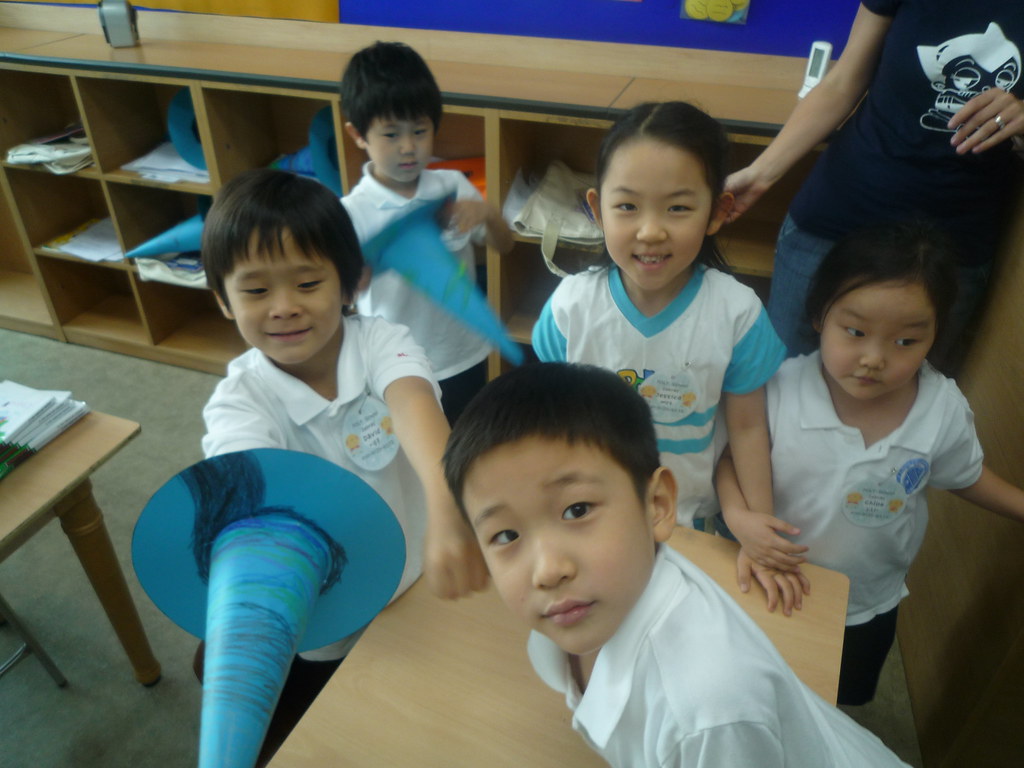
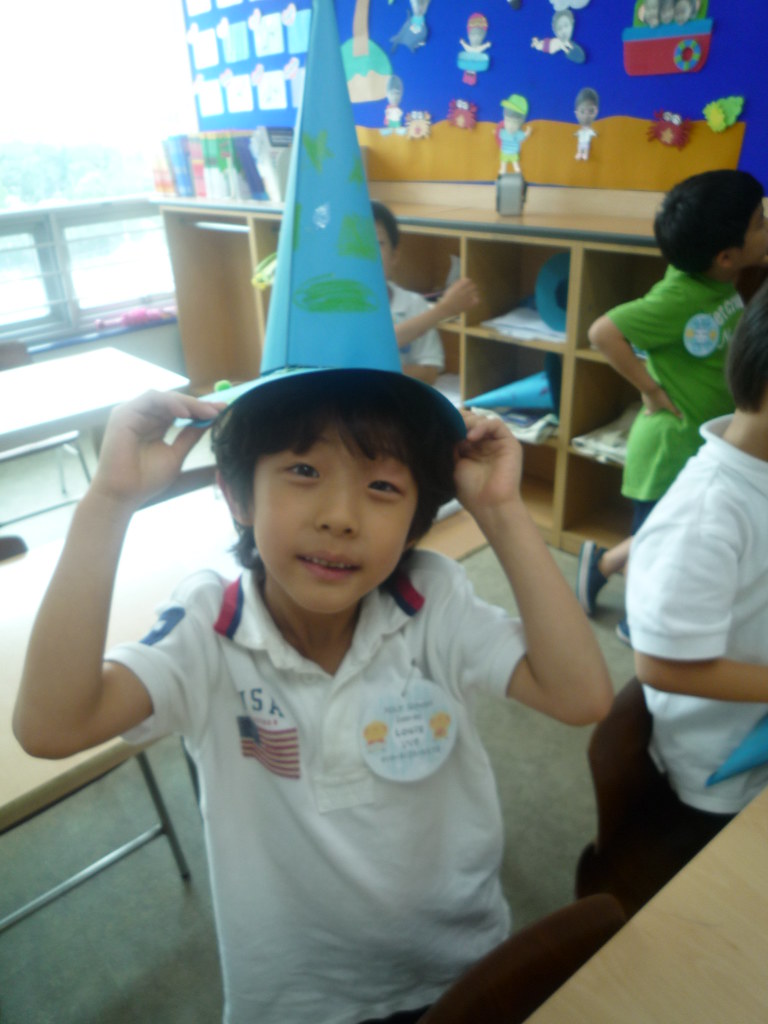
In September (yeah, I'm that far behind on blogging, sorry) my hogwan had a speech contest, which was very similar to August's drama contest except that the older classes gave individual speeches instead of saying their parts in a play. The younger kids still sang songs, and all of the pictures are of Saturn class due to their adorable outfits:


Tuesday, November 24, 2009

Geumsan Insam (ginseng) Festival

One festival that wasn't canceled was the festival celebrating insam (which the Western world knows as ginseng) in a small city near Daejeon. The festival was surprisingly interesting. Geumsan is a fairly small agricultural town, though it was all decked out for the festival:


The town had an agricultural market with some very fresh food:


They had strangely shaped roots, mushrooms, and even lizards floating in decorative jars, which made all the shops look like wizard laboratories:


(even this table was made from bottled ginseng. )


(Here the roots are tied together to form star patterns.)


They also had entire warehouses full of ginseng sans decorative jar, which is amazing since the lower quality ginseng is grown for five years and the good stuff is in the ground for seven.


Other strange things for sale included the velvet from deer antlers...


...dried silk worms...


...and (I shit you not) live bees sold in bags (?!?!) with small honey combs.


There were ginseng statues, ginseng aroma rooms, ginseng (and other) scarecrows... you get the idea:


We ate deep fried ginseng, ginseng icecream, and ginseng infused Korean pancakes, all of which were pretty good.


The samples of ginseng tea on the other hand... well, ginseng doesn't actually taste very good, especially when concentrated. Just about every other Korean food there is (including silk worm larvae and chicken feet, both of which I declined to try on the basis of their smell) was available with a nice helping of ginseng tossed into the pot.

I don't think there was ginseng on the roast pig, but I 'm sure it could have been arranged:


There were also some events with no obvious connection to the wonder plant, such as a synchronized dance competition to Korean pop songs and a calligraphy stand. As Westerners we were given a free* sheet of calligraphy stating the wish that Alanna and I remain happy together. (*The price was that we were interviewed and had our picture taken and will probably be on the brochures and website for next year's festival. Every festival likes to have pictures of the token white person enjoying the event.)


One of the more fascinating parts of the festival were those having to do with health. Keep in mind that the festival took place in the middle of the swine flu panic, so there were handwash stations everywhere, and the aroma room had a 'fever detector' that looked like a metal detector but claimed to be able to remotely take out temperatures as we walked through it. Thus people were even more desperate than usual to believe nonsense like booths that claimed to predict a lot about your health on the basis of what basically amounted to palm readings:


The ginseng museum also talked quite a bit about health. It had posters that made claims that ginseng helps in pretty much any aspect in health, from its famed roll as a male enhancement drug to claims that it prevents the common cold, provides more energy, and stops cell degeneration so that people live longer. My favorite claim (and seriously, this was in writing in the bloody museum, the only really official looking part of the festival, and purporting to be backed up by 'scientific studies') was that it "has been proven to delete the AIDS gene." Yes, that's right, not only is Western medicine ignoring the prefect and easy cure for AIDS, it is completely wrong about what it is; you see AIDS is a genetic disease not a syndrome caused by a virus. A former co-worker of mine also was told by a Korean doctor that kimchi keeps AIDS out of Korea. I have always been very skeptical of Eastern medicine since it is completely unproven to be anything but placebo, and even if a particular treatment or drug does work no one has the slightest idea as to why it works or how it would interact with other medicines. However, after this my deep skepticism has turned to pure ridicule. [Update: for a more serious and nuanced discussion of traditional medicine see the comments.] Anyway, besides misinformation, the museum had some impressive roots:

(This one isn't ginseng. I don't know what it is other than large.)
(These are preserved ginseng stems, leaves, and berries.)

Gingseng roots are said to look like people, and the museum had a collection of many where the resemblance was indeed plausible with amusing names:

(The Lovers)
(slim super model)
(Super Fighter)

(Ballerina)

The museum was much more believably informative about the practices of growing ginseng and the rituals that surround its farming:


(These cases remind me of the growing fetus display at OMSI)

The festival was enjoyable overall:


Korea and race

Brook was kind enough to send me this article from the NYT. Here are my thoughts:

The portrayal of race relations in Korea seems fairly accurate from what I know. The article is certainly correct in its characterization of the prevalent attitude towards whites being a mix of envy and loathing. However, that characterization leaves out a major component, which is bewilderment and fascination. I often feel like I am on display while in Korea, with children pointing and shouting to each other that there is a foreigner, while their parents--far from stopping this innocent but nonetheless rude behavior--stare right along with them. One of my former co-workers was actually yelled at in a subway for speaking in English. Ironically, she was on her way home from Korean class. We are also living status symbols: we are shown off as trophies ("look, I have foreigner friends") and studying with a native speaker is a requisite part of looking like you know English on a resume.

People with darker colored skins are treated in a truly negative way, unlike with whites whose treatment is mixed. I think that this is one area where the article missed an important component. It says that in Korea '...the words "skin color" and "peach" are synonymous..." This is simply not the case. Eliot sent me a great blog called Ask a Korean that intelligently addressed the issue of race in this post (I reccomend the whole thing: the Korean is far more eloquent and informed than I am). In it the Korean points out that skin color varies greatly in Korea and has traditionally corresponded to socioeconomic status. People who work in the fields are very tan while people who have government positions can remain smooth and white skinned.

The bias about the skin color spectrum was reinforced by meeting white Westerners who had greater technology than Korea at the time, and mostly interacting only with people with darker skin from Southeast Asia or the subcontinent who are usually poor uneducated refugees, immigrant laborers, or mail-order brides rather than the successful people who stay in their native countries. Also, Korea has had far less contact with black people than they have had with whites, so they are making judgments on the basis of a small sample--again, not from the best and brightest of black people--along with their perceptions of other people's opinions, especially Western movies and other media, where they are often portrayed in a mildly racist way. Part of Koreans emulating (white) Americans is adopting the mild racism that still persists in our society. Also, many Koreans hear from their relatives about crime committed by black people in the poor neighborhoods where recent immigrants often live. Since they don't know any black people themselves, the relatives in Korea will only know about this worst element and not about the wide spectrum of black people.

Another thing to keep in mind: Korea has spent approximately 10% of its long existence not fighting off foreign invasion. Outsiders are treated hostilely and with distrust because they have historically been part of an effort to subjugate the Korean people. In fact The Korean hypothesizes that this is a major factor in Korea's homogeneity; people who are different are the ones who aren't as nationalistic and not as close to the country, i.e. they are the people who the populace should kill first in the event of a foreign invasion that may have local sympathizers.

I had my chemical engineer students read the article for class and tried to get reactions out of them. This was an instance of another Korean trait which is far more prevalent than racial insensitivity, which is Koreans' avoidance of causing offense. Koreans will generally go to amusing lengths to avoid saying anything that someone else will disagree with since it could result in one or more of the parties losing face. Such topics are simple avoided. I theorize that this is one reason that the older men who--as the article said--are the worst offenders of racism in the country do not change their ways. No one pressures them to change because no one wants to offend these older men especially since they have higher status by virtue of their age and sex. Also, racism and racial insensitivity are not topics for polite discussion, and there is only polite discussion in Korea except maybe between the closest of friends who are exactly the same age.

The one woman in my Hanwha class agreed with the article that racial tension is greater in situations involving a foreign man and a Korean woman. She thinks that part of this is from English teachers who come over without any qualification besides a diploma and a pulse and without any screening to see if they are assholes (I may be paraphrasing a bit here). She says a lot of Korean women who date English teachers feel lead on by them and don't realize that they guy is just out to get laid. My reaction was that, while I agreed that this certainly happens, even perfectly nice guys might accidentally be a part of this problem due to the huge difference in ideas concerning dating between Western and Korean cultures. In Korea, dating means looking for a spouse, and if you have sex that means you are probably going to get married. English teachers, however, probably assume that it is obvious that the relationship, while sincere, is short term since they will only be in the country for a year.

The lone vocal Hanwha student also thought that the New York Times article was a bit negative towards Korea, especially with how it ends. I completely agree with her. Ending the article with a quote from a lunatic fringe racist protester makes him look like a representative of Korean thought. I would be appalled if the teabagger protesters were portrayed as representing America, or if the 9/11 truther idiots of the left were for that matter, so I think it was rather unprofessional of the NYT to end on that note. A much better ending would have been a simple addition of a sentence stating that it is unclear whether the reactionary forces represented by the the protester or the progressive ideas of those pushing for legislation to protect minorities will prevail.

Tuesday, October 27, 2009

Only in Korea

Do you know what exists? Corn ice cream with actual kernels of corn in it:
What's stranger is that it is delicious.

Tuesday, October 13, 2009

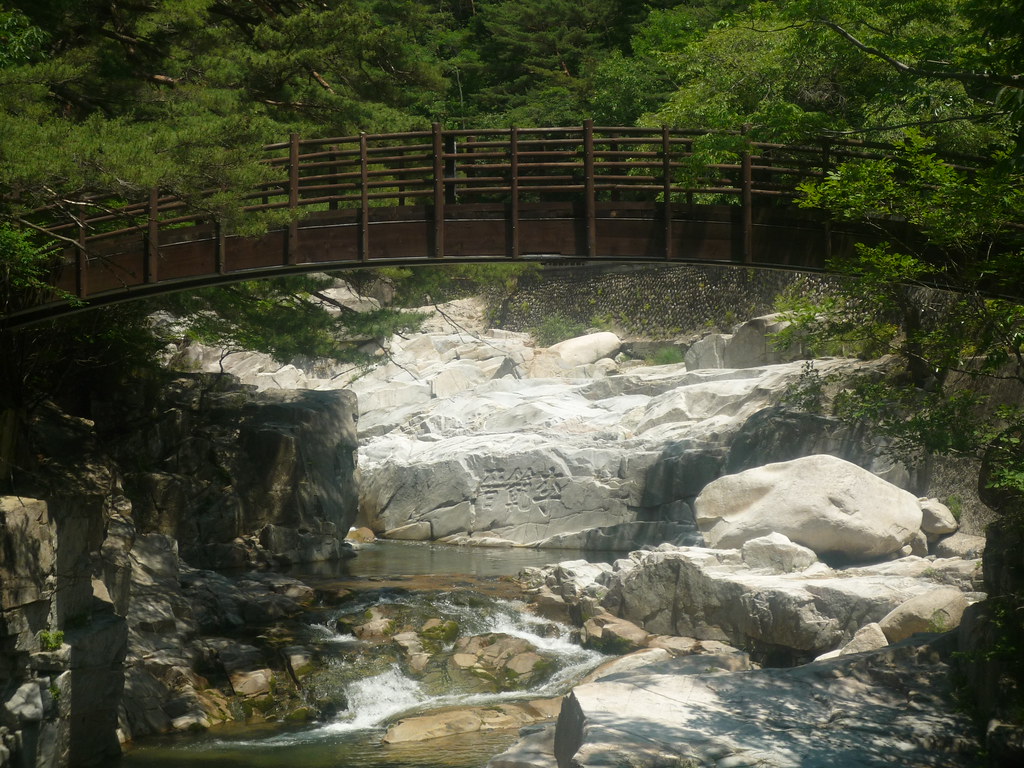
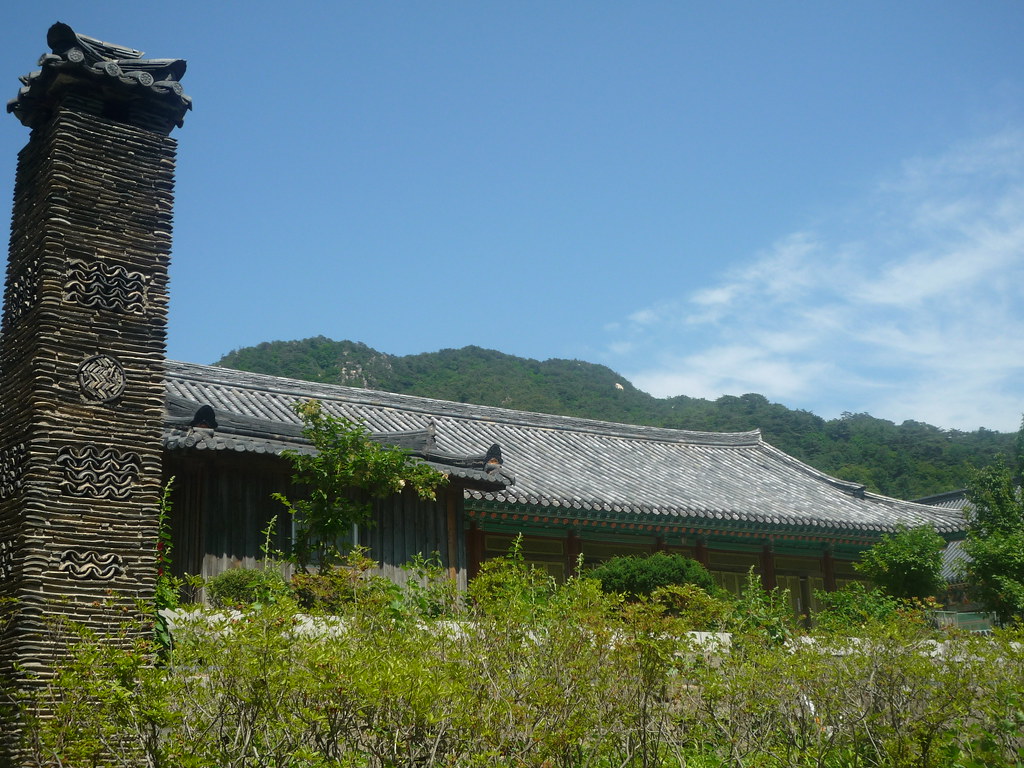
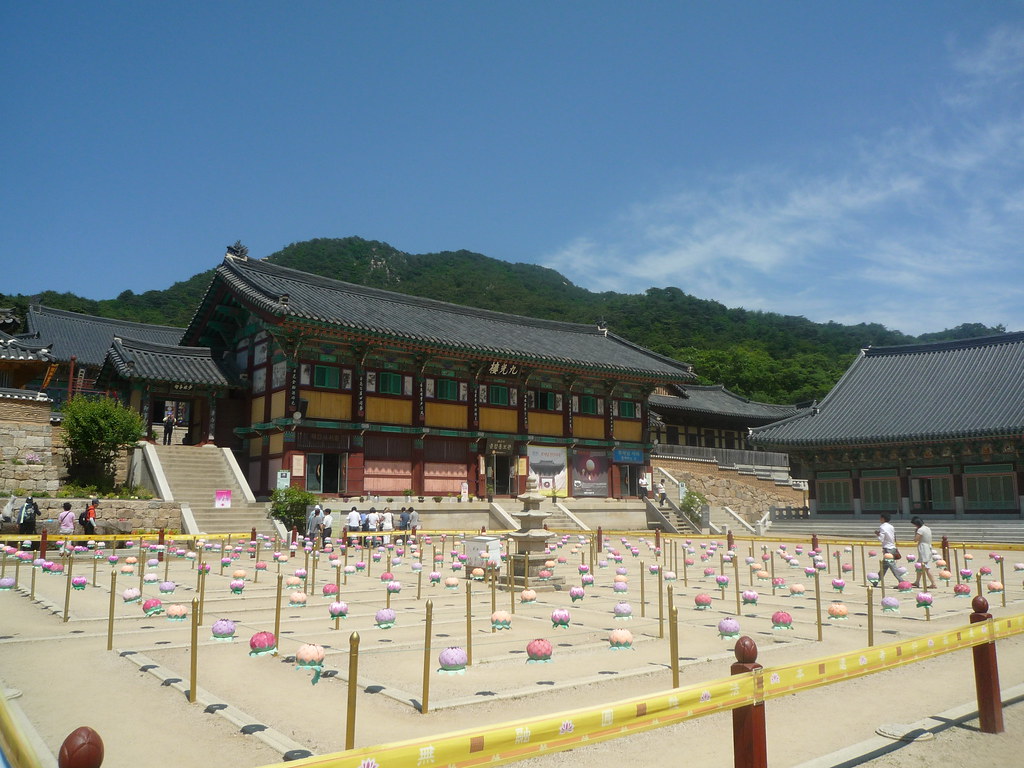
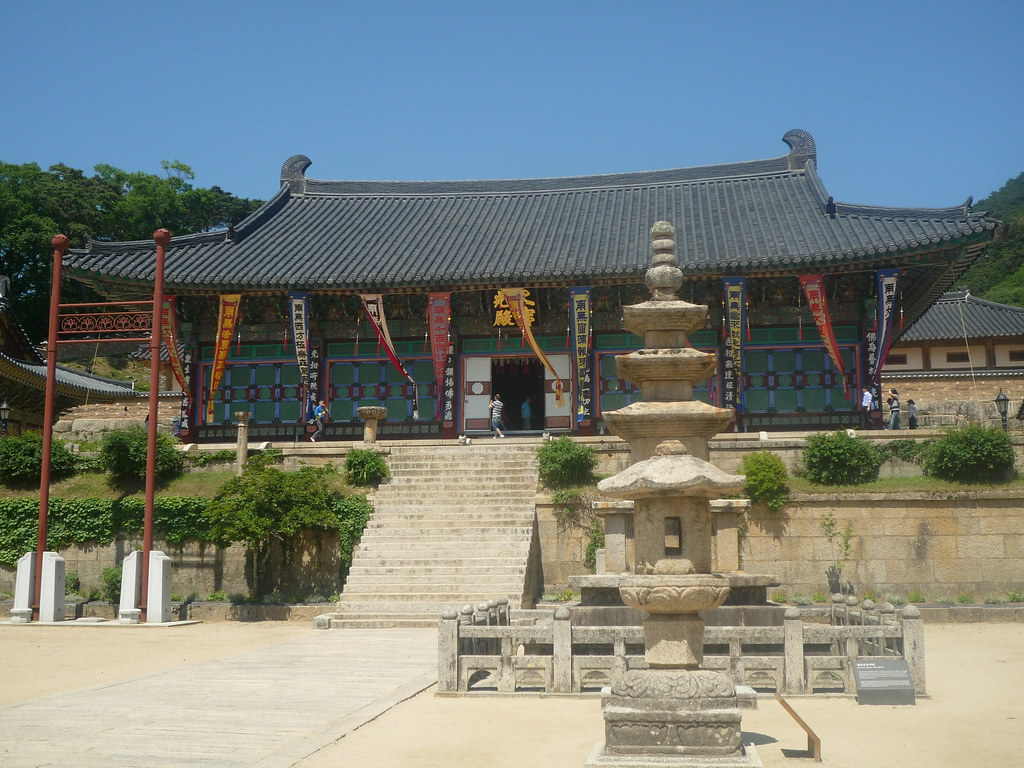
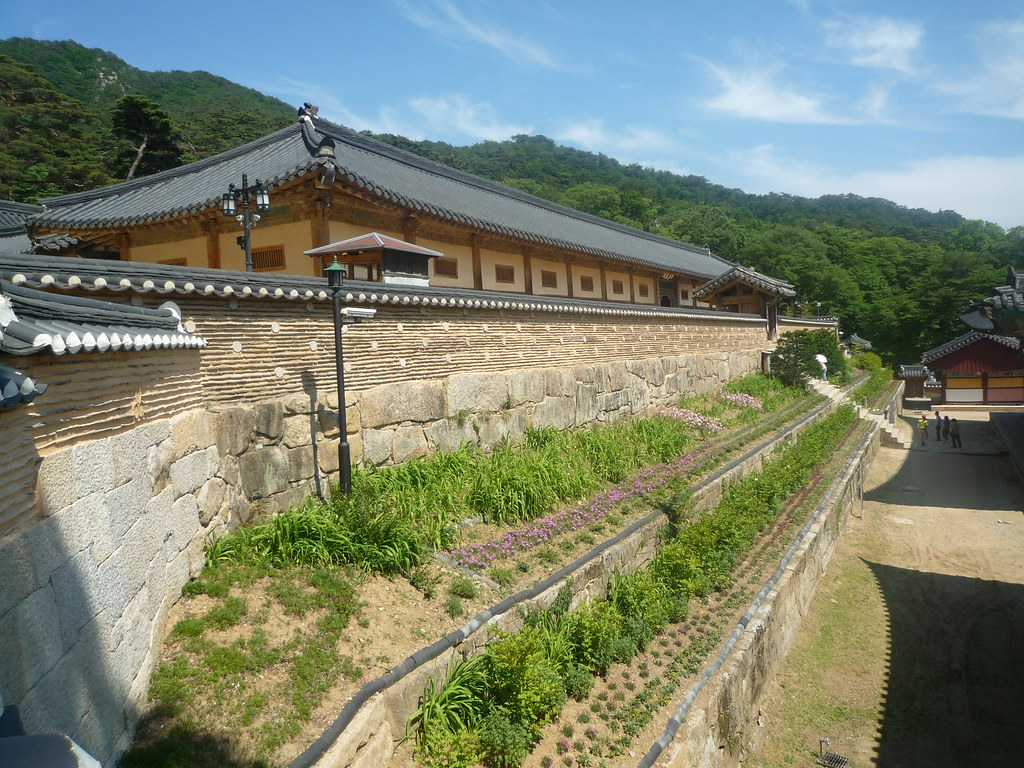
Magoksa Temple and Haemi Fortress

Alanna and I have been saddened that most of our weekend plans have been ruined by festivals being canceled due to paranoia about swine flu. We wanted to go to a martial arts festival, or the drum festival or Seoul fireworks festival the same weekend, but all three were canceled. We are pretty good at adapting to the circumstances, though, so instead we went to Magoksa temple and Haemi fortress.

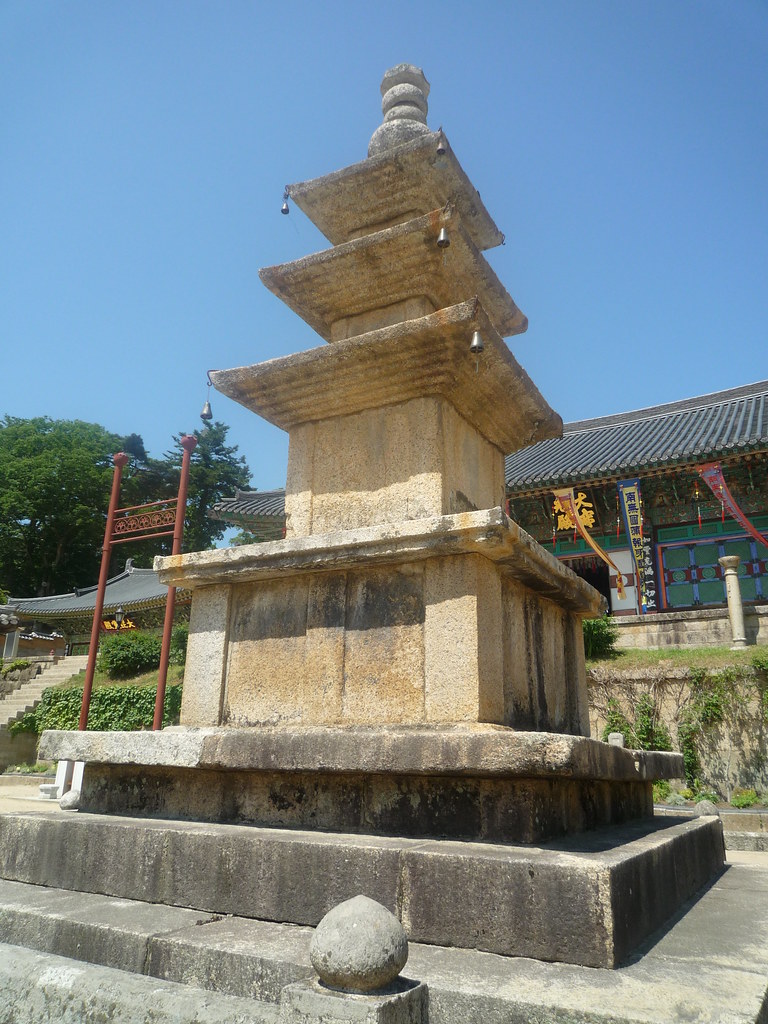
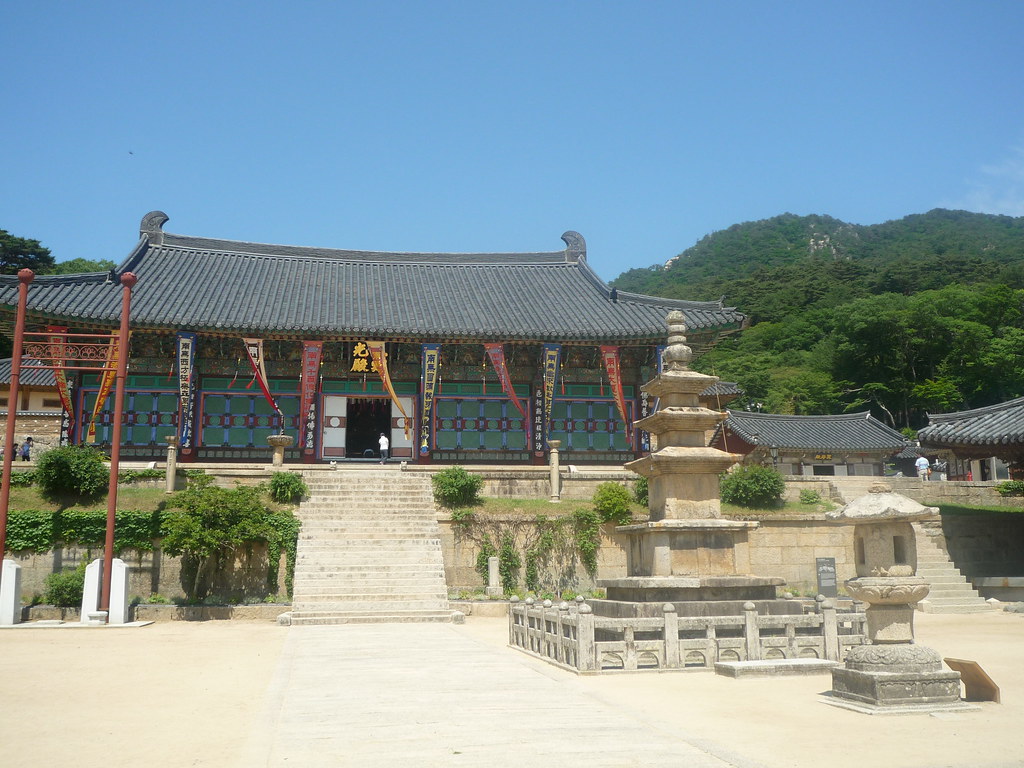
Magoksa is most notable for actually looking as old as it is (the buildings are 200-400 years old). Most temples in Korea have been recently repainted, which makes them all look the same whether they were built 5 or 500 years ago since all Korean temples use the same color scheme, whereas Magoksa's paint is weathered.
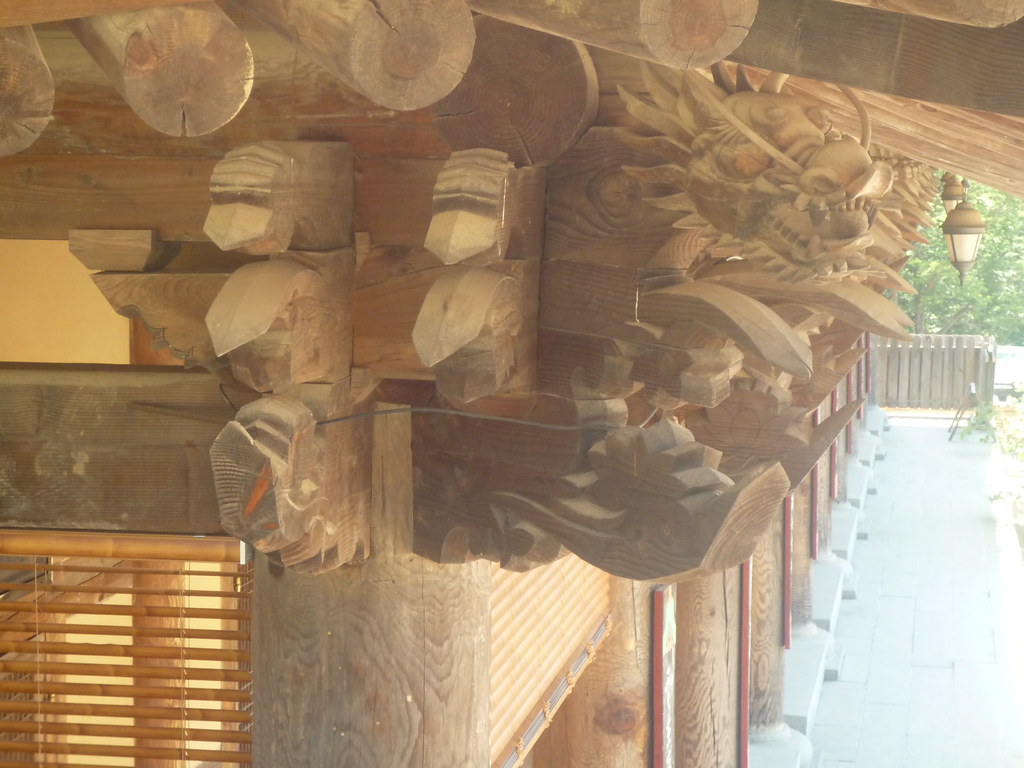
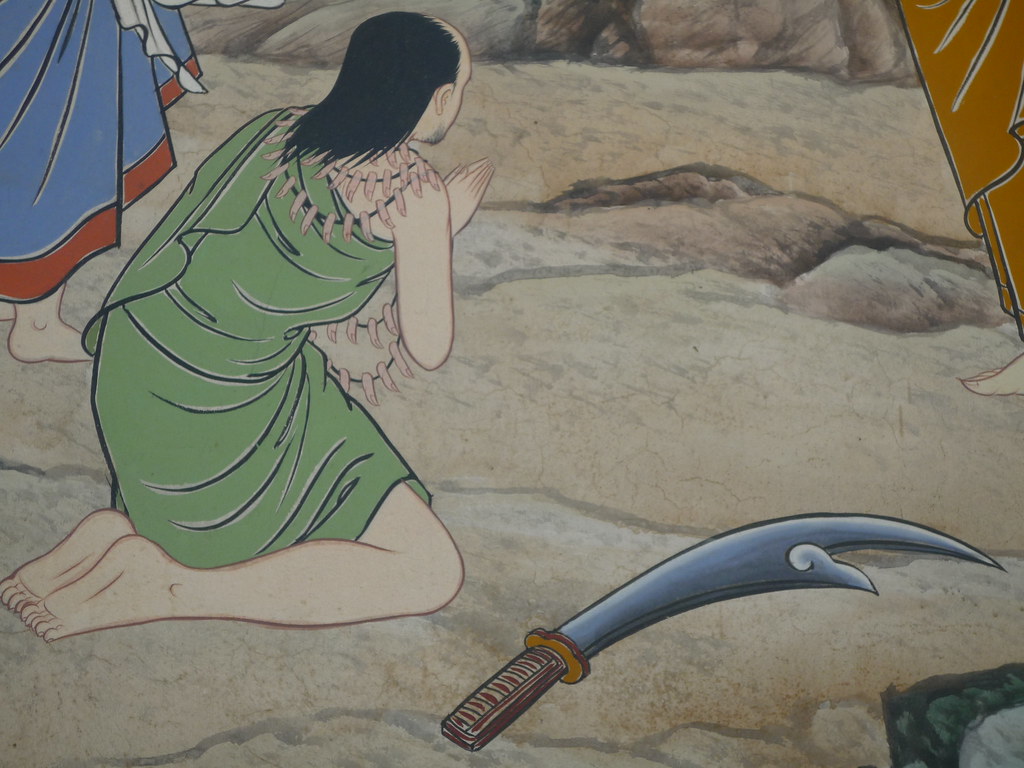
Magoksa is full of dragon iconography, which I'm sure you've realized by now I can't get enough of.
Note the dragon's tail on the inside of the building:A lot of the ceiling beams were curved wood made to look like dragons:
I loved this two story wood building:
The gate to the temple had the traditional four giant guardians of the cardinal directions, who always are subjugating human sized demons, one of which had three eyes in this version:
Other temple buildings:
Note the duck in the rafters:
There was also a room with over 1000 Buddhist statues, each a little different from the others:

After touring the temple we went out to the town of Haemi where we stayed the night. Had we realized that we were about two blocks from the fortress we would have gone to see it lit up at night, but we thought it was further away. Oh well. In the morning we saw that Haemi is a pretty typical Korean fortress consisting of baracks and other buildings inside a wall with ornate gate houses:

There were various reconstructions of weaponry, clothing, houses and traditional games from Korea's history:
The people working here showed up a flower that either blooms every hundred years or just has a name that heavily implies so:
Also, more hanging vegetables:
The fortress has a folk museum in its walls, so we got to see old men and women weaving baskets and sandals in the traditional manner.
The older generations here feel like they are imported straight from the past wherever I see them, so this felt very authentic, far more so than, say, colonial Williamsburg. I see old people planting harvesting vegetables by hand in the gardens I see on the way to work, so I think the people at the folk reenactment might do the same activities even if they were at home.
I was most impressed by the sandal-making, which involves the use of one's toes:
Haemi has an interesting history as a place of persecution of christians. Hundreds of them were executed there in the 1860s.
One building had an amusing animatronic reenactment of a speech about keeping out all foreigners and foreign influence, including religions:
I'm still not sure what these rock mounds are for. In many areas they are shamanist, but I don't know if that makes sense in the government built area, since the government was usually Confucian.
On our way back we stopped in Gongju and saw a fortress-like church:
We also saw this (probably) unintentionally funny sign:
We were planning on going to some beaches at Taein National Park, but that didn't work out with buses and schedules so we just went home.

Friday, October 9, 2009

Urban Agriculture, continued again

Now the gardens by my house are drying out rice in front of them on the streets where a few weeks ago there were gochu peppers. There aren't any rice paddies in my neighborhood, so I'm not sure where the rice came from, maybe across the major street nearby. In any case, there was a lot of it:


While I see a lot of small garden plots on my way to work, that's nothing compared to what I see on my bike ride to Hanwha (the chemical engineers I teach early in the morning). I live at the outskirts of town (yes, those twenty-five story apartments are the put up even at the edges of Korean cities), and on my way to Hanwha I essentially pass out of the city and into actual farms. Here too, though, every space is utilized, even the triangles of land between the exit ramp and a highway:

(Also, there are two of these great posters on my way:)


Even this drainage ditch is growing some sort of squash:


One of the farms is also a tree nursery:


I doubt the rice in front of my apartment came all the way from these paddies:


Update: Here is more rice drying, this time actually near rice paddies and taking up sidewalks on a bridge and even blocking an entire road:

Thursday, September 24, 2009

Other things I see on my bike rides

Besides car accidents and gardens, on the way to work I also see decorative flowers that are changed out for the season on a bridge over a canal:
... the same thing but with an elementary school in the background instead of the omnipresent identical apartments:... and sick people wandering the streets in their gowns just in front of one of several hospitals on the street with my school (sometimes with IVs, but in this case just with a cane).
Between my house and Alanna's I saw this mobile sock shop:
Trucks that convert into mobile stores are also everywhere. Clearly Korea either does not have or does not enforce zoning laws (not to mention noise ordinances; trucks often cruise neighborhoods with huge speakers attached to them and blare out recorded messages that I'm pretty sure translate to "buy the shit in the back of this truck!"). Trucks can also convert to be part of the setup for the tent restaurants that pop up along the river every night:
In the median of the street in front of one of the major universities in Daejeon (and Korea) is a new statue of Yi So-yeon, Korea's first astronaut. She is from Daejeon (the science center of Korea) and she spent two weeks on the international space station courtesy of the Russians.
I also saw a couple (literally two) fireworks above the university right across the street.

  © Blogger template 'Minimalist G' by Ourblogtemplates.com 2008

Back to TOP