Showing posts with label volcanoes. Show all posts

Sunday, January 16, 2011

The Blue Lagoon

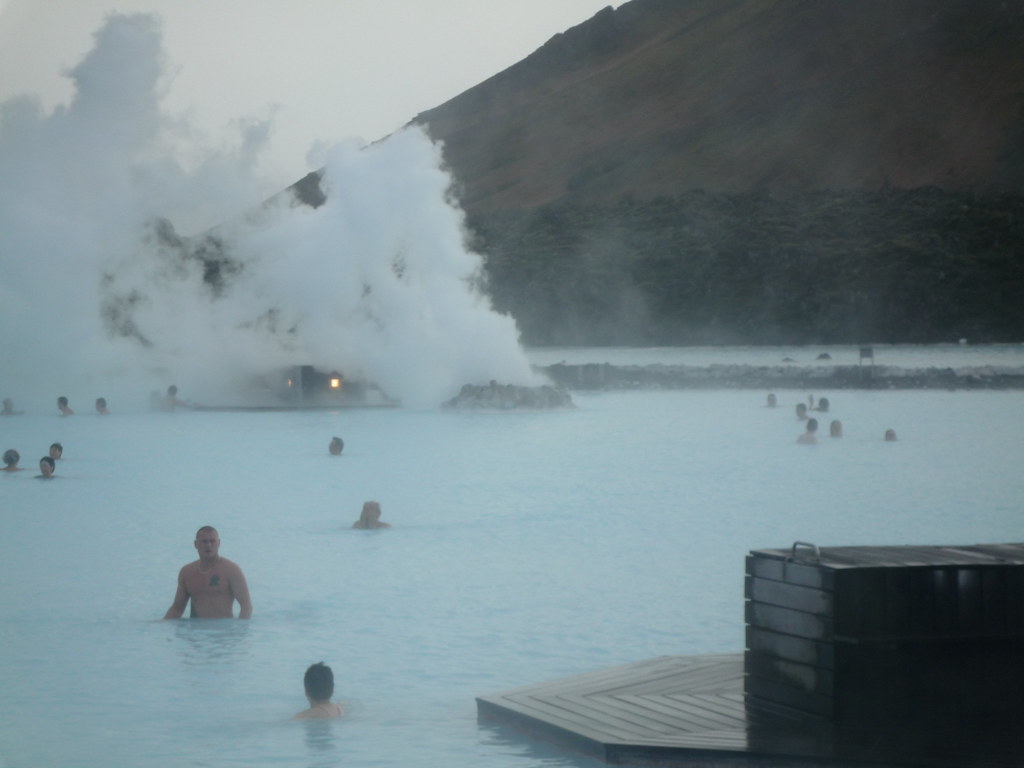
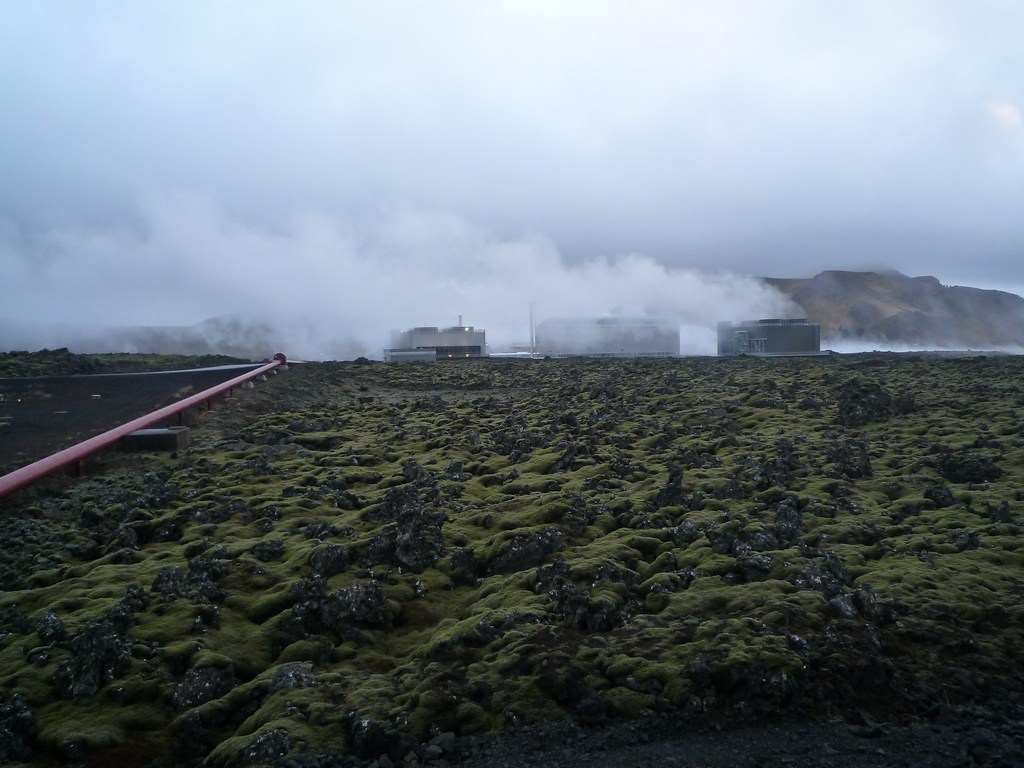
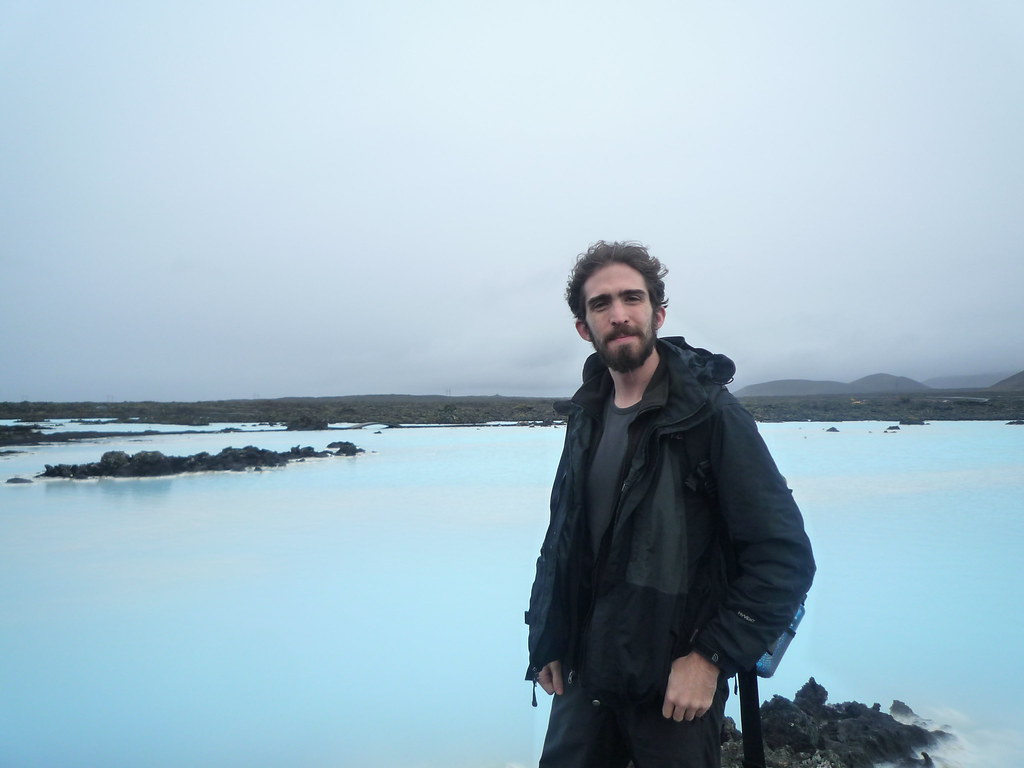
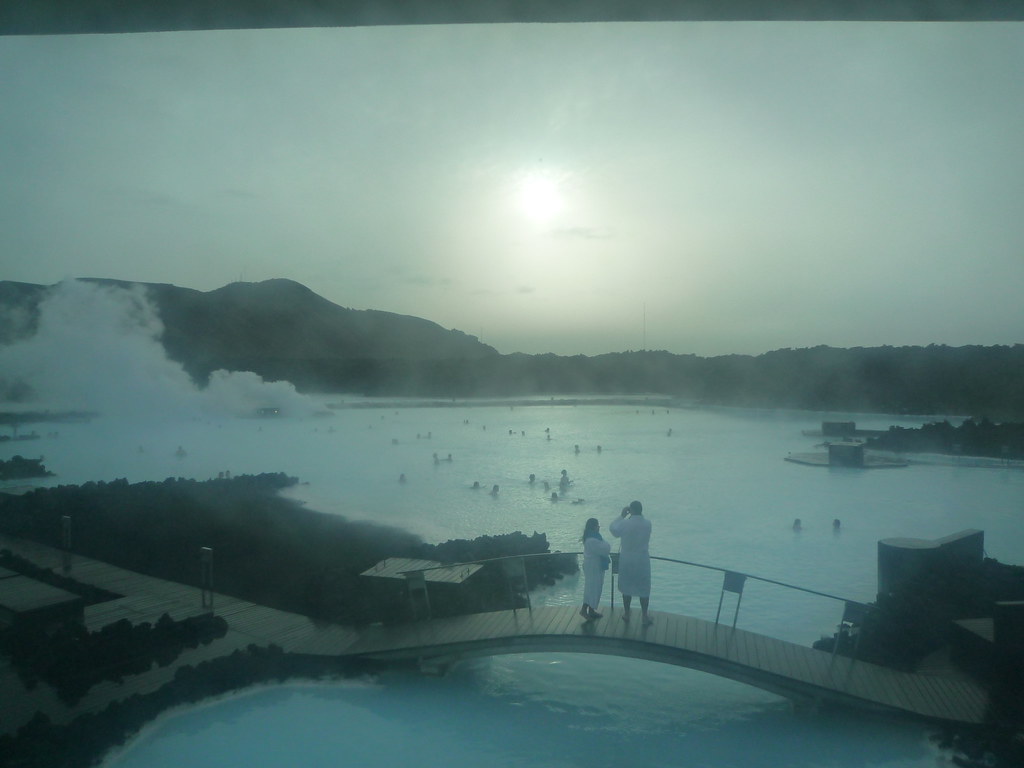
I spent my final day in Iceland at the famed Blue Lagoon. As I had read, it was both overly touristy, overly priced, yet still worth seeing. The water all around was a milky baby blue and looked rather surreal sitting in the lava fields.


I'm often asked if it was cheap to travel in Iceland. I thought it would have been since the entire country actually went bankrupt. However, while the currency fell in half, the prices doubled, which is of course terrible for the people living there and made it no cheaper to travel than it had ever been. The Blue Lagoon's prices had tripled in the three years since my Lonely Planet was published, and that's not even counting the bus ride out there.

Inside the manicured swimming area there were steam rooms, mud-floored pools, and fake steam vents where even warmer water bubbled forth. The mud here purportedly helps people's skin due to the high mineral content (or something), and there were stations where gobs of the chalky white mud waited to be applied.


After a couple hours I felt that I had soaked enough and headed towards the airport. My plan was to walk the 26 kilometers to the airport. The bus ticket to the lagoon included a shuttle to the airport, but it only ran twice a day, once half an hour after I arrived and once far too late for me to catch my flight the next day. It actually worked out well since I had all night with nothing to do anyway before my early morning flight and, as my fellow European Hobos know, the cheapest way to the airport is to walk.


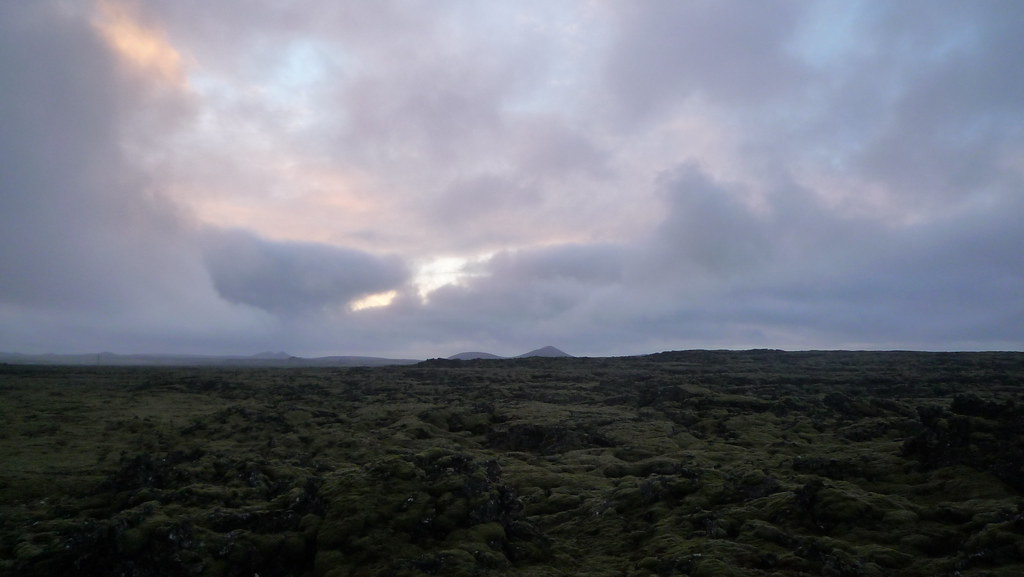
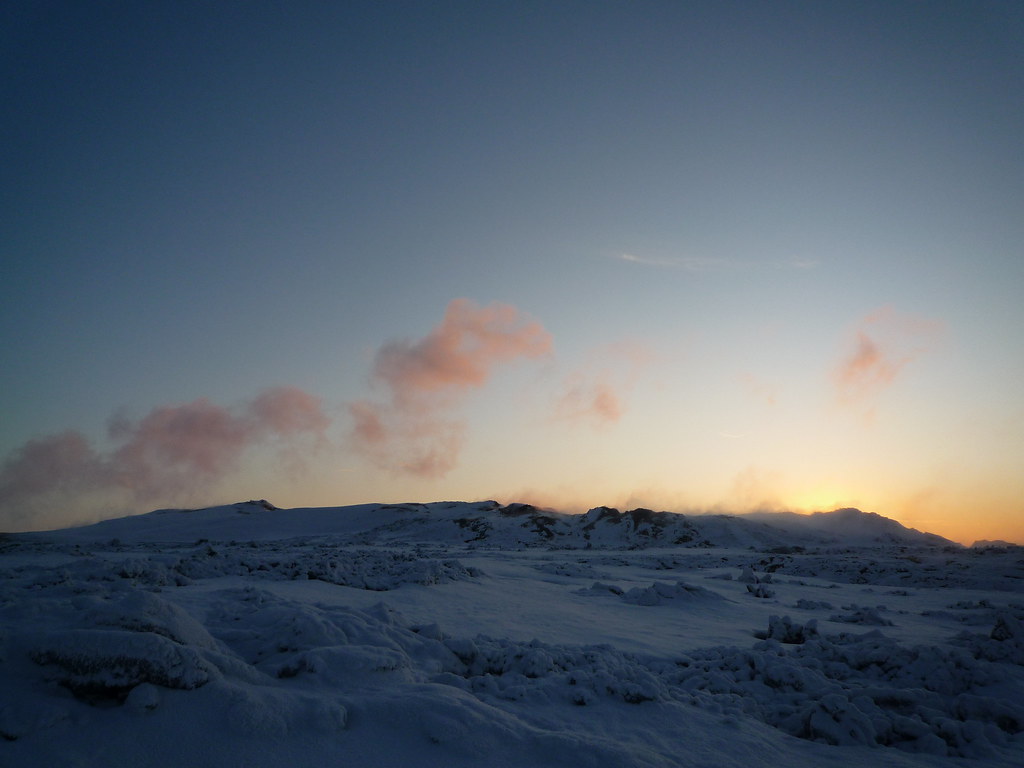
I had some nice views of the sunset over the lava fields. Before it was fully dark a man pulled over and offered me a ride. I thought it was rude and thickheaded to refuse (though I almost did out of a stubborn desire to avoid taking the easy way) and he sped me on to Keflavik International. I then of course had all night in a shut down airport without free internet. I first walked a few kilometers to the actual town of Keflavik where I had one last Icelandic style seafood dinner. On my walk back a woman offered me a ride and seemed concerned for my safety walking along the narrow road in the dark so again I assented despite the fact that I would have that much more time to kill in the airport. An airport worker said there was no sleeping at the airport so I spent the whole time making plans for Britain and doing non-internet things on my computer. In the morning the airport began to show signs of life and I was able to sleep on the hop over to London.

The Golden Circle

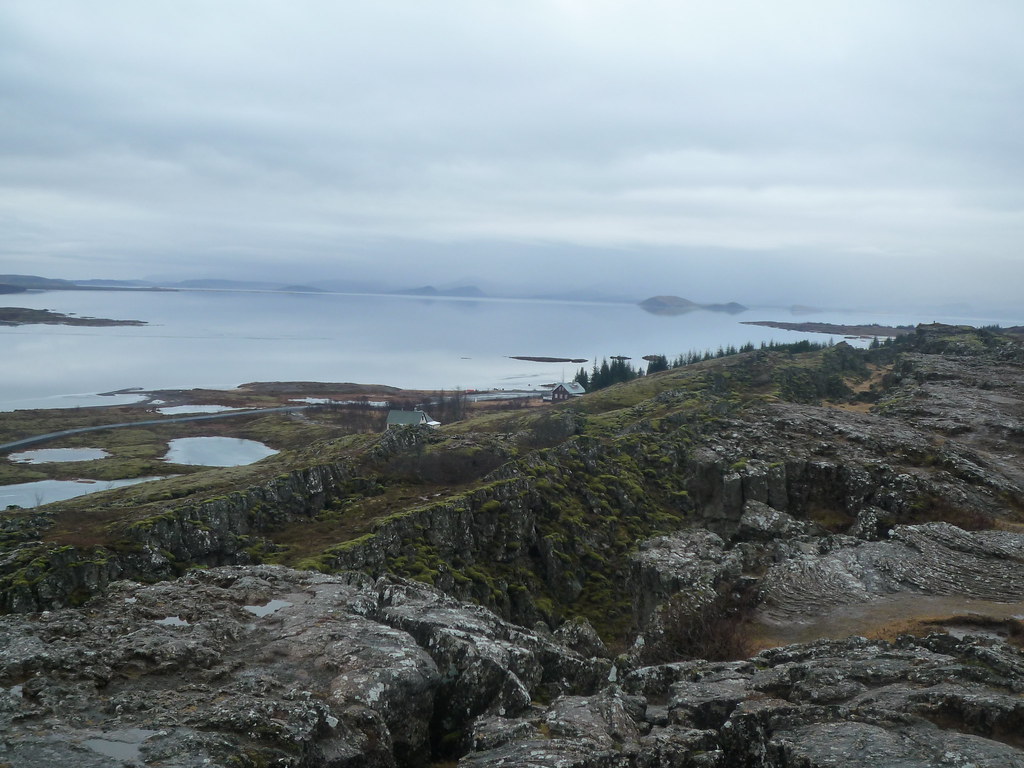
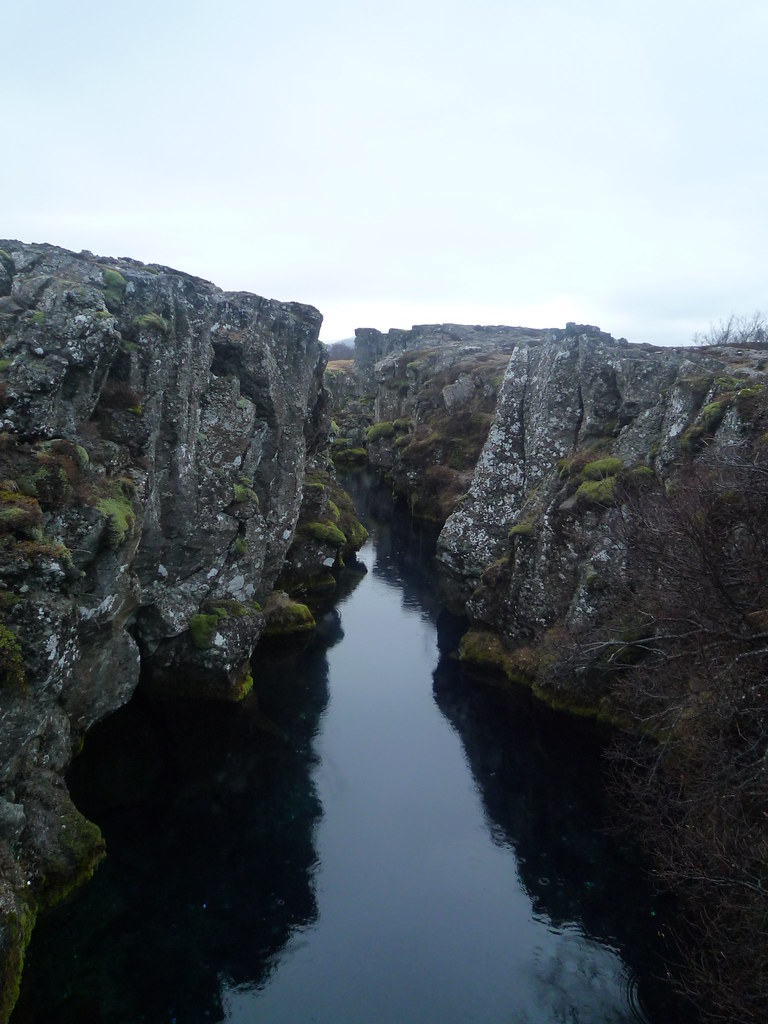
The Golden Circle is a  circuit that takes tourists to many of Iceland's most famous sites that conveniently lay just inland of Reykjavik. (The 'Circle' is not at all circular but more like a mutant figure eight.) First up is Þingvellir National Park, situated on the edge of Iceland's largest lake. The waters are crystal clear and so deep that scuba-diving is popular within its trenches.


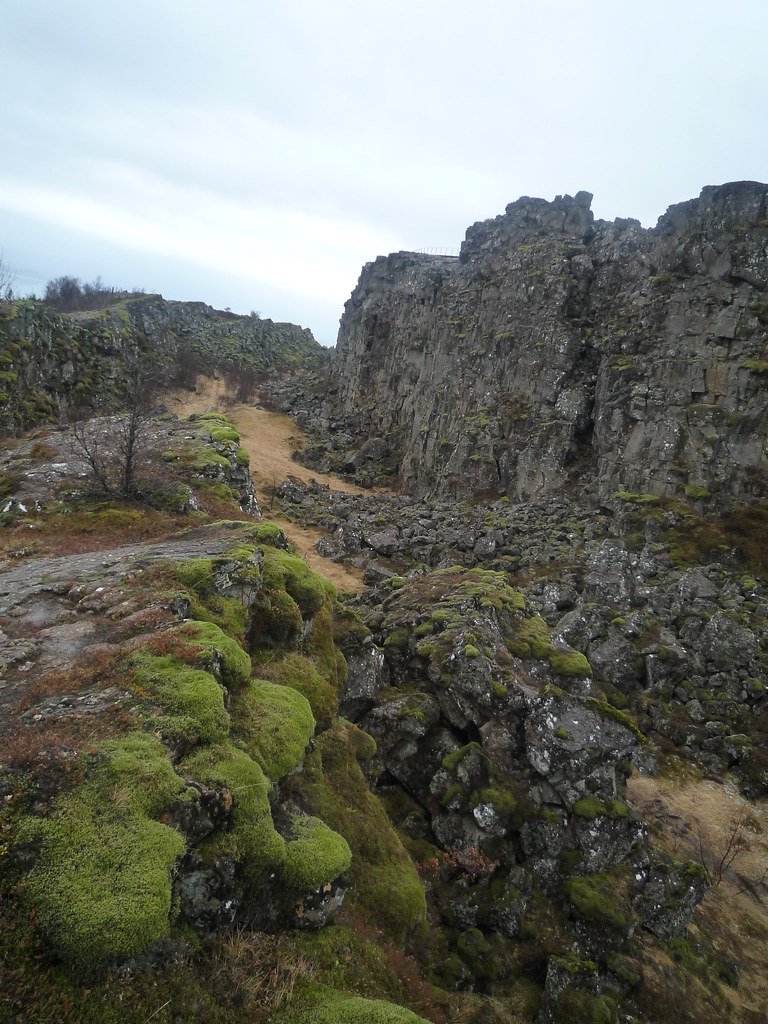
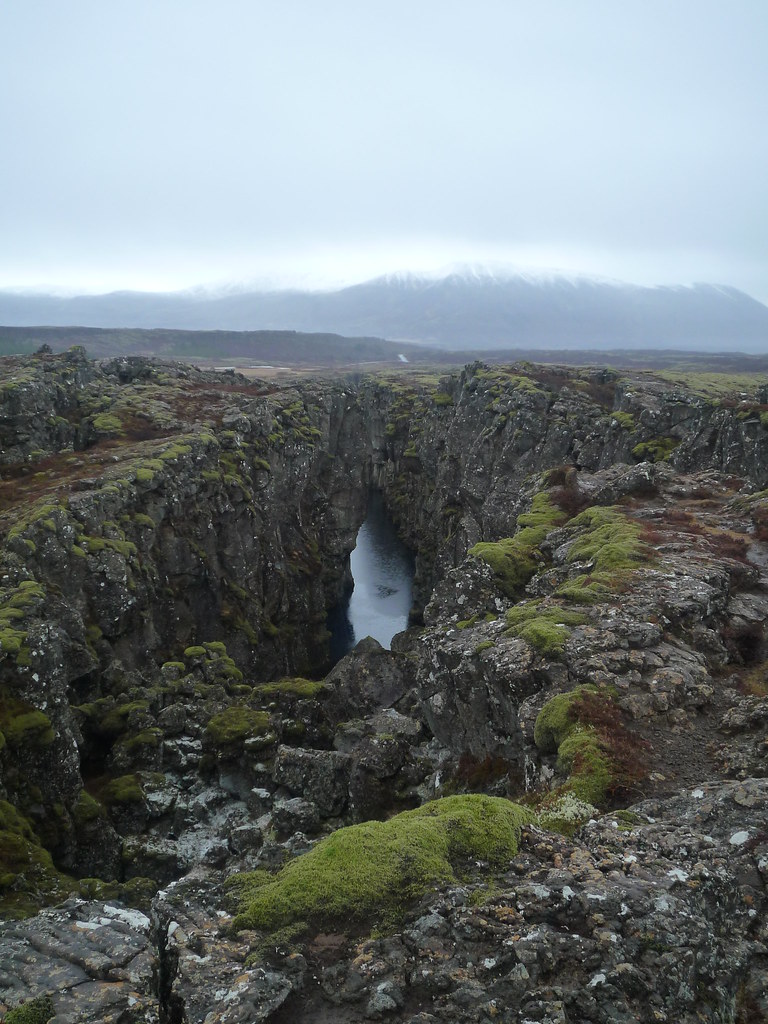
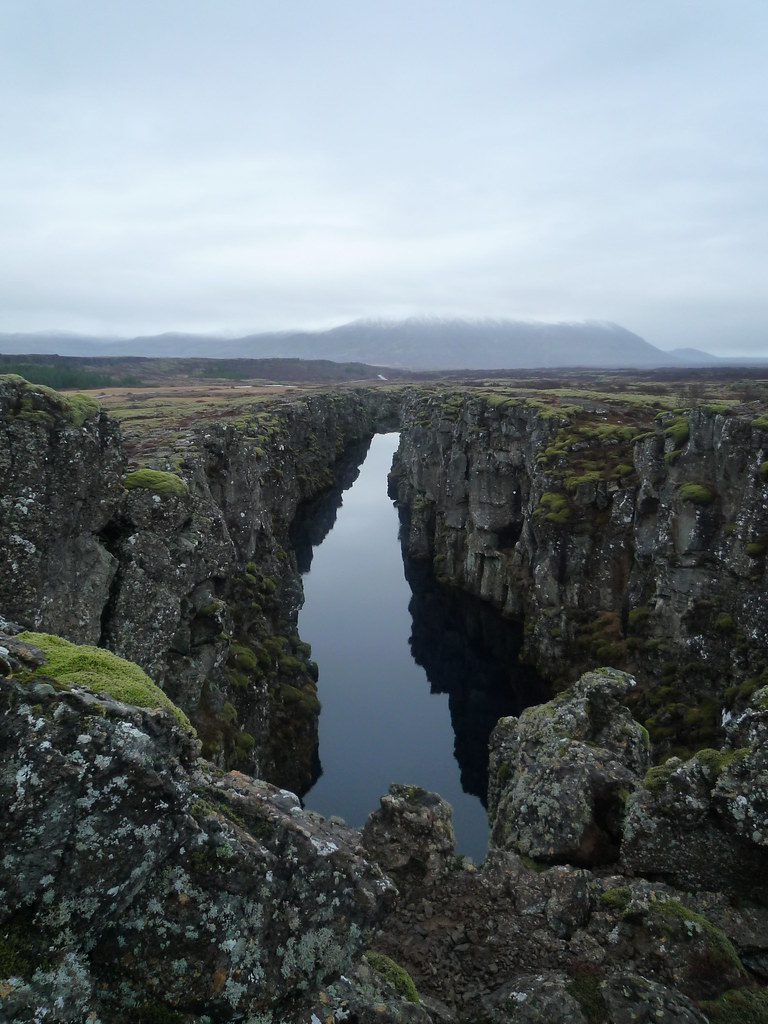
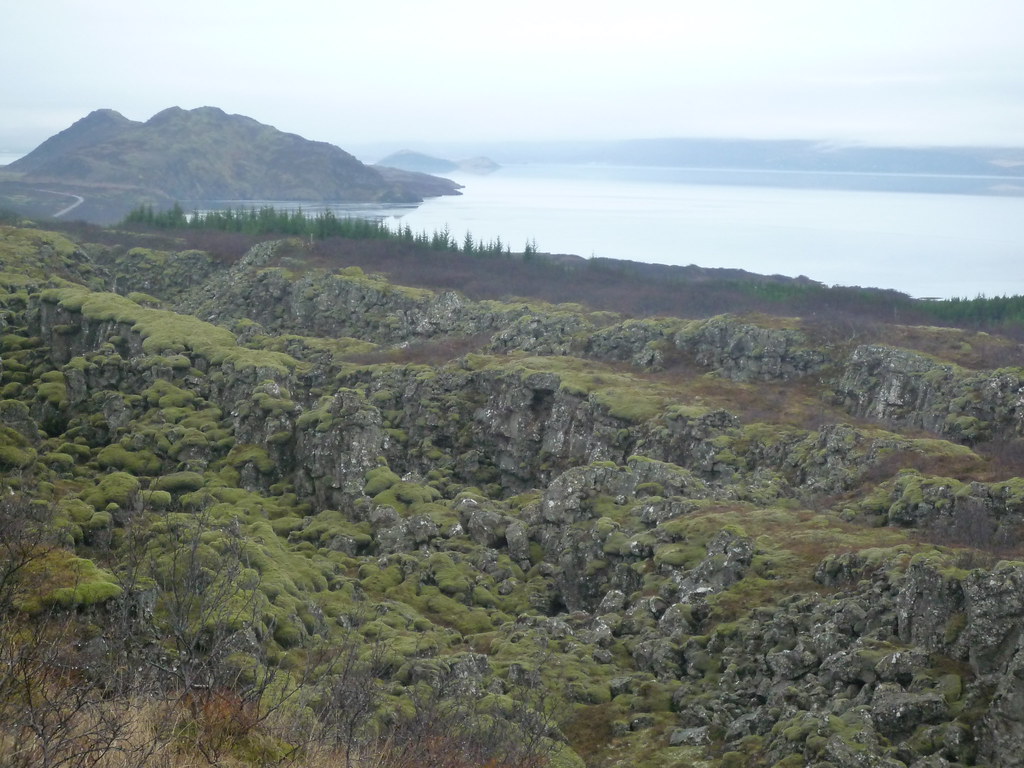
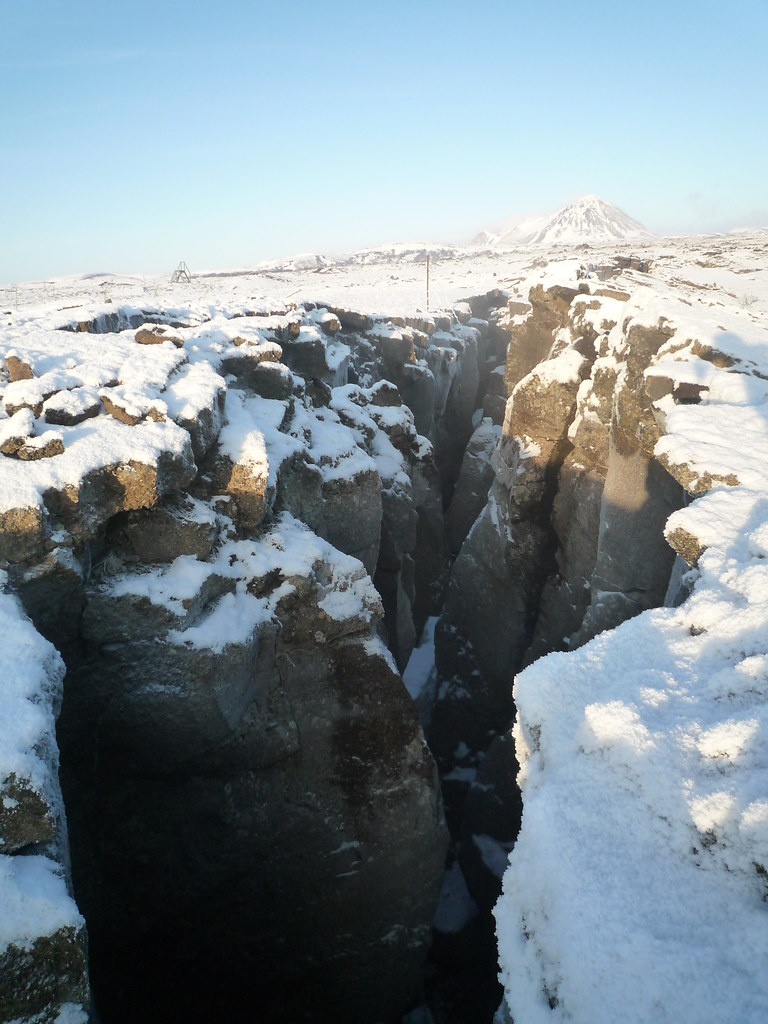
Iceland sits atop a point where tectonic plates are pulling away from each other, and in the park you can see the land being slowly torn asunder.


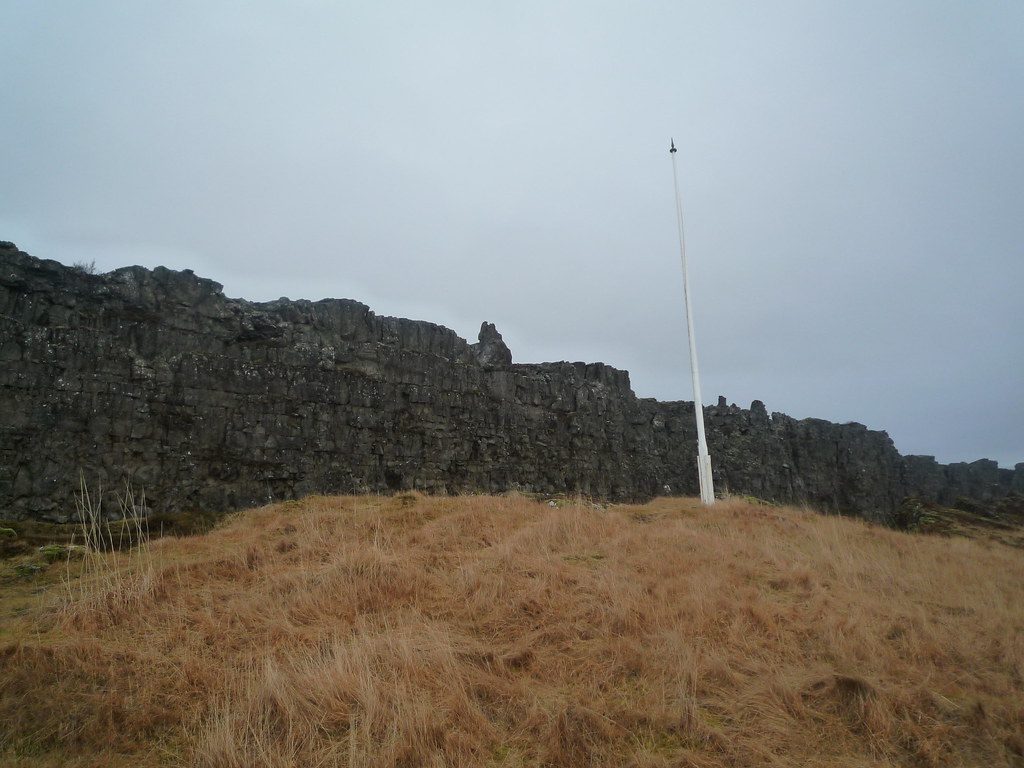
This spectacular landscape was the setting for many of the pivotal events in Iceland's early history. It was the location of the location of Iceland's parliament, the Alþing, from 930 CE to 1799 CE. After being dissolved for 45 years the Alþing was reinstated in Reykjavik and continues to this day, making it the earliest founded extant parliamentary system in the world. (Note: Iceland's political makeup is enviably liberal: right now the ruling coalition is made up of the Social Democratic Alliance and the Left-Green Movement, while the opposition is composed of the Independence Party [a center-right leaning party that was the result of a merger between the Conservative Party and the Liberal Party], the Progressive Party, three members of The Movement, and one independent who is a former movement member.)  The Lawspeaker and others addressing the parliament stood on the Law Rock, where their voice was amplified by the rock outcropping from the higher side of the fissure behind him. The exact location is no longer known, but a flagpole was put up at the best guess. The Law speaker would read forth all of the laws from memory and then the laws would be debated and added to or amended. The decision for Iceland to become a Christian country was made here during a meeting of the assembly.


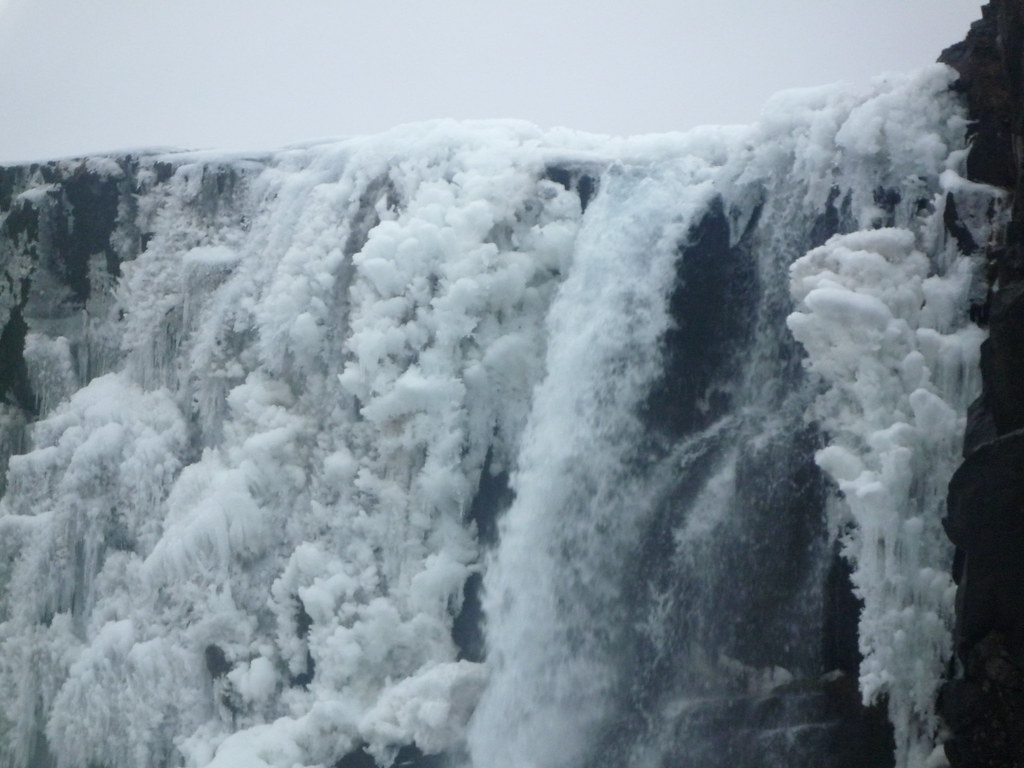
A short walk away a powerful waterfall rumbles as it falls between the sides of the fault lines.

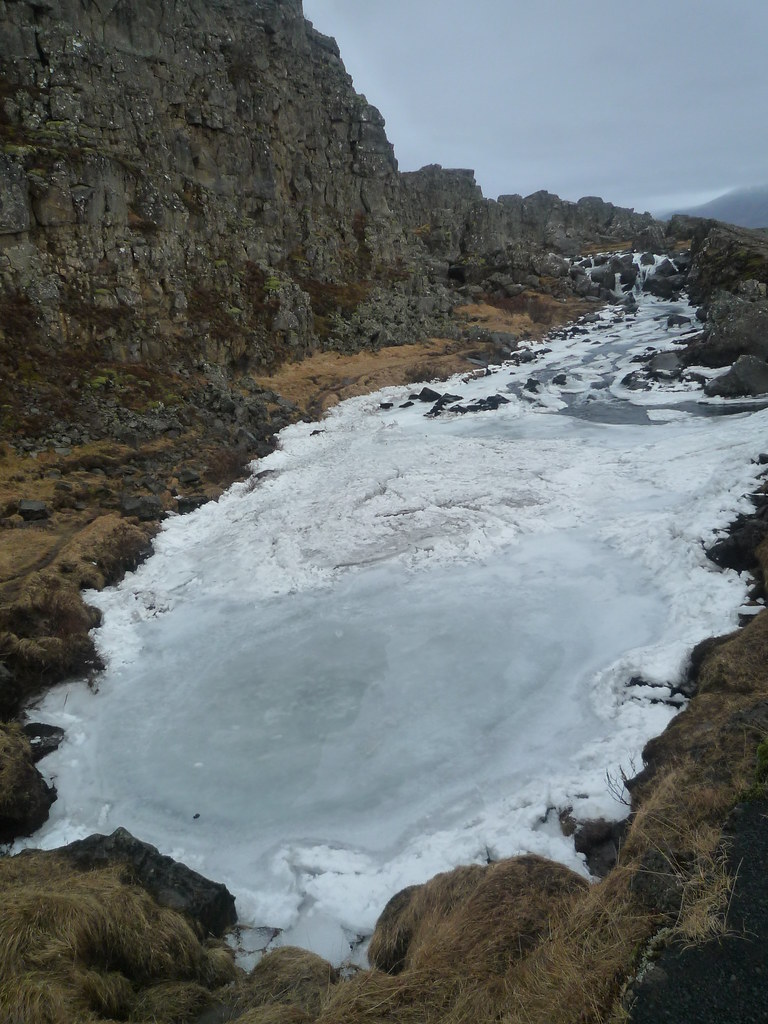
Downstream is the Drekkingarhylur, a pool used to drown women found guilty of infanticide, witchcraft, adultery, and other serious crimes. Men were also executed at the assembly meetings, but by beheading or hanging.


The area is full of fissures and the lake itself is there due to the North America and Europe being rent apart. Rarely do natural beauty and historical significance coincide to such an extent. I was hesitant to move on, but I had a great deal to see that day.


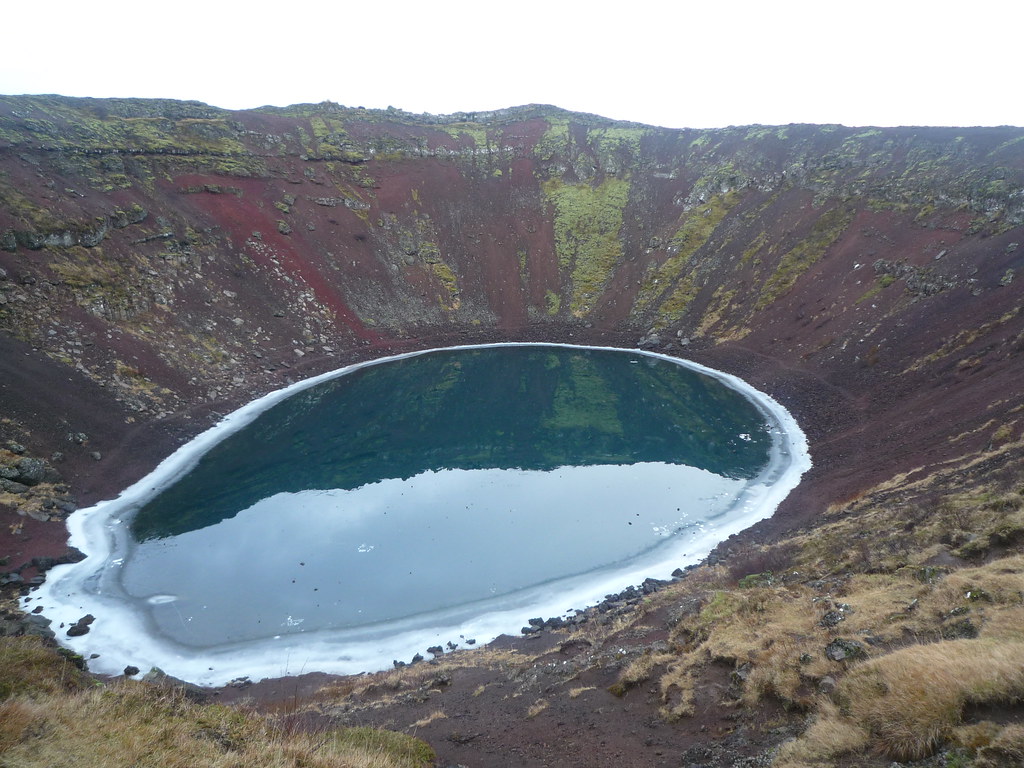
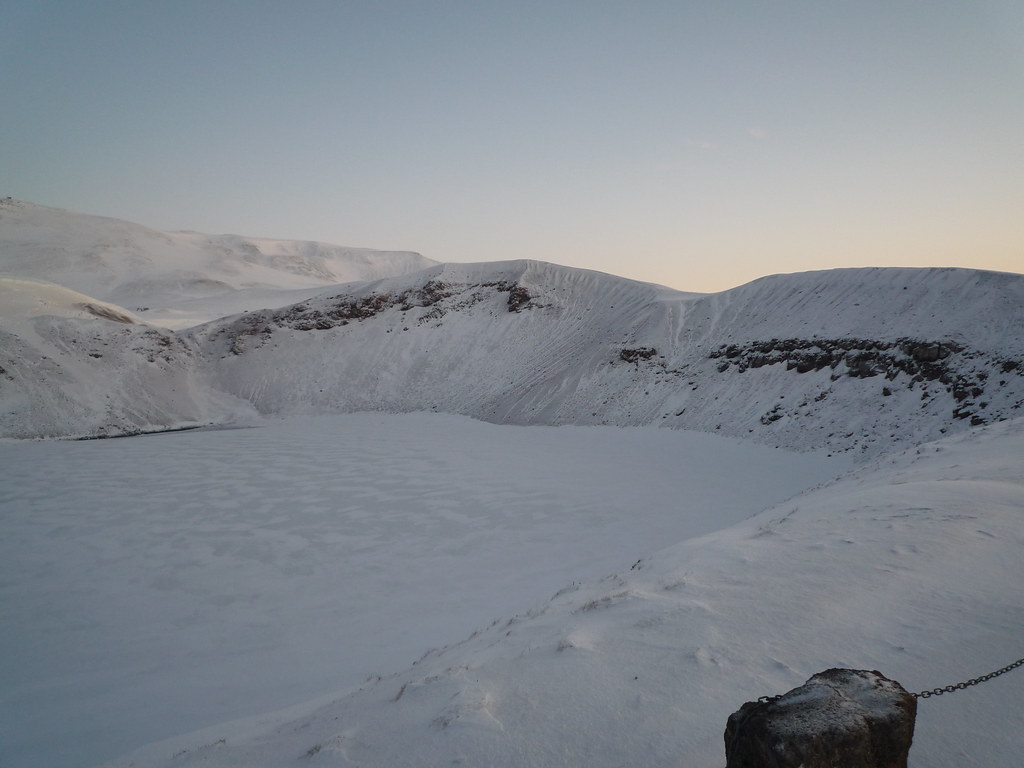
The next stop on the circuit was Kerið, a lake within the steep confines of a deep crater. Björk gave a concert here once from a raft in the lake. I bet it was a hell of a show.


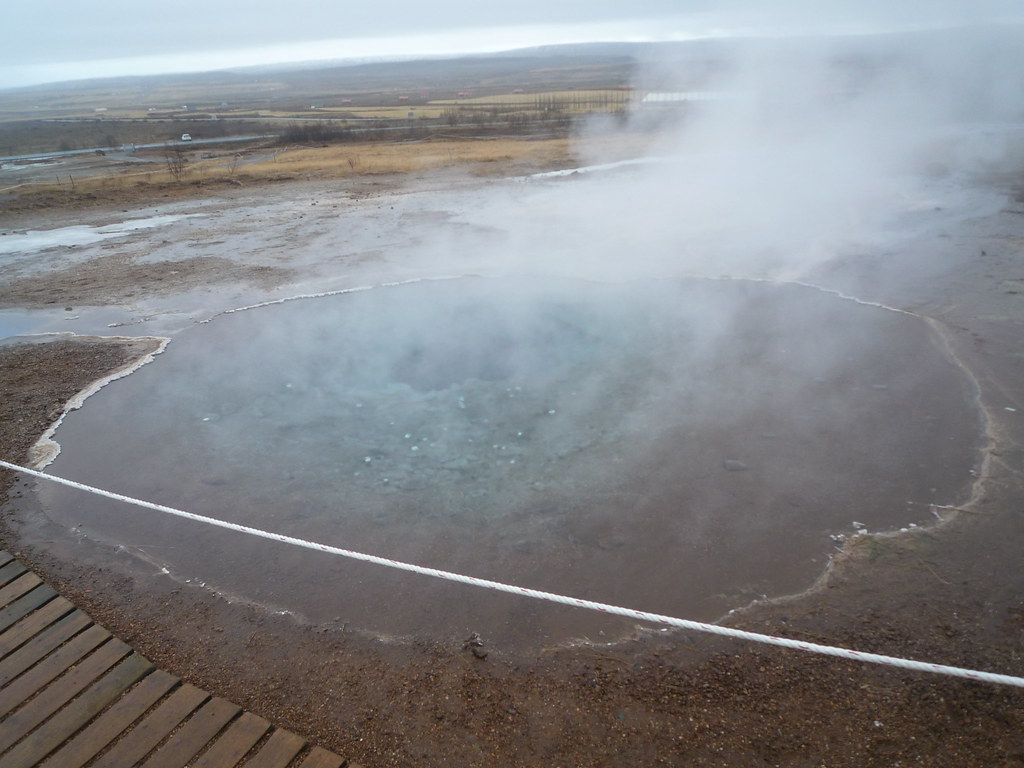
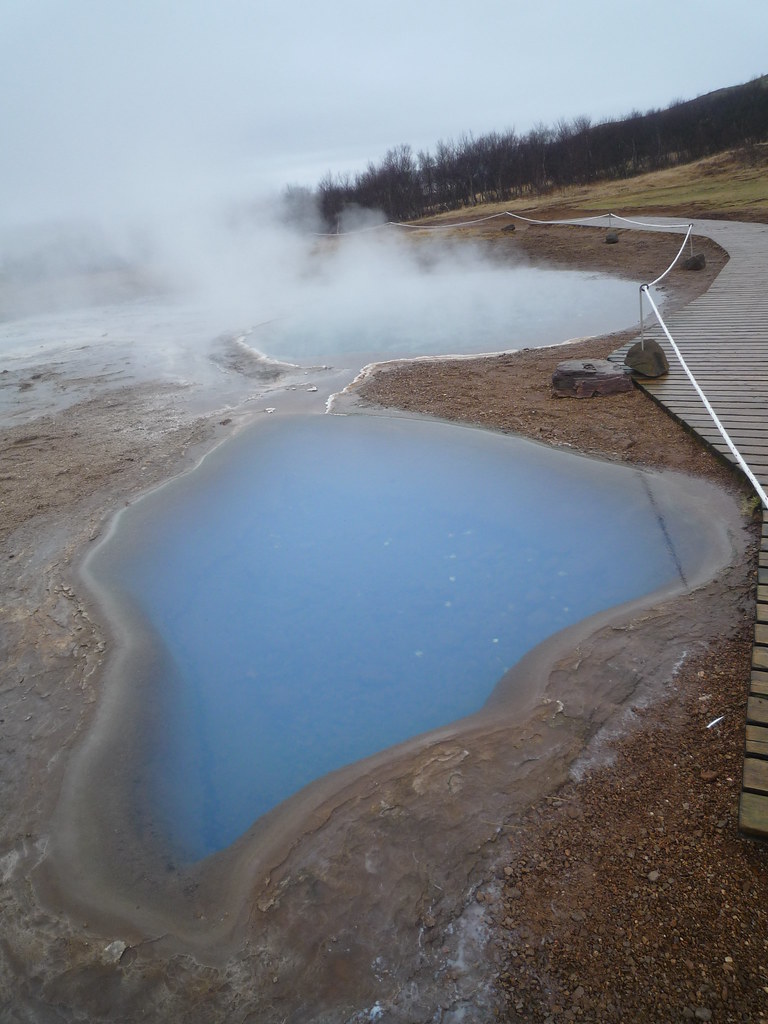
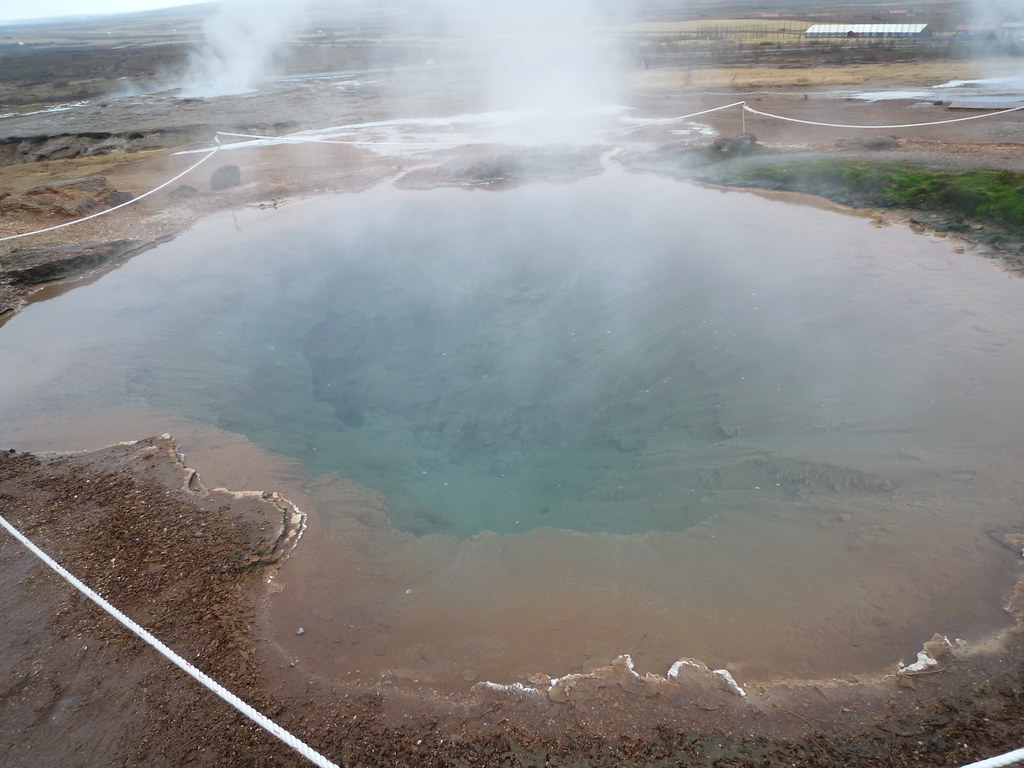
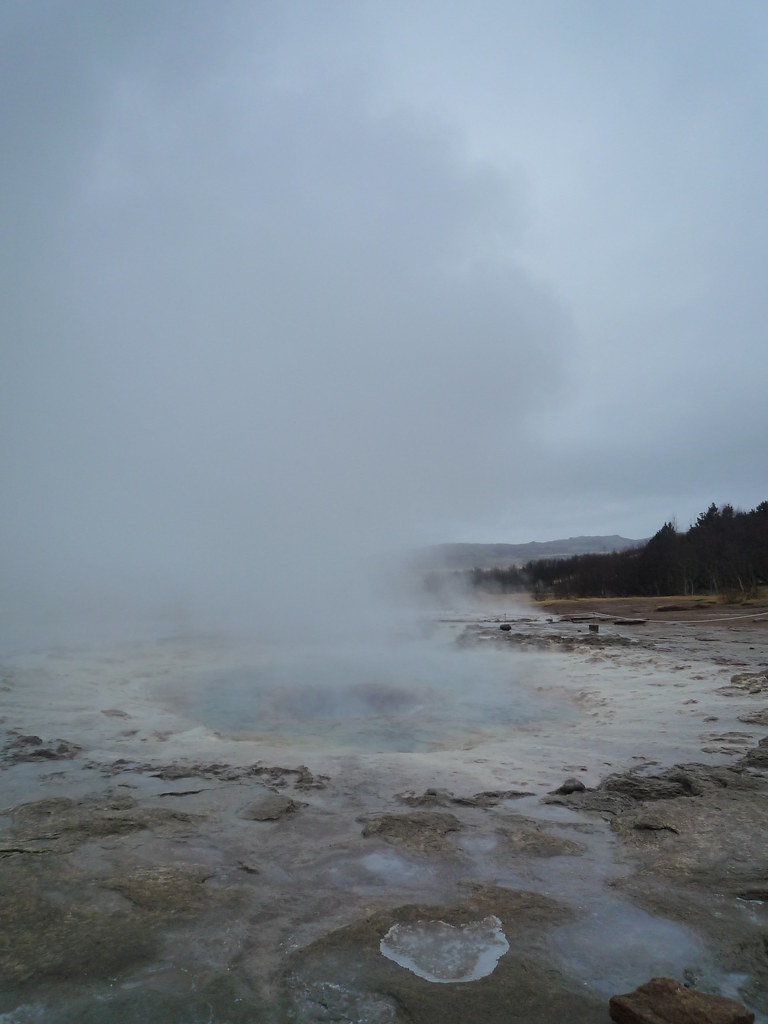
The area along the rift is of course highly volcanic, and actively so, as can be seen at the Geysir Geothermal Fields.


The star of the area is Geysir, the geyser for which all others are named. It used to erupt fairly regularly, but then some idiot tourists tried to set it off early by dropping rocks in it, which clogged the workings so that now it only erupts during earthquakes.


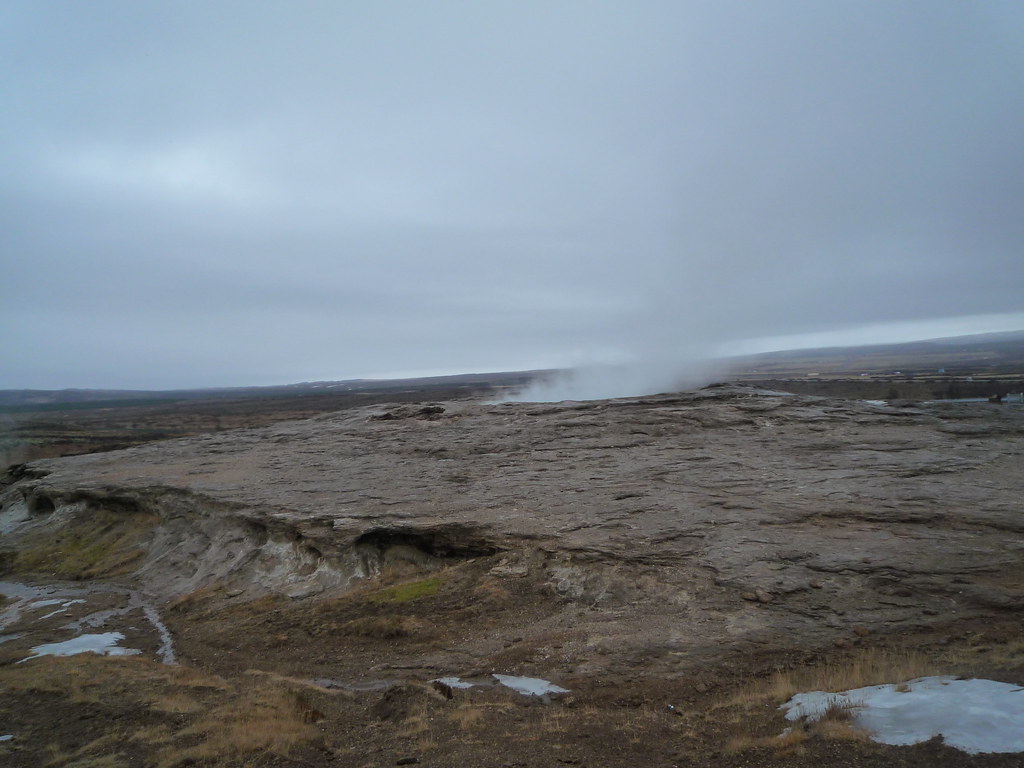
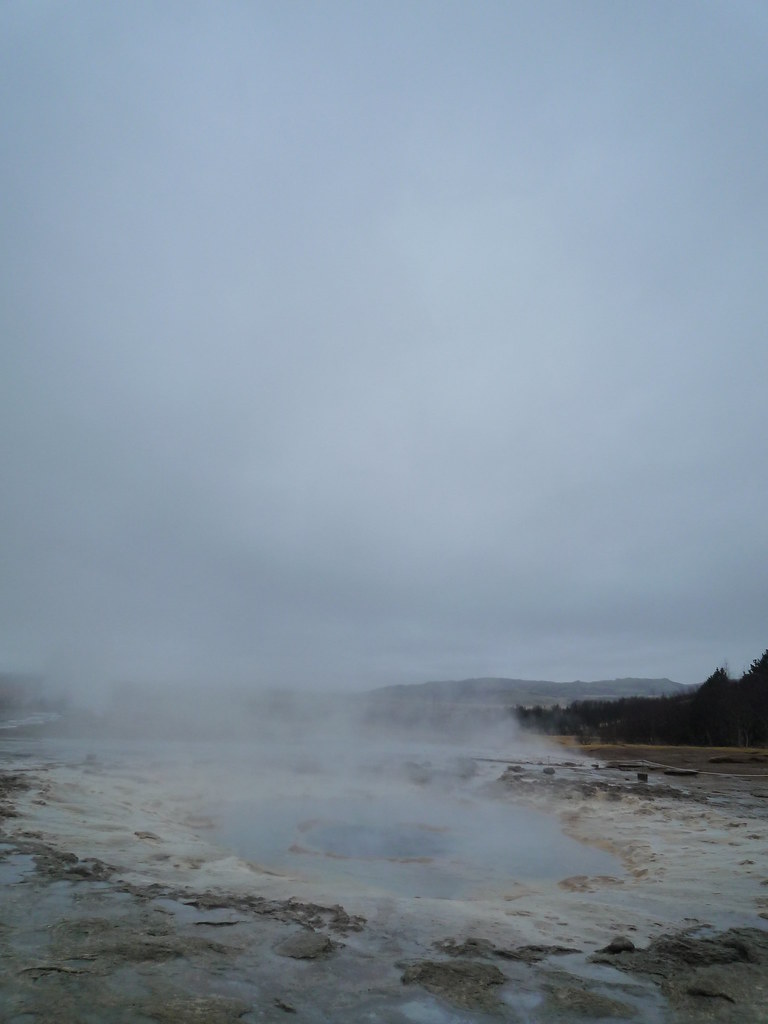
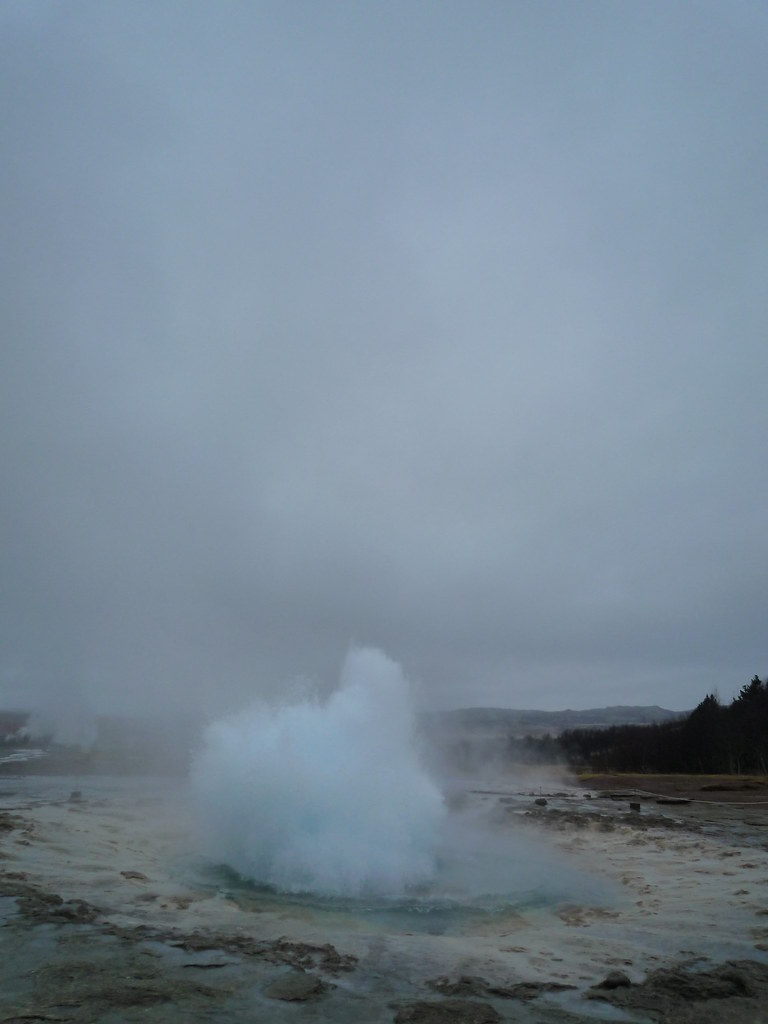
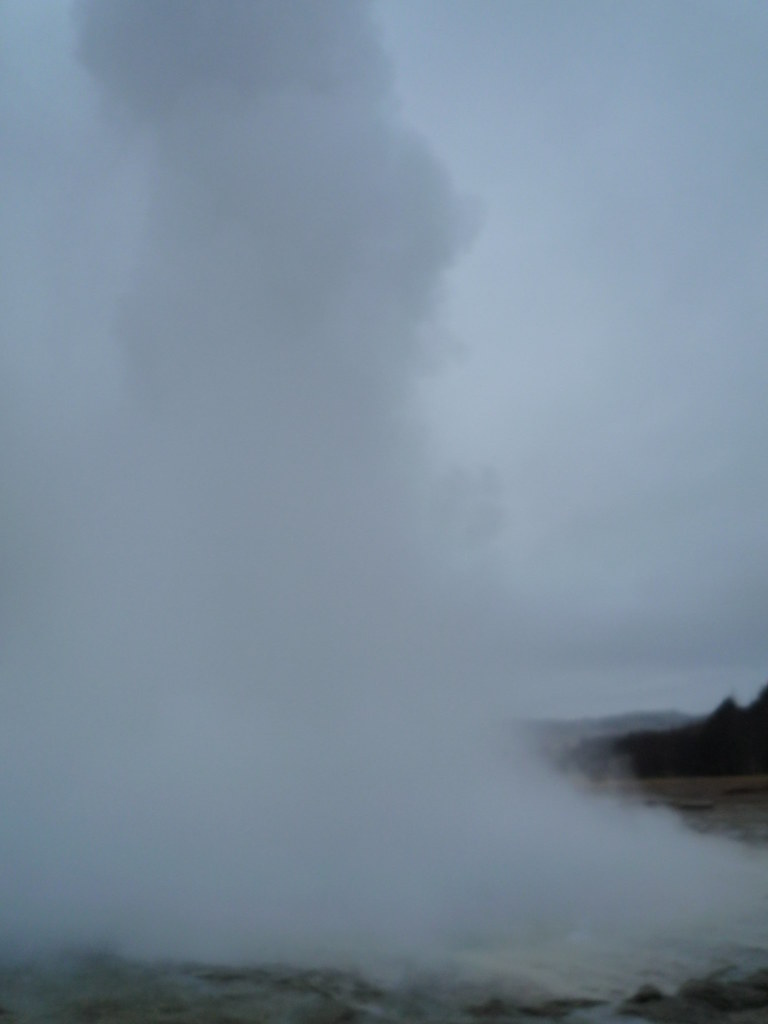
The smaller geyser of Strokkur, on the other hand, erupts every six minutes. I watched it three times. I especially liked seeing the water level suddenly drop, suctioned down into the earth before shooting skyward.

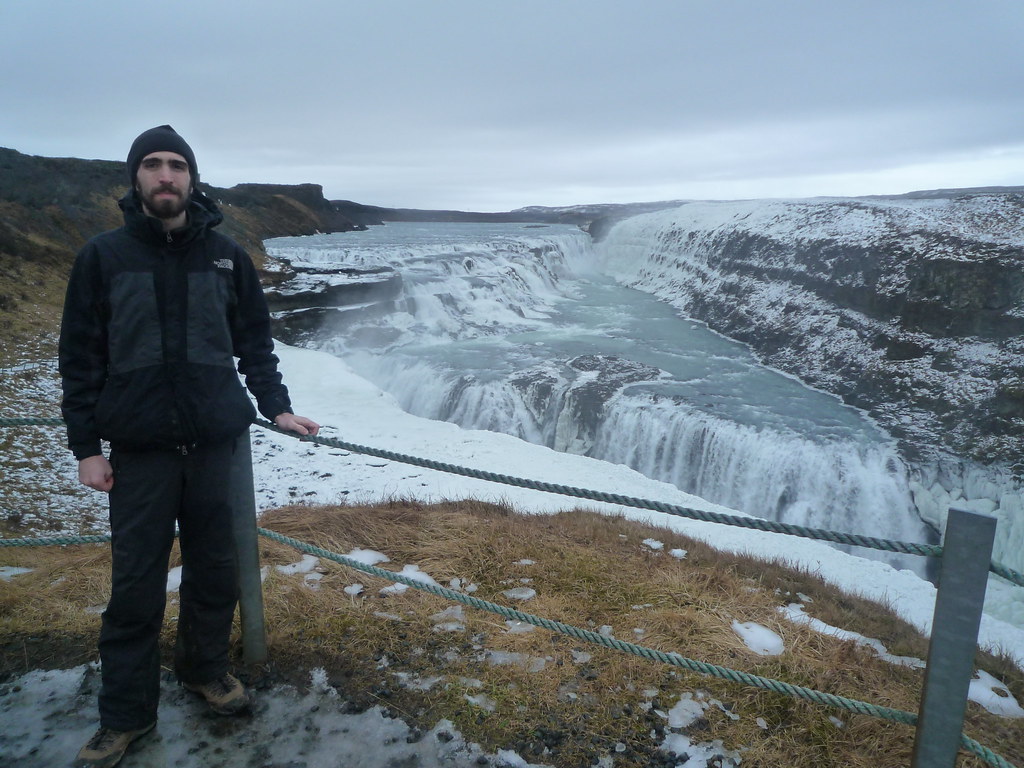
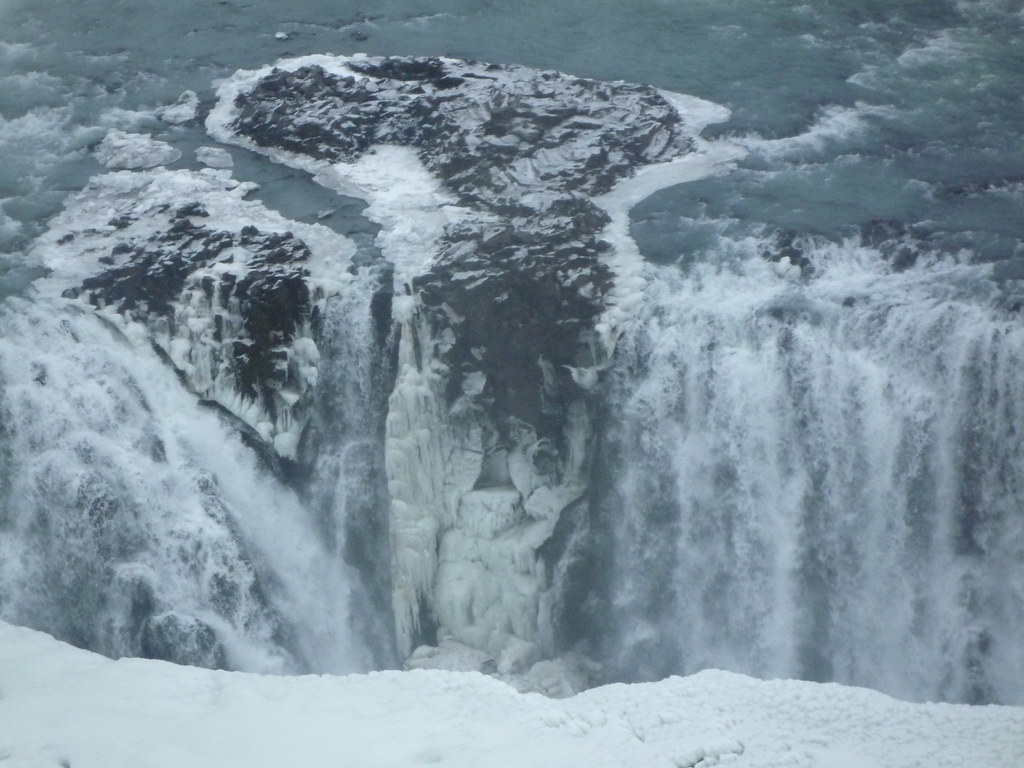
The farthest point of the circle from Reykjavik was Gullfoss, a double cascade waterfall.


As it grew dark I headed back into Reykjavik where I returned the car and spent the night in a hostel.

Sunday, January 9, 2011

Ring Road Day 4: Walks Through Epic Landscapes

Whenever people ask me what Iceland is like, I have a one word response: epic. I mostly mean the landscape, and it is places like the ones on this day's leg of the journey that make the word leap to mind.

I started out the day in Akureyri. I saw the main church there, which was designed by the same architect as the basalt themed tower in Reykjavik, as well as the historic catholic church and another casting of Einar Jónsson's The Outlaw.

A short ways out from the city I passed a van that was filming out the side door as the rolled by the landscape. They caught up with my soon thereafter at my first stop, Goðafoss, or Waterfall of the Gods. They were filming a promotional video about the possibility of tourism in the Icelandic winter, so of course they wanted to interview the foreigner mad enough to be doing precisely that. The video is supposed to be on the web, but I forgot the name of company making it. If you somehow manage to track it down, let me know. (While searching for it I came across this video, which covers almost exactly the same things I did that day, albeit in a slightly different order, and if it is the same people [which is plausible, looking at the video] then it was actually on the same day.) I told them that there were obvious disadvantages, such as the brief span of daylight, but that there were upsides too, such as the frozen waterfall behind us.
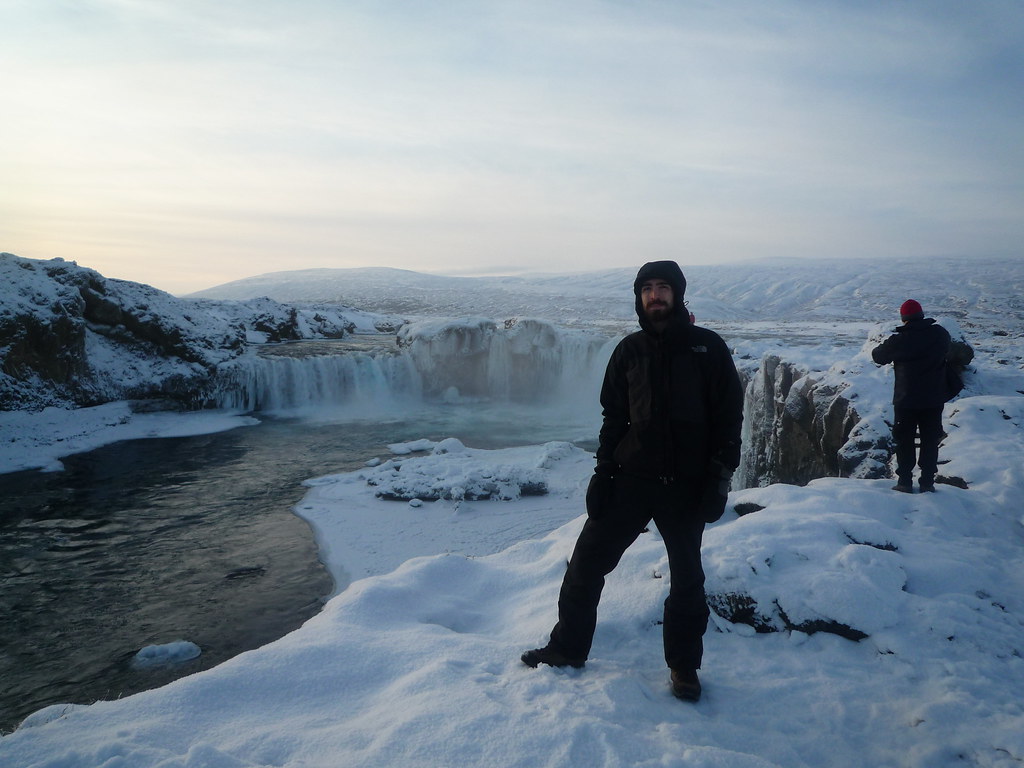
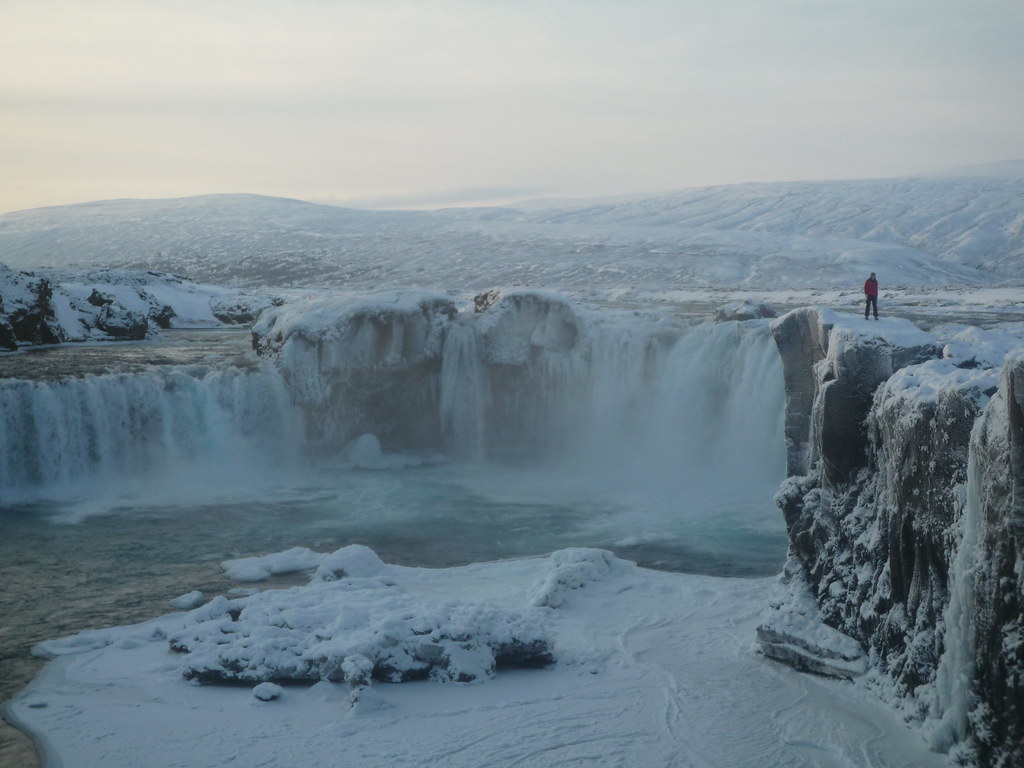

Goðafoss' name comes from an event just after a pivotal point in Icelandic history. In the year 1000 there was a country-wide meeting of the important landowners. They decided that it caused too much trouble to have a Christian set of laws and a set derived from the Norse religion and so wanted to have a single religion for the entire country. The choice of which of the two religions Iceland would adopt fell on the shoulders of one man, the Law-Speaker of the assembly. In those times many people could not read so instead of writing down the laws, the Law-Speaker would memorize them and tell them to the assembly. This Law-Speaker,  Þorgeir, spent a day in solitary contemplation before declaring Iceland a Christian country, but allowed people to practice other religions privately. He himself had been a follower of the Norse gods On his way back to his farm on the other side of Iceland, he threw the wooden idols of his gods into these falls.
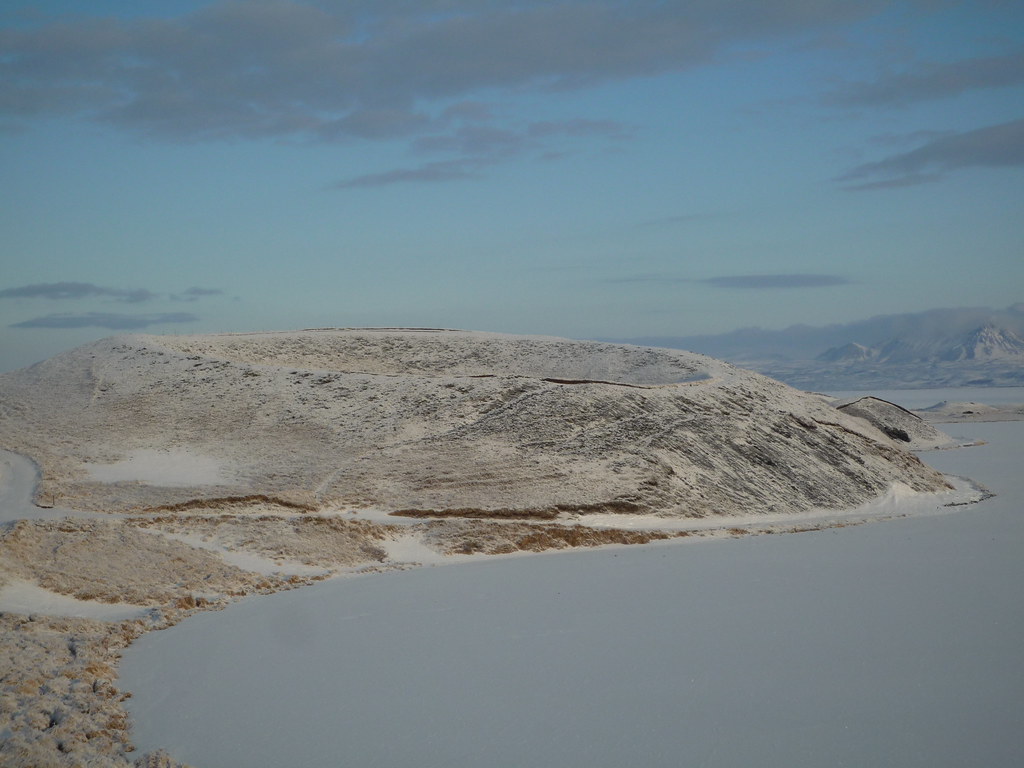
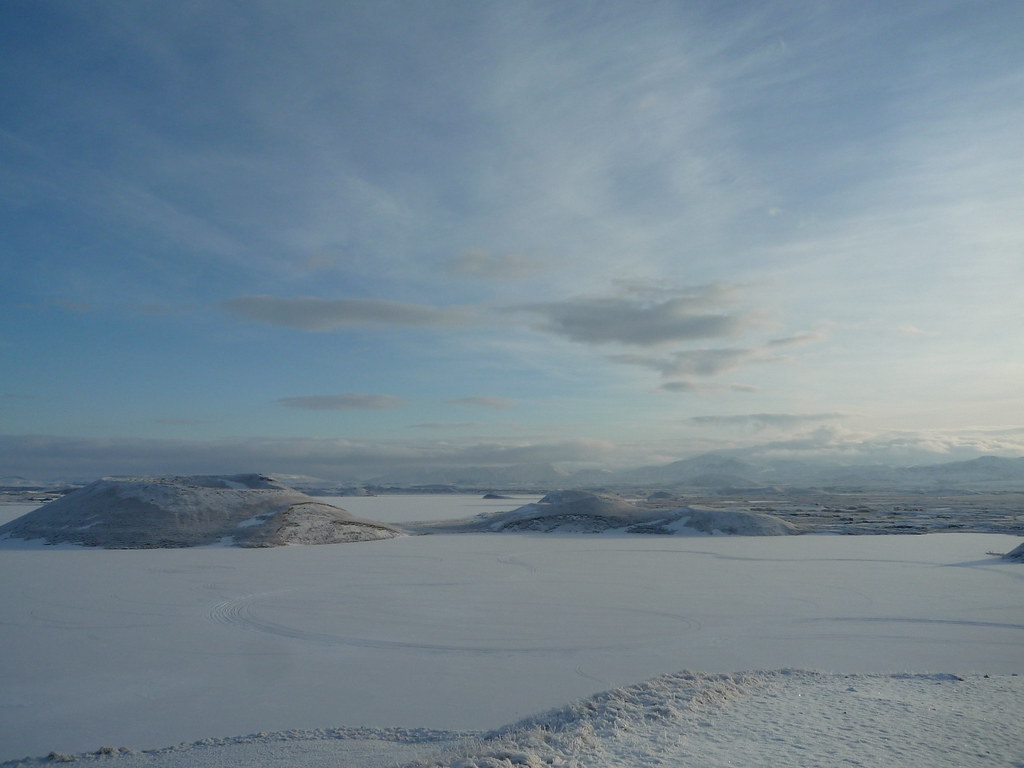
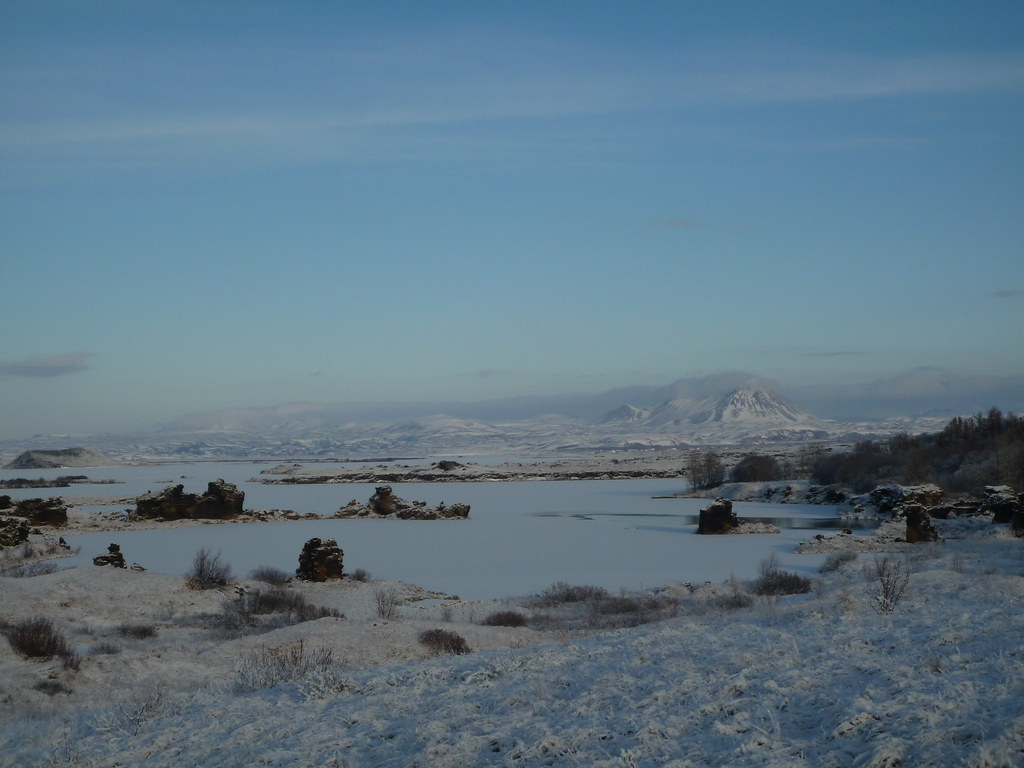
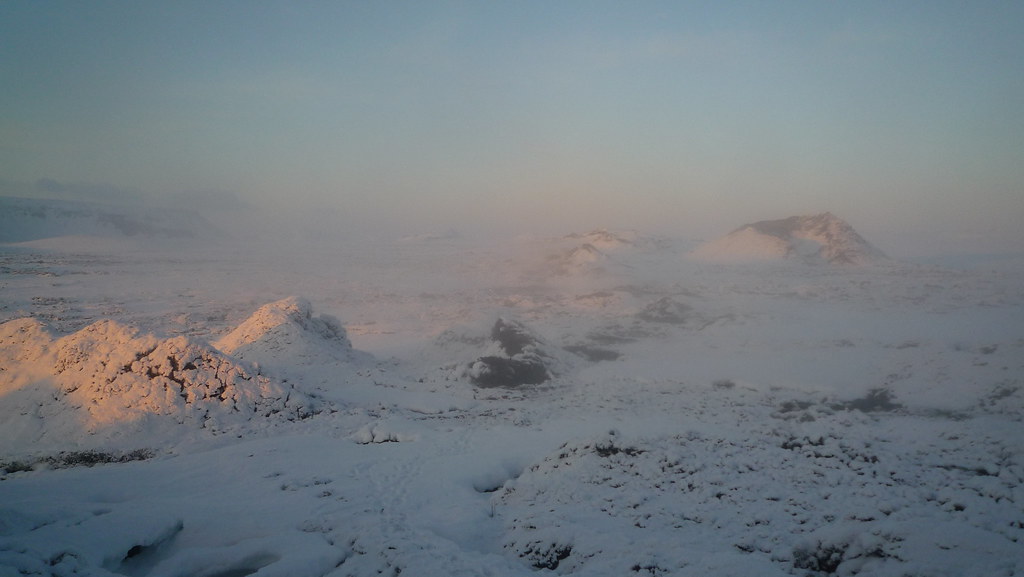
I continued to leap frog the film crew for the next few hours as we came to Mývatn lake. The whole area is pockmarked with pseudo-craters (formed by steam explosions, not magma vents) and odd rock formations.


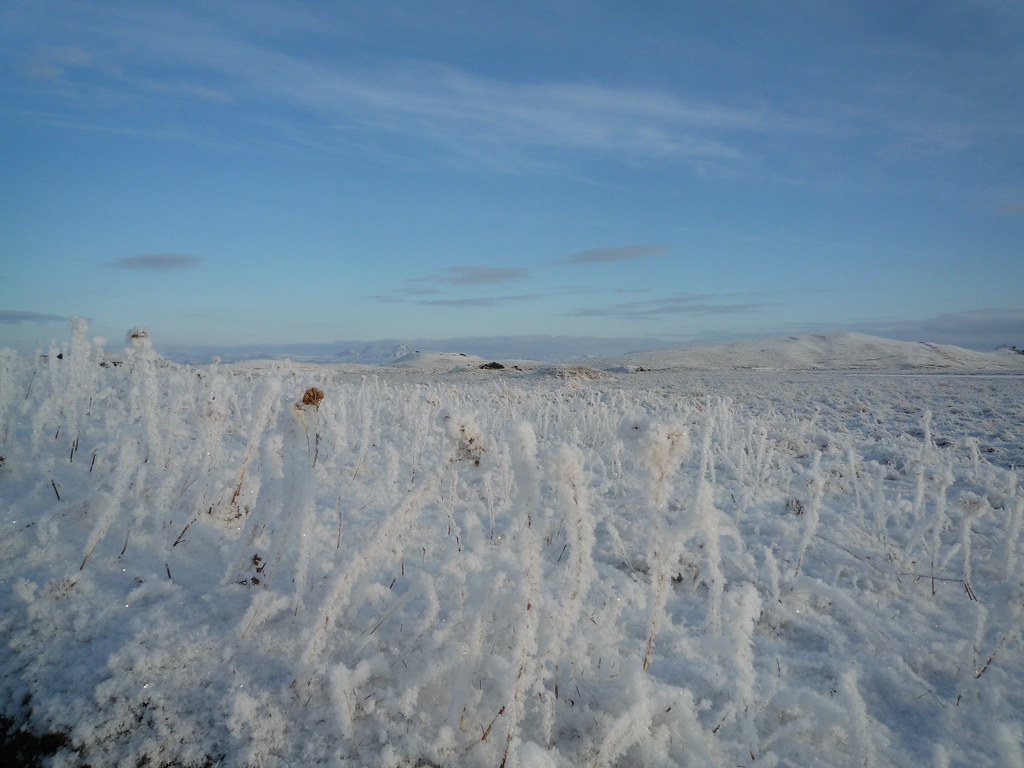
I walked around several of the craters across paths that were hard to make out in the snow. I had to jump a partially frozen stream at one point and got slightly wet when I didn't quite make it to the far side. Thankfully I always bring lots of warm socks wherever I go.


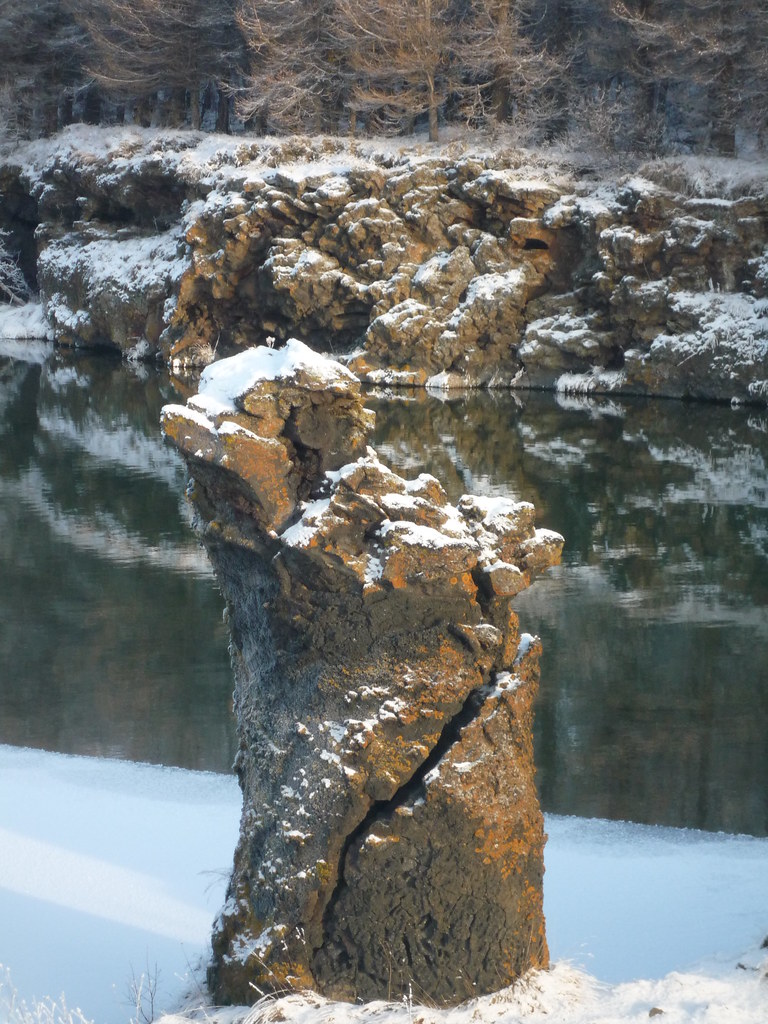
At a nearby point lava pillars rise from the lake.


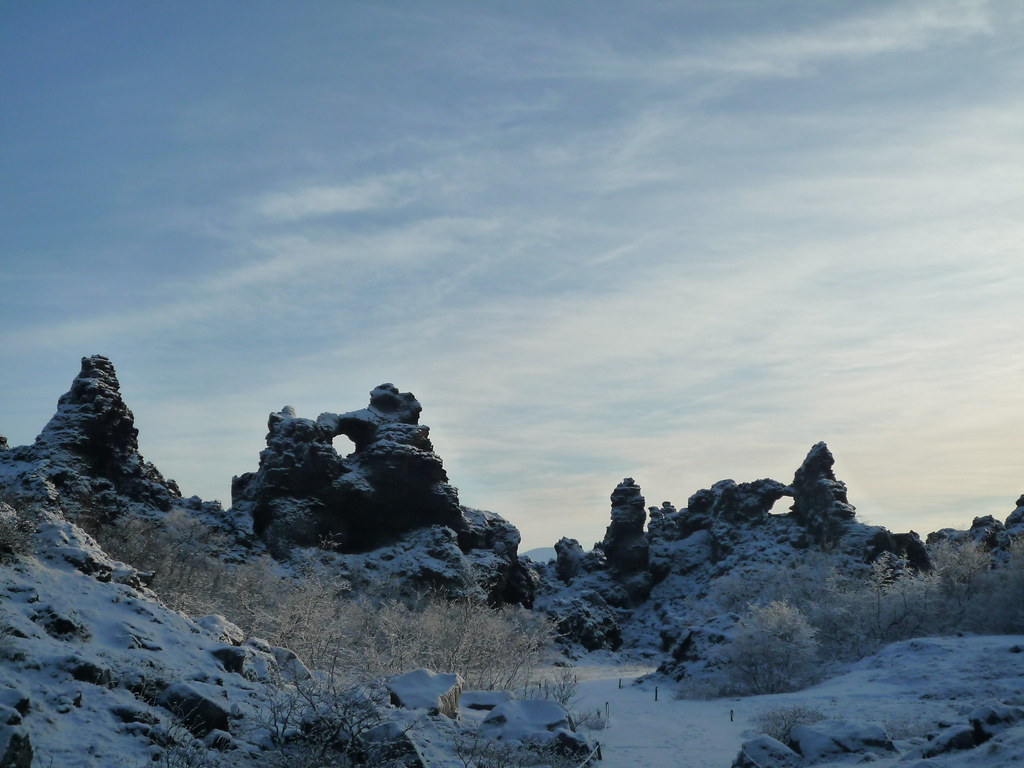
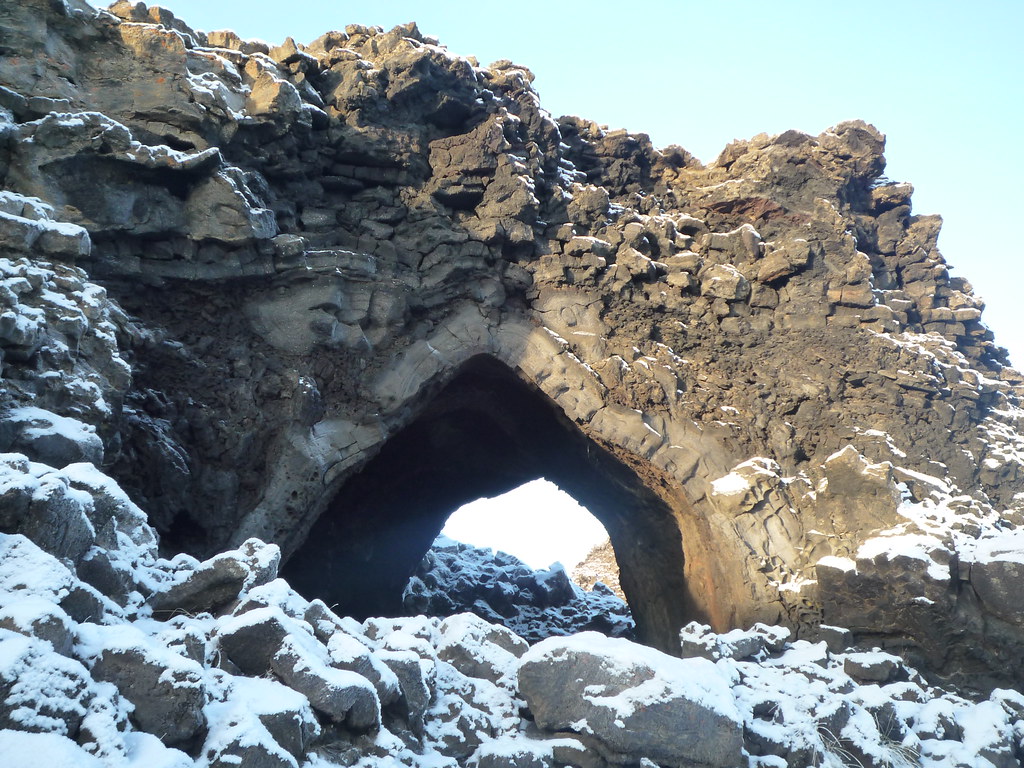
The Dimmuborgir lava field was the result of a massive lava flow where the lava hardened on the top and was supported by rock pillars where vents of water cooled the lava. Once the lava receded the pillars and pieces of the roof between them remain, leaving natural arches and otherworldly landscapes.


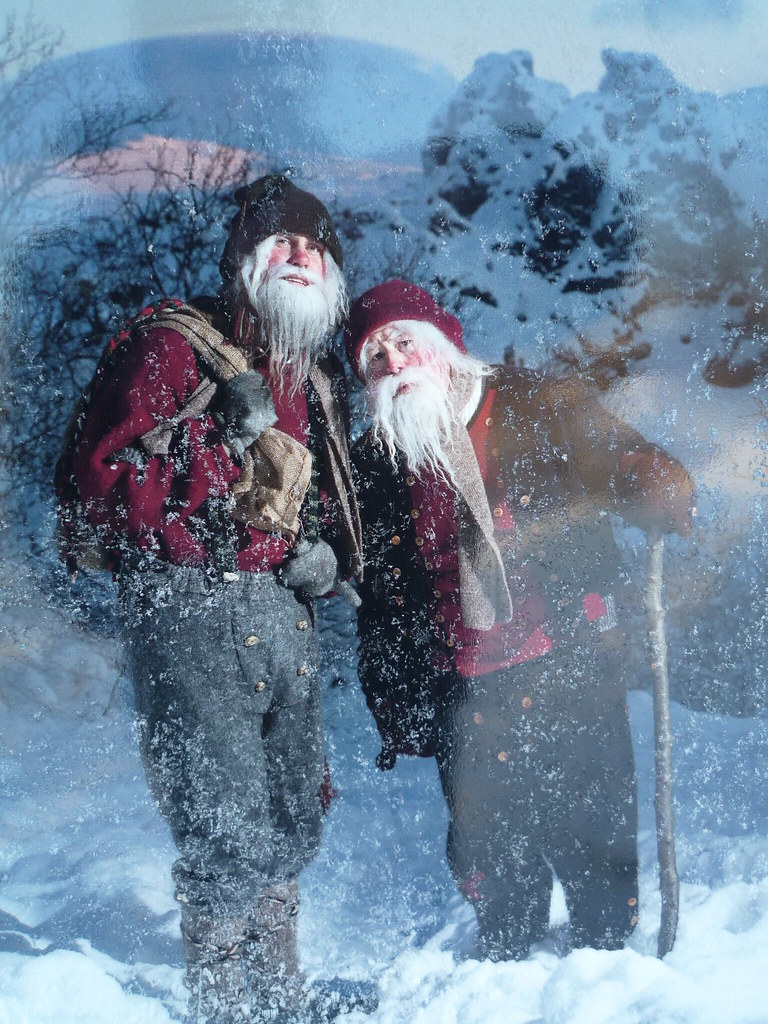
The lava field is said to be the haunt of the Yule Lads, mischievous little men whose descriptions have varied over the years from monsters who will eat children to pranksters to Santa Clause like figures.


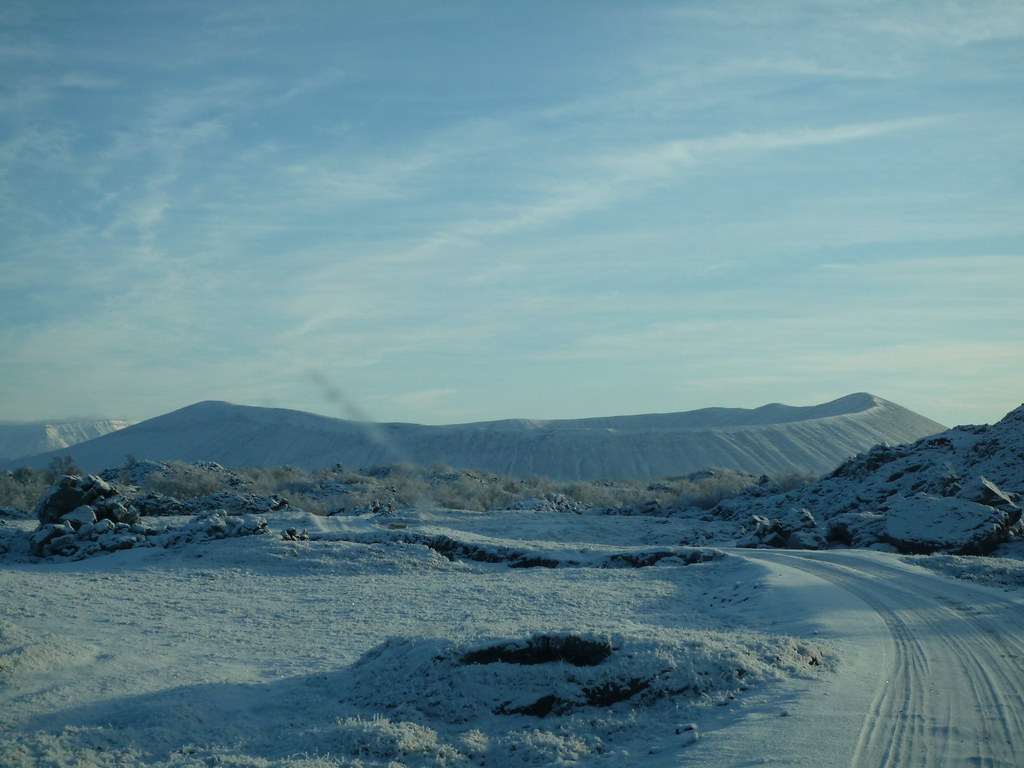
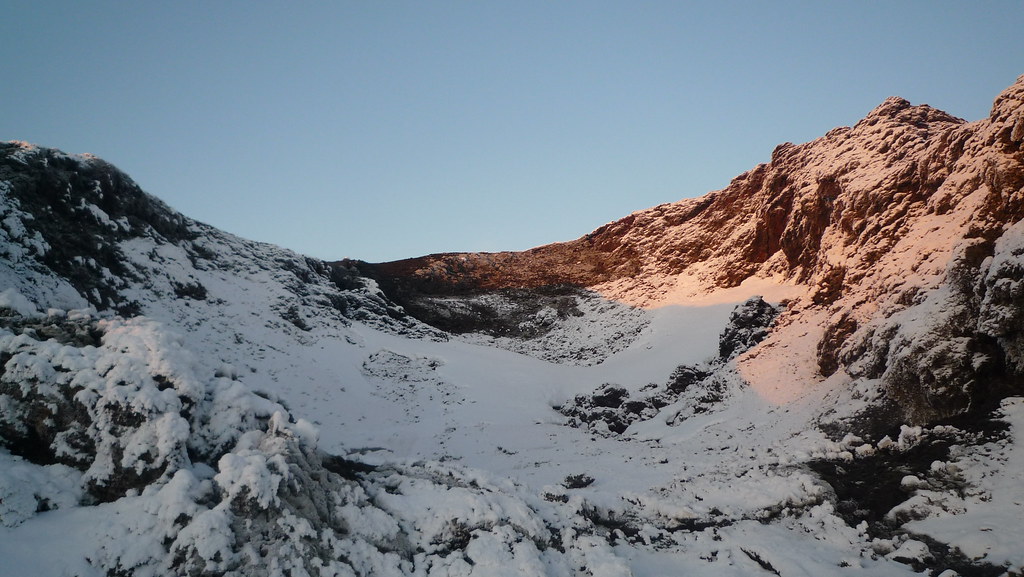
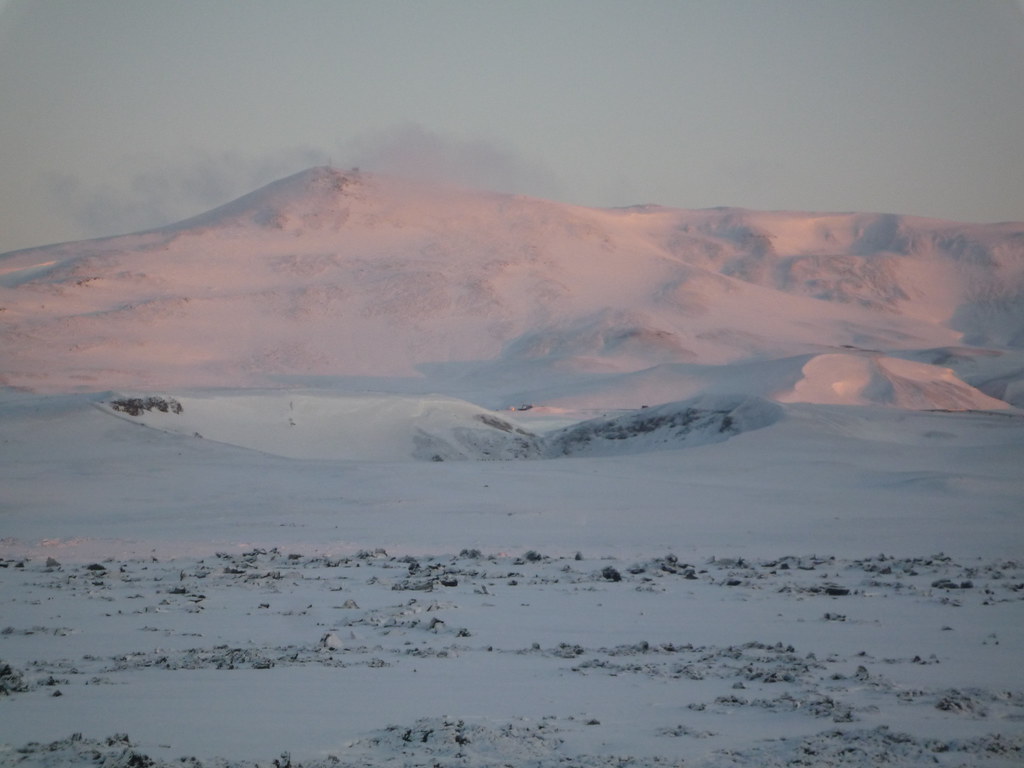
Overlooking the area is the kilometer in diameter crater of Hverfjall. 


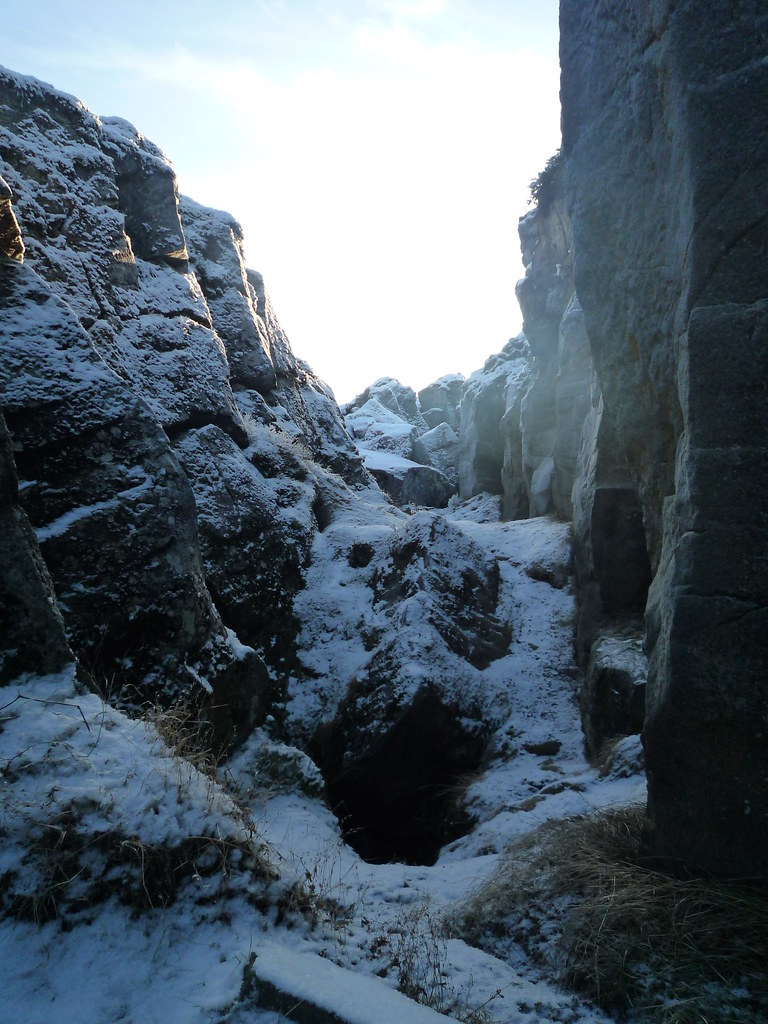
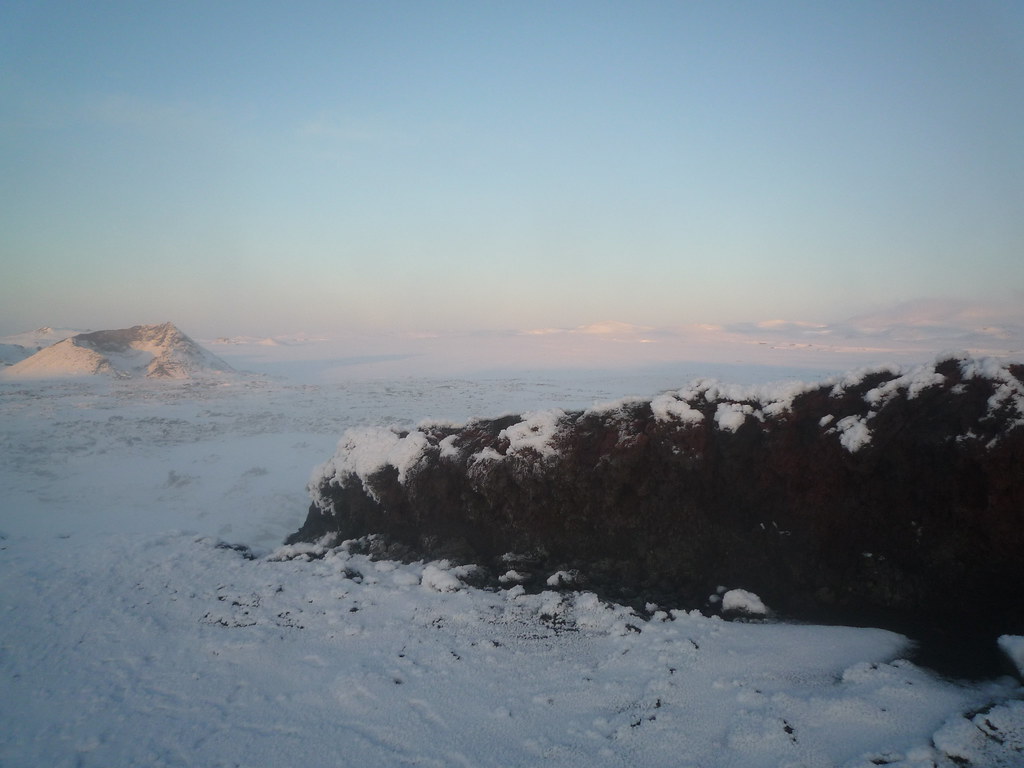
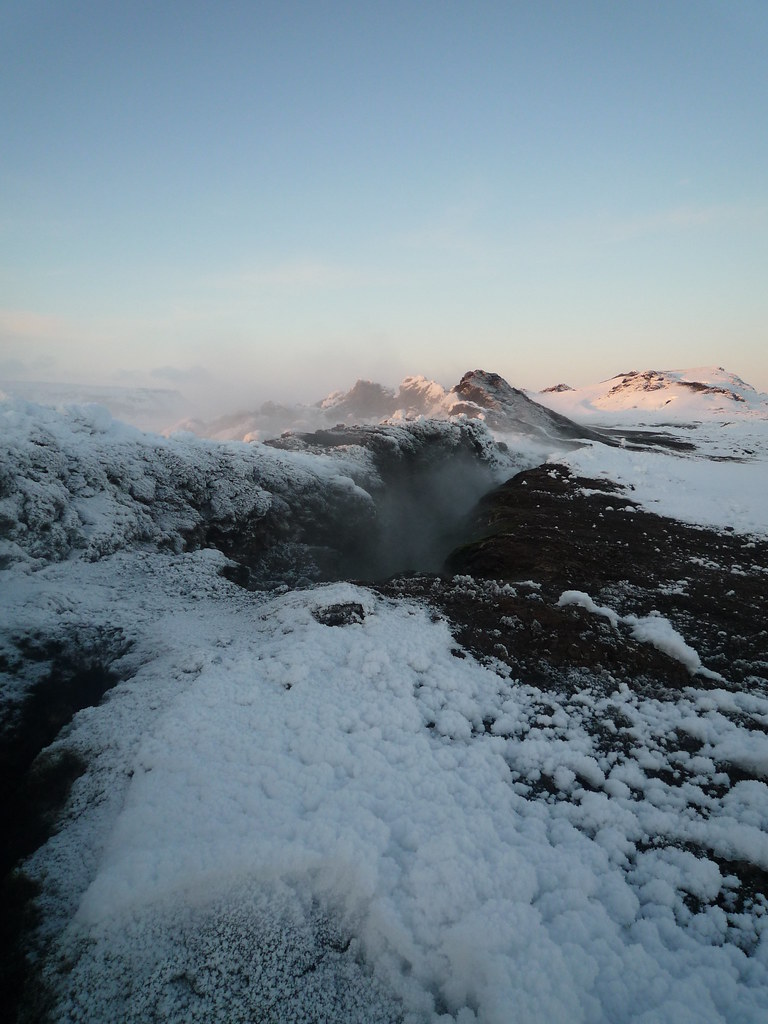
Steam escaped vents in the ground around me as I drove on frozen dirt roads to a giant fissure. Inside there are hot springs, though one is now too cold and one too hot for swimming.


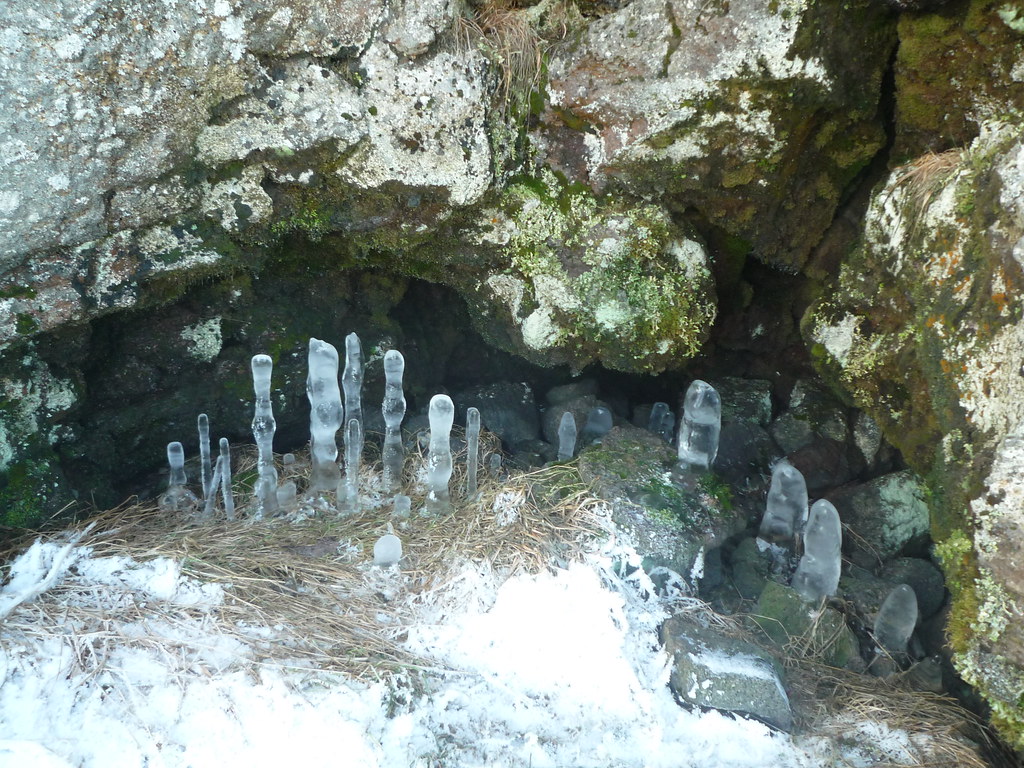
Near the fissures were icicles growing upward from the ground:


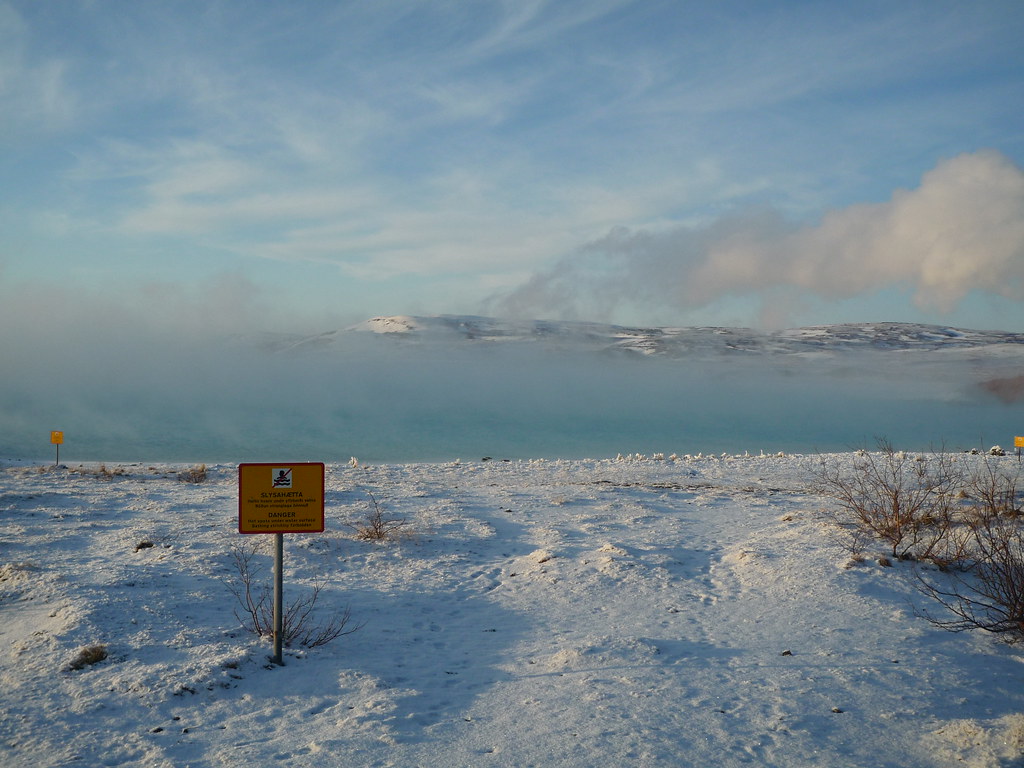
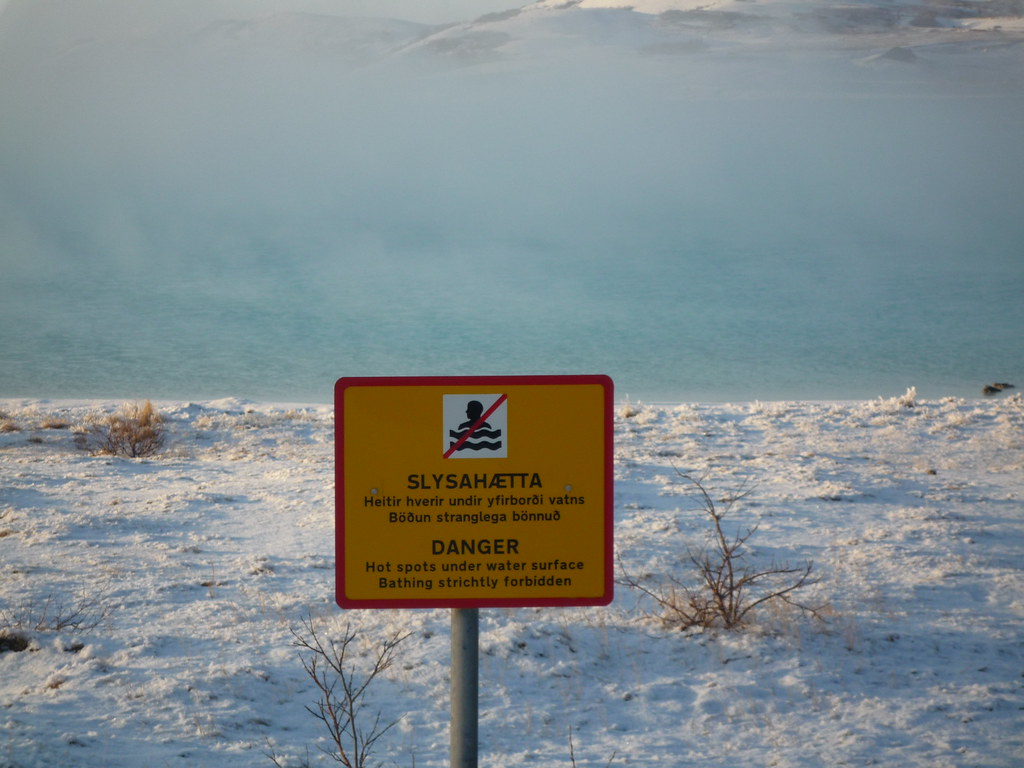
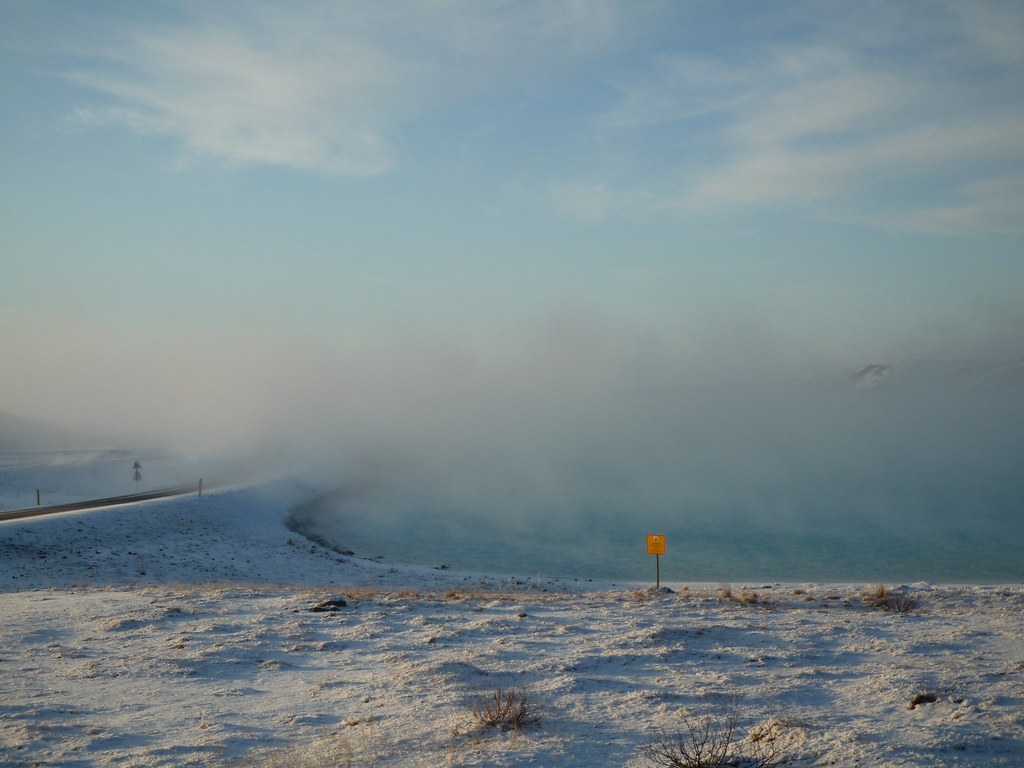
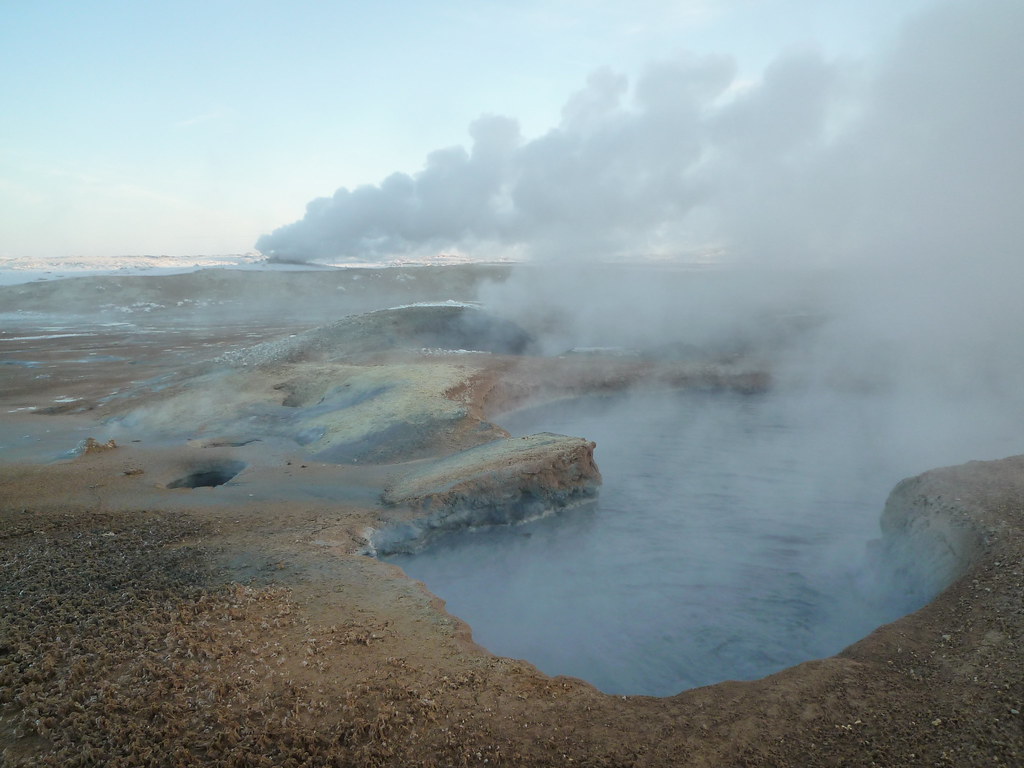
Past the far end of the lake there were some ponds that produced enough steam to interfere with driving down the road near it.


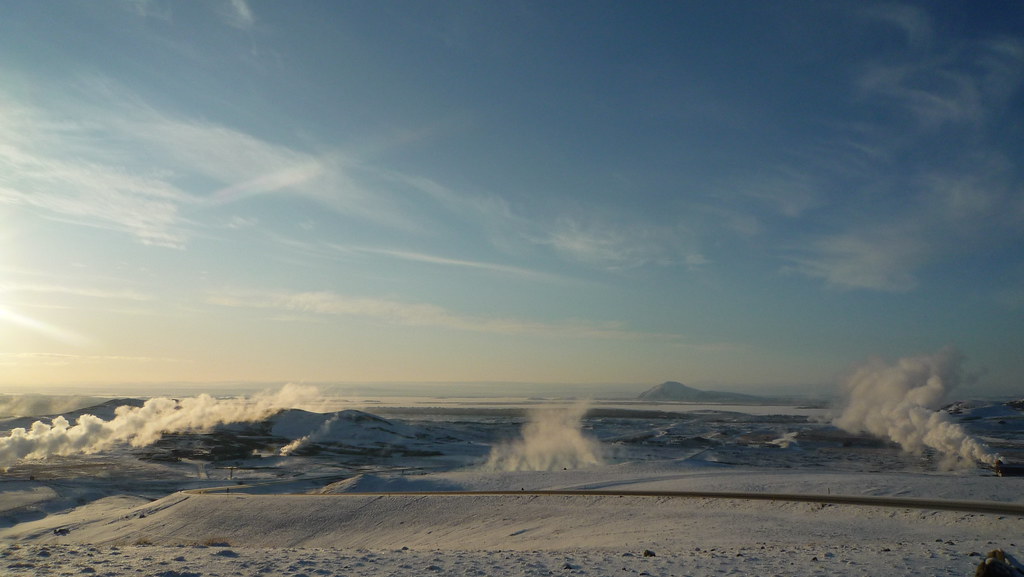
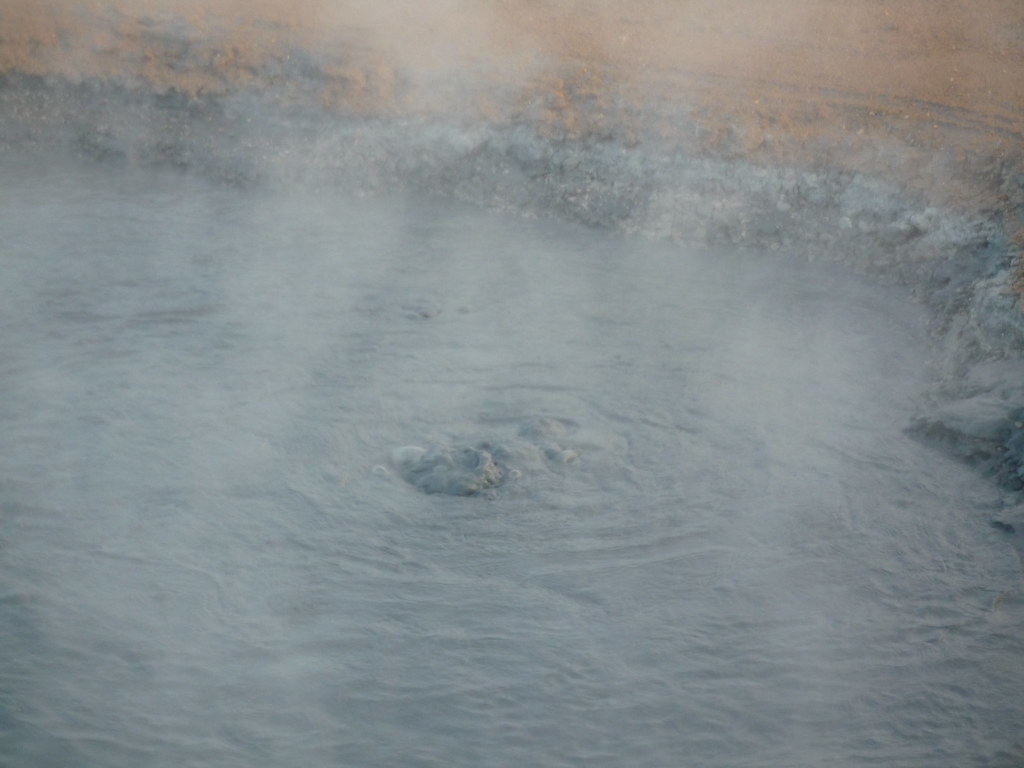
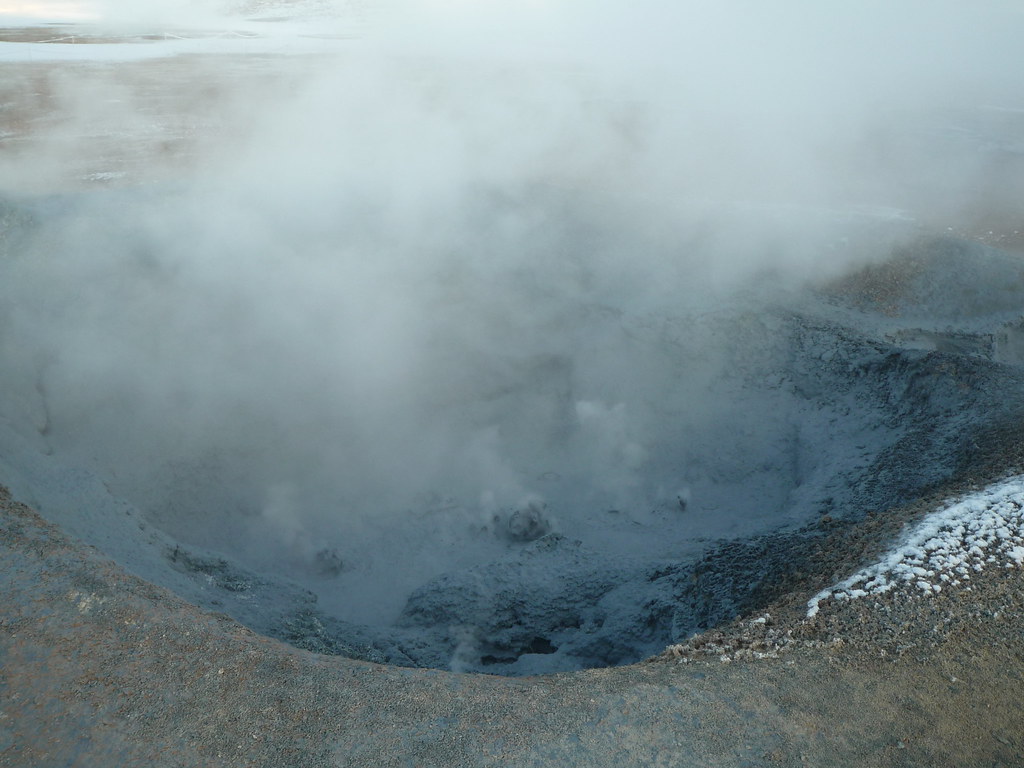
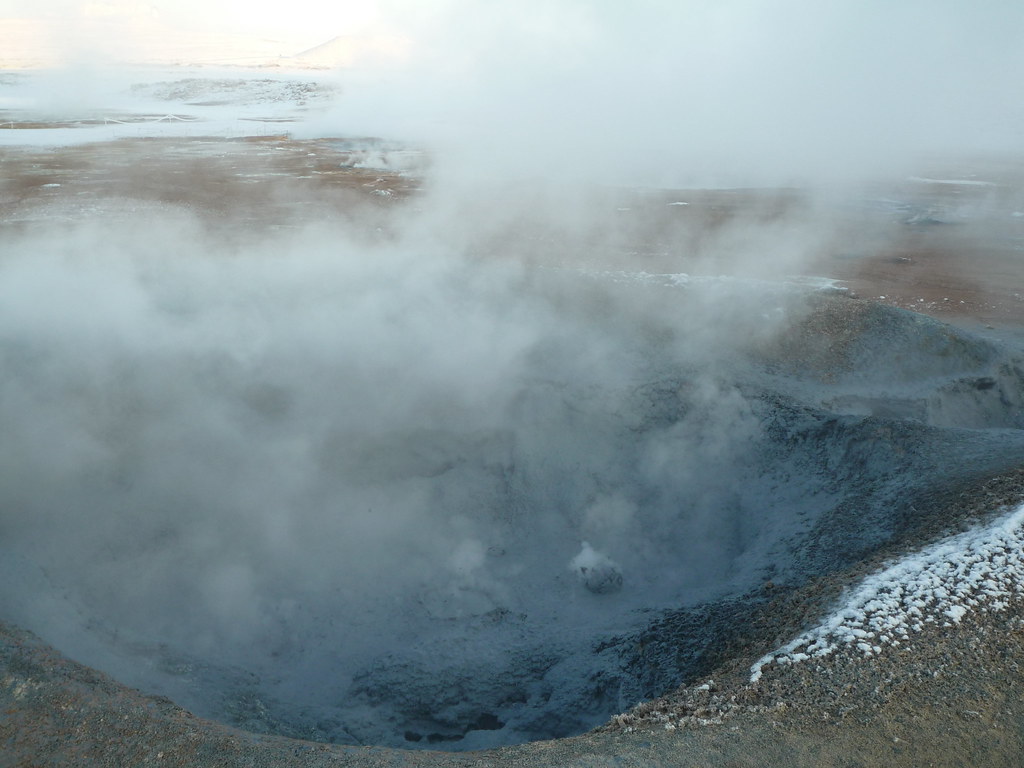
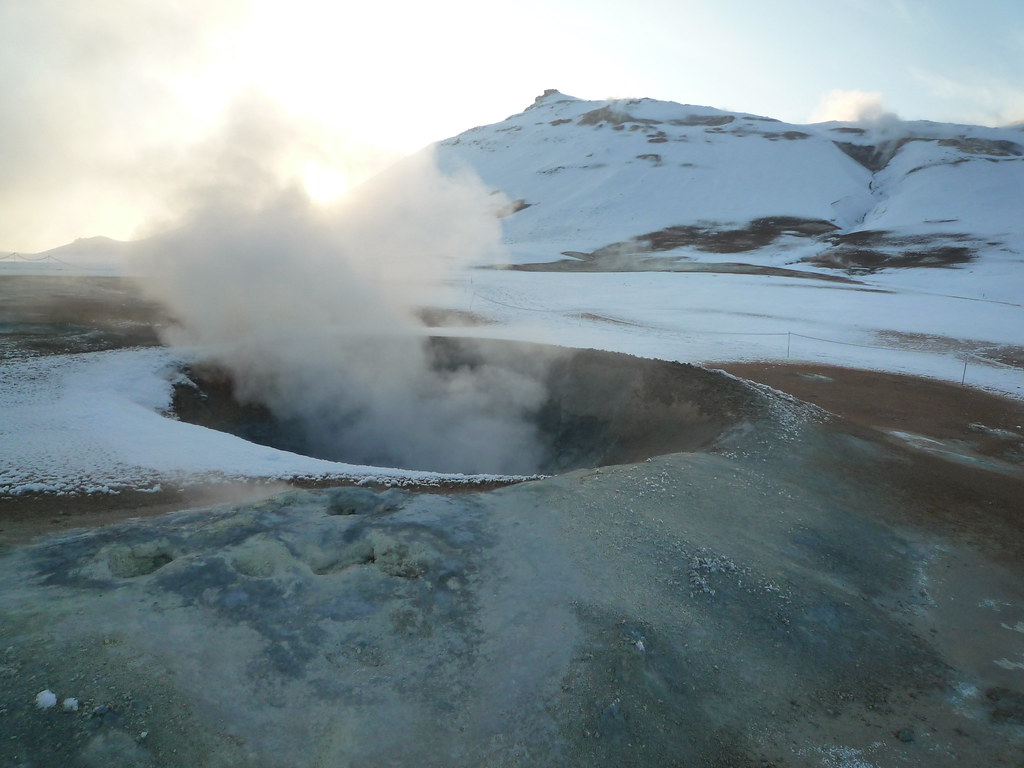
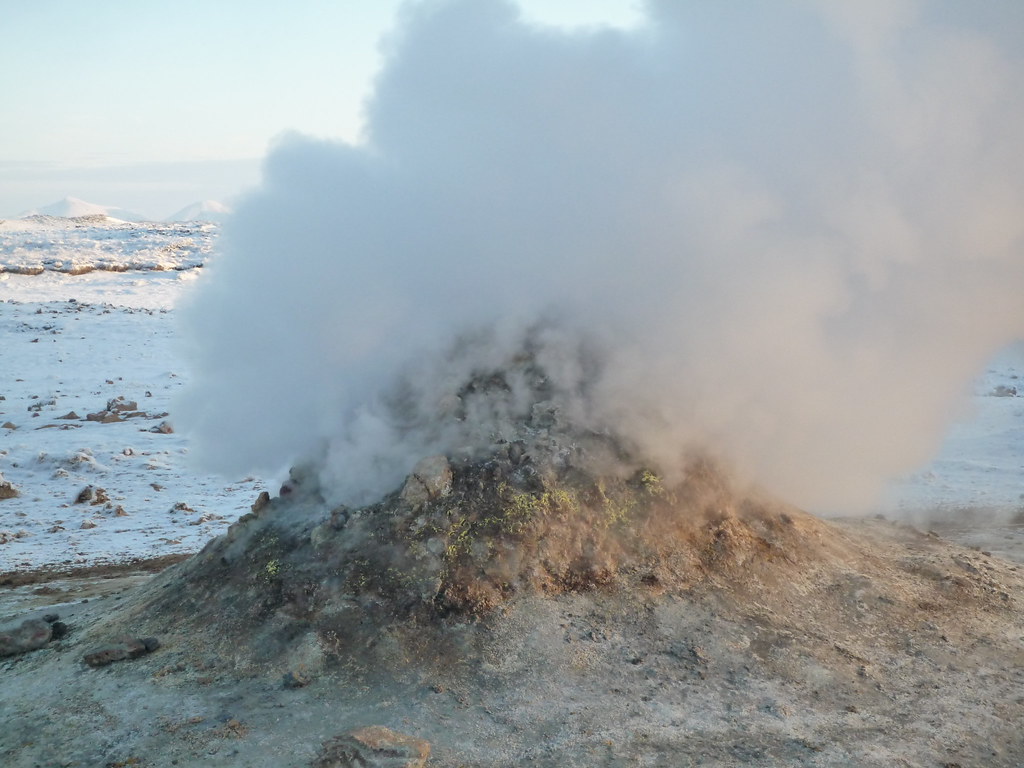
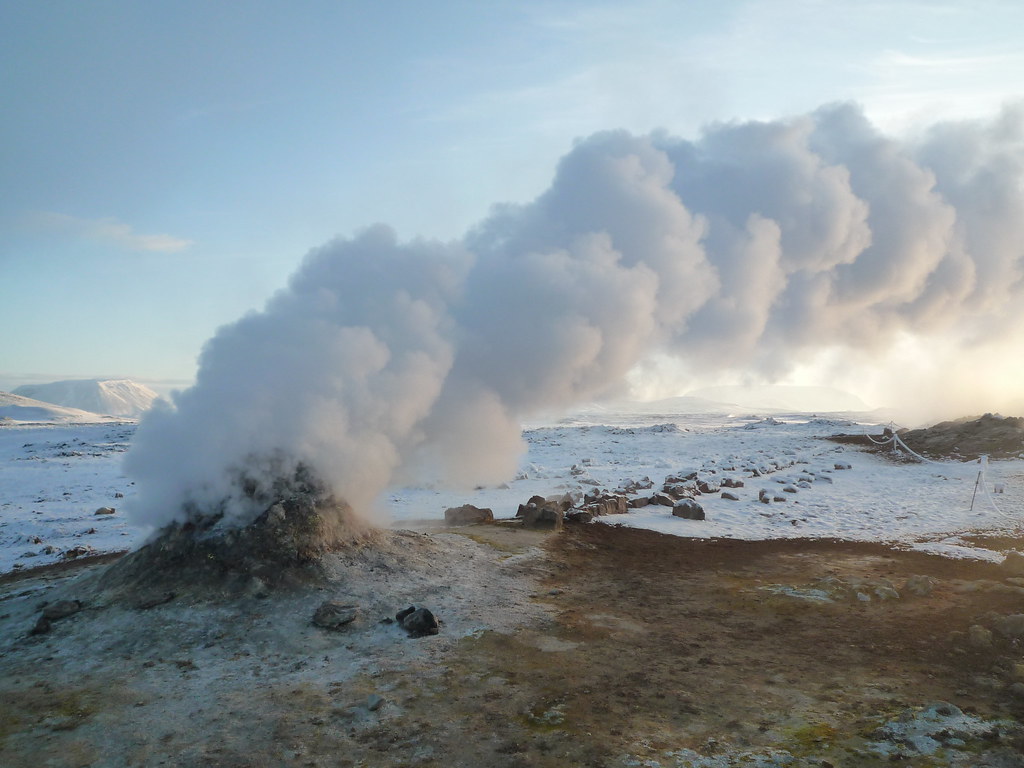
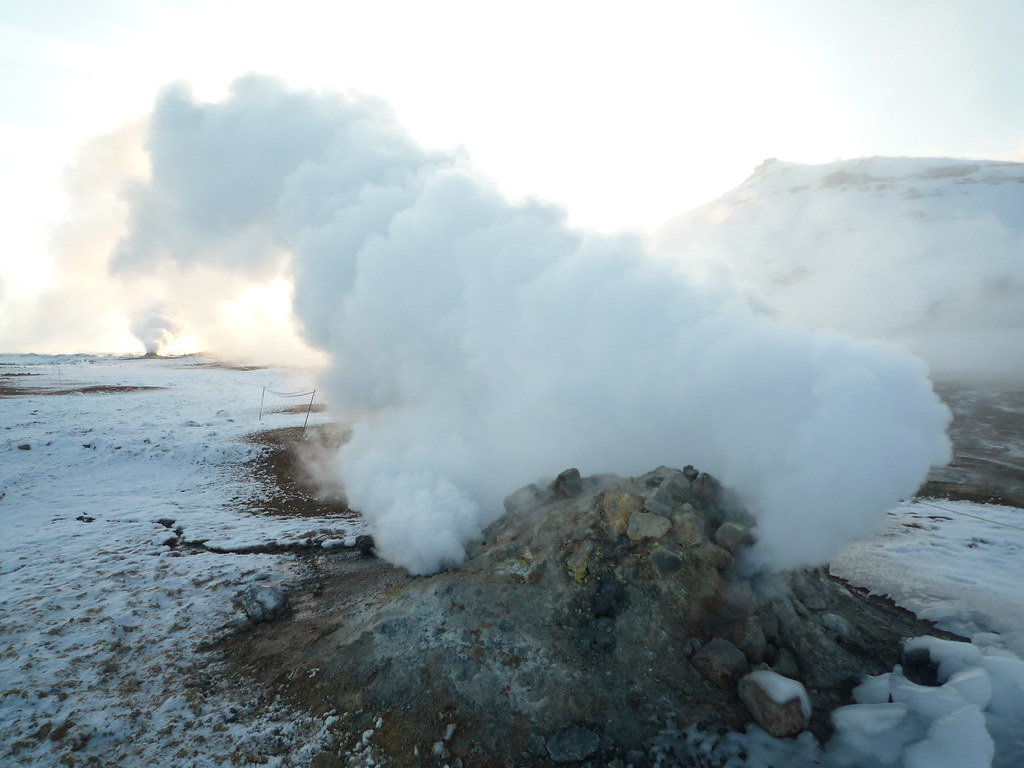
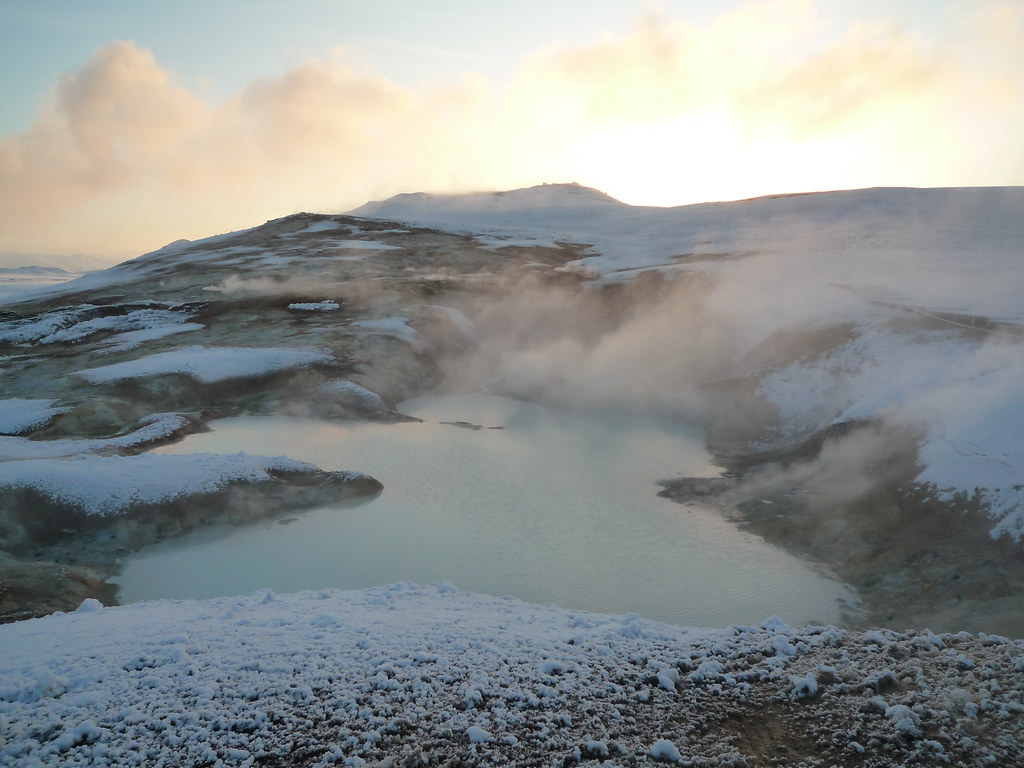
Over a small pass lay an even more geothermally active area with Yellowstone-like boiling mud and what looked like termite mounds converted to vents that shot out perfect lines of steam:


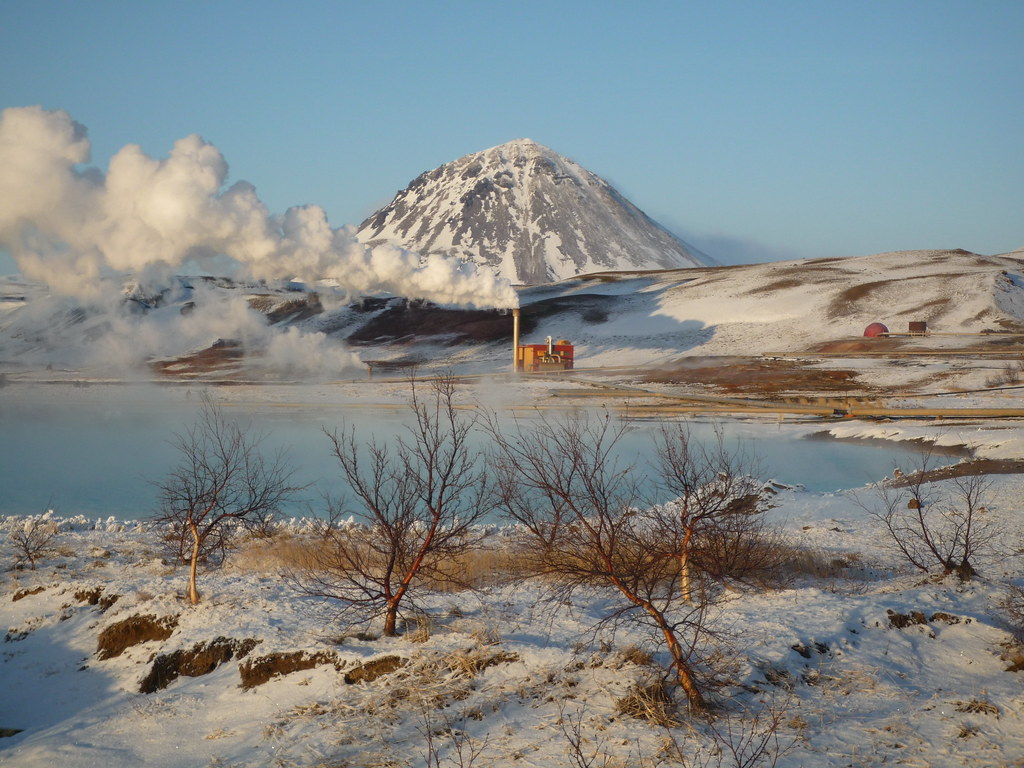
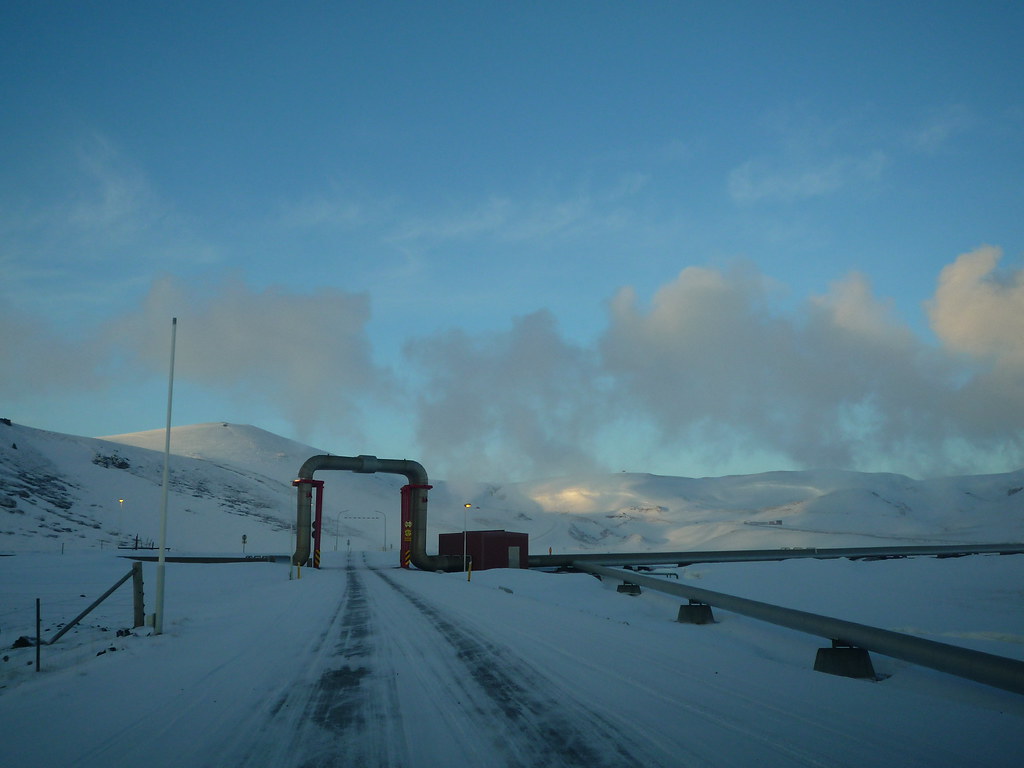
Not too far was a power plant where all that geothermic energy was being harnessed.


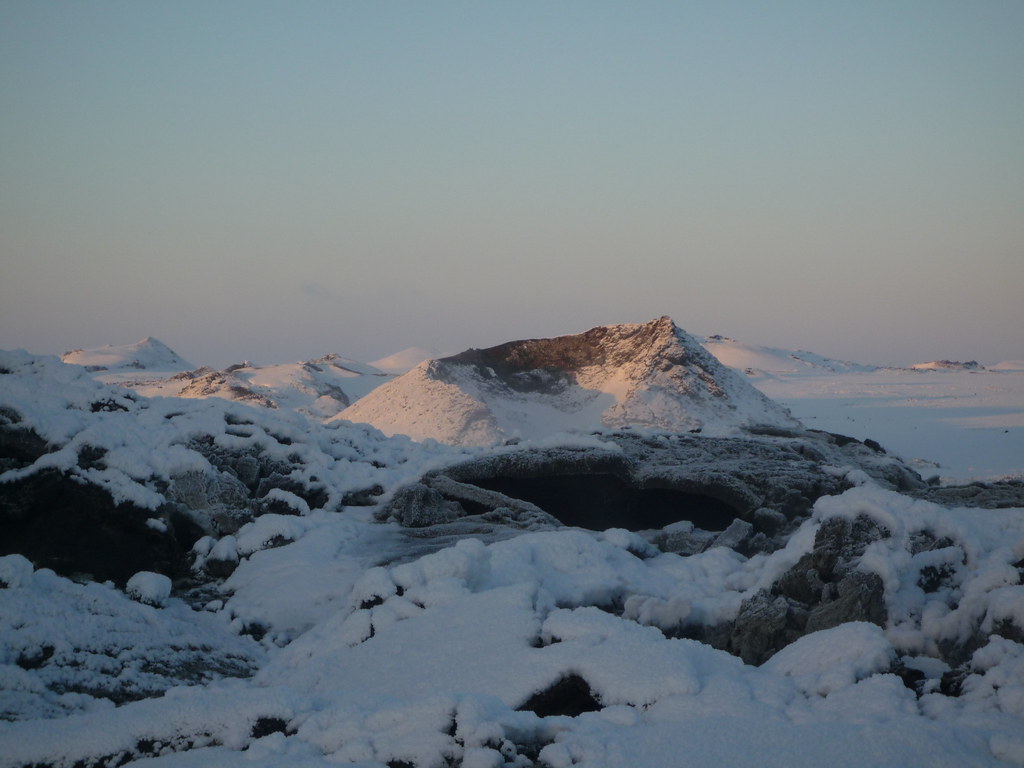
 Craters, steam vents, and boiling lakes, and crevasses were prevalent in the vicinity. 


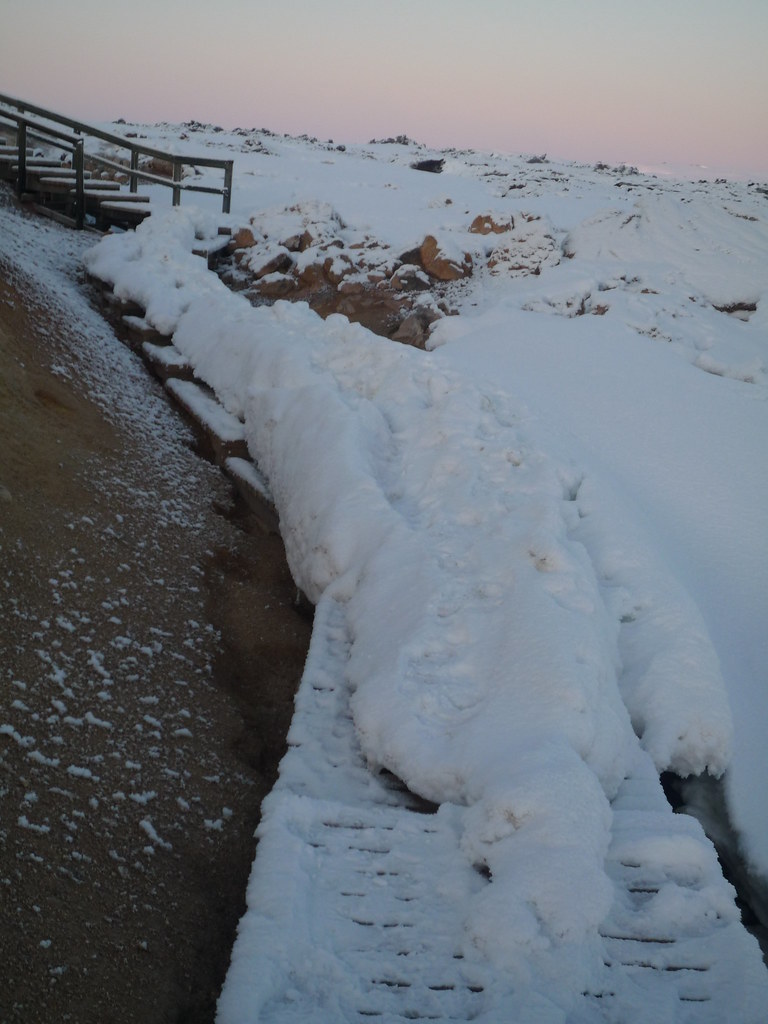
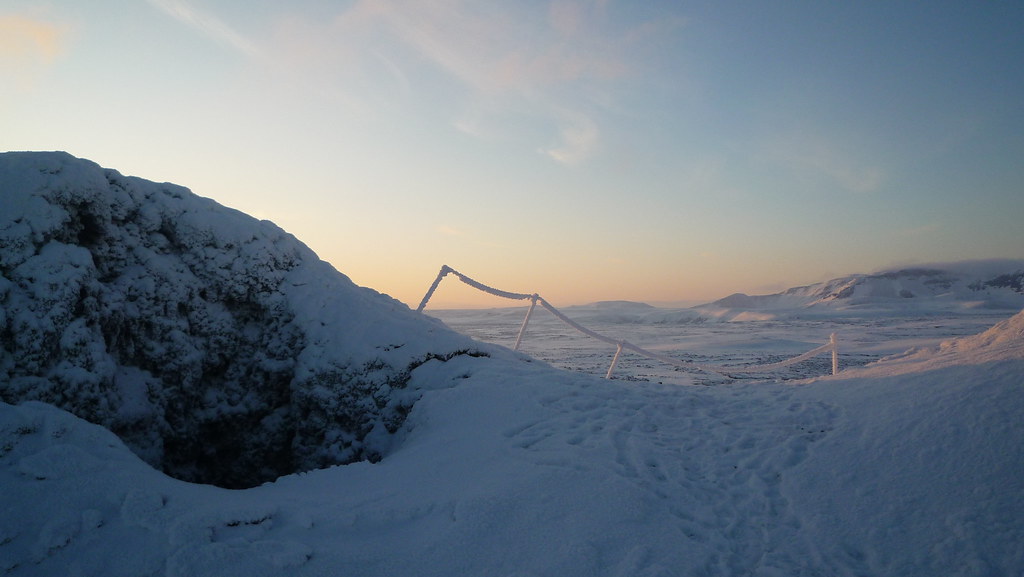
The path was trick at points, whether because of being covered with feet of ice or being hot enough to threaten to begin to melt the soles of my boots. I was nervous at points but I was following recent footprints so I felt I was probably not going to fall through the thin ground that the signs and my Lonely Planet warned about.


One crater is called "homemade Hell" because it is the result of trying to make one big bore-hole to fulfill the needs of the entire power plant. After the explosion a secondary site was used with many smaller bore holes.


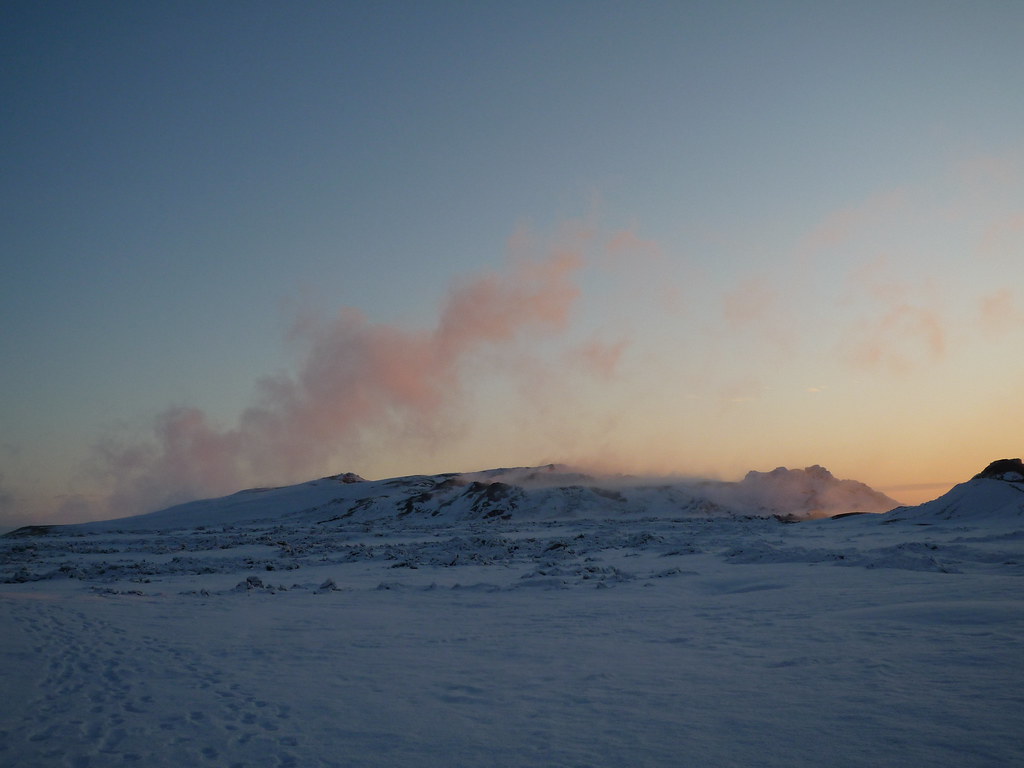
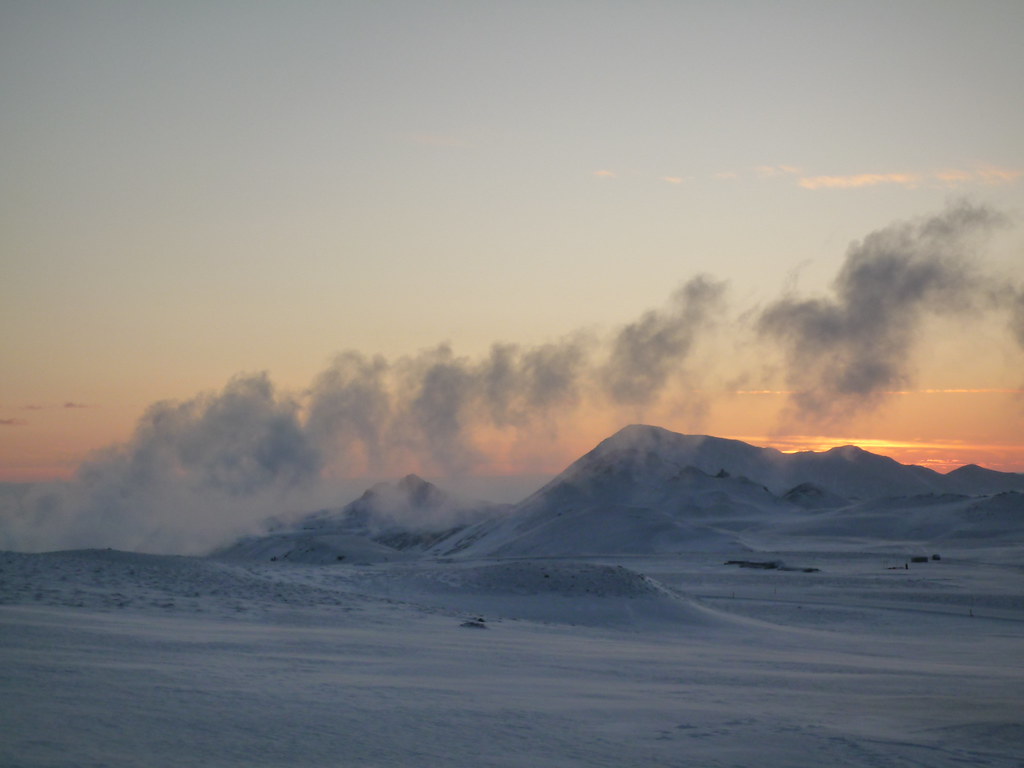
The steam caught the sun's dying light magnificently.


I drove in the dark to the nearest real town, Egilsstaðir. The places I intended to stay were closed for the night were closed for the season, so I continued on over treacherously icy passes and down into a steep fjord to the little town of Seyðisfjörður. The hostel was closed, but it turned out the annex was open, and by open I mean simply left unlocked and unwatched. I called out for a while before finding the proprietor in a room upstairs. I probably could have slept there without him ever noticing, but I support the existence of hostels so paid my way.  Here I was told that my timing was wrong for seeing the Northern Lights, which apparently are only common from September to November. So it goes.
  © Blogger template 'Minimalist G' by Ourblogtemplates.com 2008

Back to TOP